
Author: HEMCbags Technical Team | BPI and OK Compost Certified Manufacturer | 10+ Years Experience
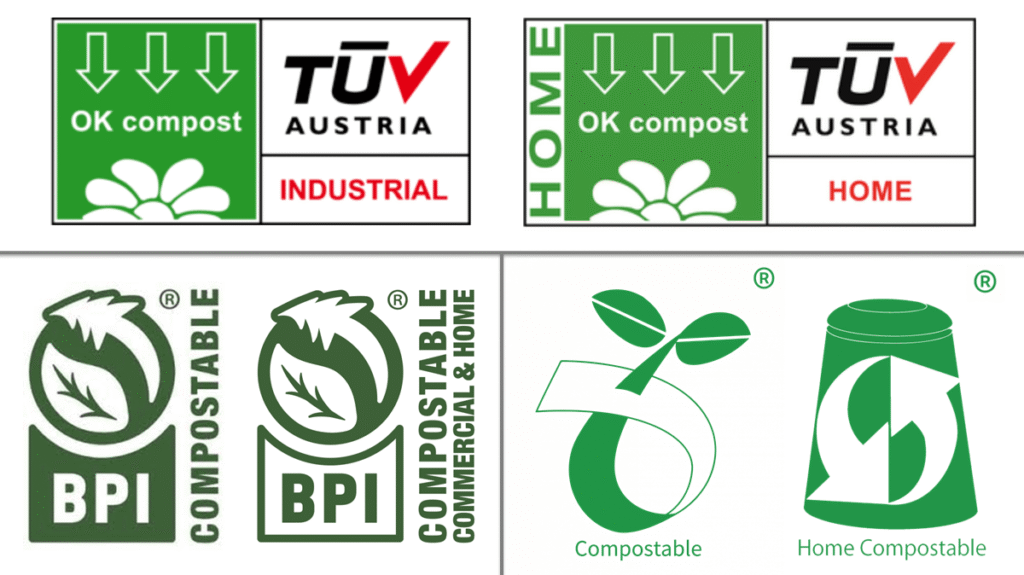
Quick Answer: Compostable certifications are third-party verifications that a product will break down completely in specific composting conditions within a defined timeframe. The main certifications are BPI (North America), TÜV OK Compost (Europe/global), ASTM D6400 (US standard), and EN 13432 (European standard). Each has different requirements for temperature, timeframe, and environment — and none guarantees breakdown in landfills or home compost unless specifically certified for home composting.
At HEMCbags, we have supplied more than 50 million BPI and OK Compost certified bags to distributors, municipalities, and waste management partners across North America and Europe. Over the past decade, we have seen one recurring pattern: many buyers assume all certifications are the same, only to discover later that their local composting facility requires a different standard.
This guide explains exactly what each certification means, how they differ, and which one you need for your specific use case.
Why Certifications Matter
Certifications are the only reliable way to verify that a product labeled “compostable” actually breaks down as promised. Without third-party certification, anyone can print “compostable” on a bag.
What certification guarantees:
| Guarantee | What It Means |
|---|---|
| Timeframe | The product will break down within a specific period (usually 90-180 days) |
| Environment | The product requires specific conditions (industrial or home composting) |
| Complete breakdown | No microplastics, no toxic residue |
| Third-party verification | Independent testing, not manufacturer claims |
What certification does NOT guarantee:
- Breakdown in landfills (composting requires oxygen, heat, and moisture)
- Breakdown in oceans or soil (only applies to controlled composting)
What We’ve Learned After Supplying Certified Compostable Bags
After supplying more than 50 million certified compostable bags to distributors, municipalities, and waste management partners, we have seen three recurring mistakes:
1. Assuming raw material certification covers the finished product
Many buyers mistakenly believe that raw material certification automatically covers the finished product. In reality, certifications are issued for specific finished products. Manufacturing changes — different thickness, different blend ratio, different printing inks — can affect compostability and require separate certification.
2. Choosing certification based on price, not disposal method
A BPI-certified bag will not break down in a European composting facility that requires EN 13432. An OK Compost INDUSTRIAL bag will not break down in a US municipal program that requires BPI. Buyers who save $0.02 per bag often spend thousands in rejected loads.
3. Assuming “compostable” means home compostable
Most certified bags are industrial compostable only. We have heard from countless customers who bought industrial compostable bags for their backyard piles — and were frustrated when the bags didn’t break down. The OK Compost HOME logo is not optional if you compost at home.
What this means for you: The cheapest certification is not the most cost-effective. The right certification is the one that matches your disposal environment.
Which Compostable Certifications Do You Need?
Not every certification is right for every buyer. The right choice depends on three factors: your target market, your disposal environment, and your product type.
Step 1: Where is your product going to be sold?
- North America → Start with BPI (ASTM D6400)
- Europe → Start with TÜV OK Compost INDUSTRIAL (EN 13432)
- Global / Multiple regions → Consider multiple certifications
Step 2: Where will the bag be disposed?
- Industrial composting facility → BPI or OK Compost INDUSTRIAL
- Home / backyard compost → OK Compost HOME or TÜV HOME
- Municipal green bin program → Check with the program — most accept BPI or OK Compost INDUSTRIAL
Step 3: What type of product is it?
- Plastic film (bags, packaging) → ASTM D6400 or EN 13432
- Paper products → ASTM D6868 (US) or EN 13432 (Europe)
Quick reference table:
| Your Market | Your Disposal Method | Certification You Need |
|---|---|---|
| United States / Canada | Industrial composting | BPI (ASTM D6400) |
| United States / Canada | Home composting | OK Compost HOME |
| Europe | Industrial composting | OK Compost INDUSTRIAL (EN 13432) |
| Europe | Home composting | OK Compost HOME |
| Global | Industrial composting | BPI + OK Compost INDUSTRIAL |
| Global | Home composting | OK Compost HOME |
| Any market | Landfill | No certification needed — compostable bags don’t break down in landfills |
If you’re ready to buy certified compostable bags, see our buying guide for product recommendations.
BPI Certified (Biodegradable Products Institute)
What it is: North America’s leading third-party certification body for compostable products. BPI verifies that products meet ASTM D6400 (US) or D6868 (paper) standards.
Key requirements:
| Requirement | Specification |
|---|---|
| Breakdown timeframe | 90% biodegradation within 180 days |
| Disintegration | Pieces smaller than 2mm |
| Ecotoxicity | No harmful residues, supports plant growth |
| Testing | Annual renewal + random batch testing |
Best for: US and Canadian markets, municipal composting programs
Limitation: Most BPI-certified products require industrial composting (55-60°C / 122-140°F). Not suitable for home composting unless specifically marked “Home.”
How to verify: Visit BPI’s website and search for the product name or manufacturer. Every certified product has a unique license number.
TÜV OK Compost (Austria)
What it is: European certification body offering two distinct certifications — OK Compost INDUSTRIAL and OK Compost HOME. TÜV Austria is widely recognized in Europe and increasingly accepted globally.
Key requirements:
| Requirement | OK Compost INDUSTRIAL | OK Compost HOME |
|---|---|---|
| Environment | Industrial composting | Home / backyard composting |
| Temperature | 50-60°C (122-140°F) | Ambient (~25°C / 77°F) |
| Breakdown timeframe | 90-180 days | 6-12 months |
| Standard | EN 13432 | EN 13432 + additional home compost testing |
Best for:
- OK Compost INDUSTRIAL: European market, municipal programs
- OK Compost HOME: Home composters, backyard piles
Why it matters: The OK Compost HOME certification is rare and valuable — it’s the only reliable way to know a bag will break down in your backyard pile.
ASTM D6400 (US Standard)
What it is: The ASTM D6400 standard specification for labeling of plastics designed to be composted in municipal or industrial facilities, developed by ASTM International.
Key requirements:
| Requirement | Specification |
|---|---|
| Biodegradation | 90% within 180 days |
| Disintegration | Pieces smaller than 2mm |
| Ecotoxicity | No toxic residue |
| Testing method | Aerobic composting conditions |
Best for: US market compliance
Note: ASTM D6400 is the standard BPI uses to certify products. If a product is BPI certified, it meets ASTM D6400.
EN 13432 (European Standard)
What it is: The EN 13432 European standard for compostable packaging — similar to ASTM D6400 but with additional requirements.
Key differences from ASTM D6400:
| Aspect | ASTM D6400 | EN 13432 |
|---|---|---|
| Disintegration | 90% in 12 weeks | 90% in 12 weeks |
| Biodegradation | 90% in 180 days | 90% in 180 days |
| Toxic metals | Limited testing | Stricter heavy metal limits |
| Compost quality | No negative effects | Must not harm compost quality |
Best for: European market, OK Compost certification
Note: EN 13432 is the standard TÜV Austria uses for OK Compost certification. If a product is OK Compost certified, it meets EN 13432.
Industrial vs Home Compostable: What’s the Difference?
| Industrial Compostable | Home Compostable | |
|---|---|---|
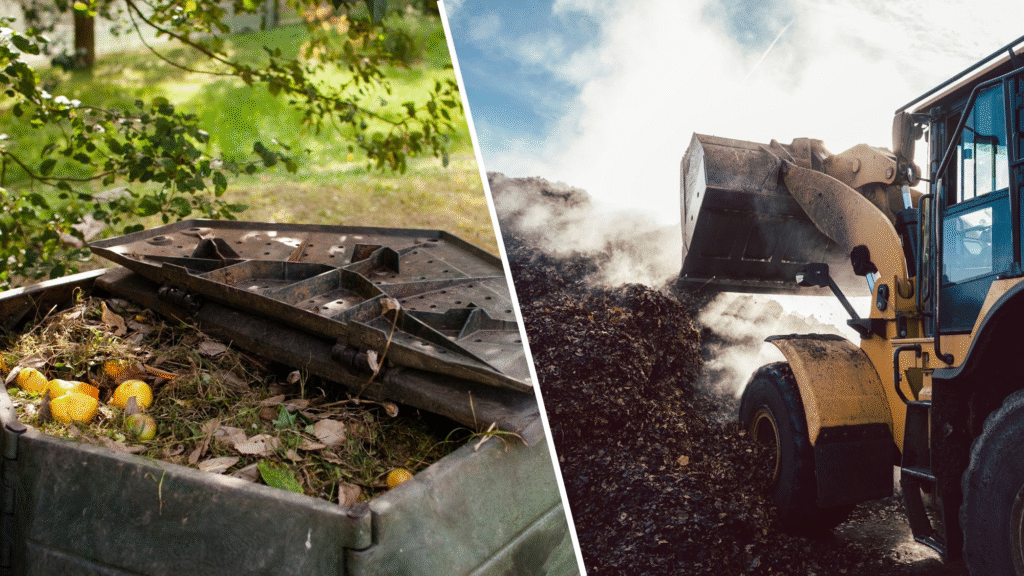
| Temperature | 50-60°C (122-140°F) | Ambient (~25°C / 77°F) |
| Timeframe | 90-180 days | 6-12 months |
| Facility | Municipal composting | Backyard compost pile |
| Certifications | BPI, OK Compost INDUSTRIAL, ASTM D6400 | OK Compost HOME, TÜV HOME |
Key takeaway: Most certified compostable bags are industrial compostable only. If you compost at home, look specifically for OK Compost HOME or TÜV HOME certification. Learn more about How to Choose Compostable Bags Suppliers.
How to Verify a Supplier’s Certification
Before ordering, verify your supplier’s certification:
1. Ask for the certification license number
BPI, TÜV, and other certifying bodies issue unique license numbers to certified manufacturers. Ask for the number.
2. Verify the certifying body
Only accept certification from recognized bodies:
| Certification | Certifying Body |
|---|---|
| BPI | Biodegradable Products Institute |
| OK Compost INDUSTRIAL | TÜV Austria |
| OK Compost HOME | TÜV Austria |
| ASTM D6400 | ASTM International |
| EN 13432 | CEN |
3. Confirm the certification covers the finished product
Some suppliers claim “our materials are certified.” This is not enough — the finished product must be certified. The manufacturing process can affect compostability.
Quick Verification Check
If you’re reviewing a supplier’s certification, here is a simple 3-step check:
Step 1: Ask for the certificate number.
Every certified product has a unique license number. A legitimate supplier will provide it without hesitation.
Step 2: Search the official database.
- BPI: Search the BPI directory using the product name or manufacturer
- OK Compost: Check TÜV Austria’s public list of certified products
- ASTM D6400: Ask for the testing report from an accredited lab
Step 3: Confirm the exact product is listed.
The certification must cover the exact product name, thickness, and specifications you are ordering. If the listed product differs, the certification does not apply.
FAQ
What does “certified compostable” mean?
“Certified compostable” means a product has been independently tested and verified to break down completely in a specific composting environment within a defined timeframe. The certification confirms the product meets standards like ASTM D6400 or EN 13432, leaves no toxic residue, and does not create microplastics.
Is a BPI certification worth it?
Yes — if your products are sold in North America and your customers require BPI-certified bags for their composting programs. The annual cost includes testing, renewal fees, and random batch checks. For US municipalities, BPI is the most recognized standard.
Is ASTM D6400 compostable?
ASTM D6400 is the US standard for compostability, not a certification itself. It specifies the requirements — 90% biodegradation in 180 days, disintegration into pieces smaller than 2mm, and no toxic residue. Products that meet ASTM D6400 can be certified by BPI.
What is the meaning of BPI certified?
BPI certification means the Biodegradable Products Institute has tested and verified that a product meets ASTM D6400 (US) standards for compostability. Products carrying the BPI logo have been independently tested for disintegration, biodegradation, and ecotoxicity in industrial composting conditions.
Is BPI compostable really compostable?
Yes — in industrial composting facilities. BPI certification confirms the product will break down completely within 180 days under the right conditions (50-60°C / 122-140°F). However, most BPI-certified products are not suitable for home composting.
How much does BPI certification cost?
Costs vary depending on the material and product type, but BPI certification typically requires: an application fee (around $500-1,000), laboratory testing (several thousand dollars), annual renewal fees, and random batch testing. Total costs range from $5,000 to $20,000+ per product.
Conclusion
Choosing the right certification matters — it directly determines whether your bag will actually break down in your local composting facility or backyard pile.
Key takeaways:
- BPI is the standard for North American industrial composting
- OK Compost INDUSTRIAL is the standard for European industrial composting
- OK Compost HOME is the only reliable way to compost in your backyard
- ASTM D6400 is the US standard BPI uses
- EN 13432 is the European standard OK Compost uses
- Always verify the certification covers the finished product, not just the raw materials
If you’re still unsure which certification fits your needs, contact us for help sourcing certified products. Choosing the right certification is just the first step toward sustainability. Ready to fully embrace your eco-friendly journey? Read our Zero Waste Lifestyle Guide to discover more tips on reducing your carbon footprint.