
Author: HEMCbags Team | Sustainable Packaging Specialists
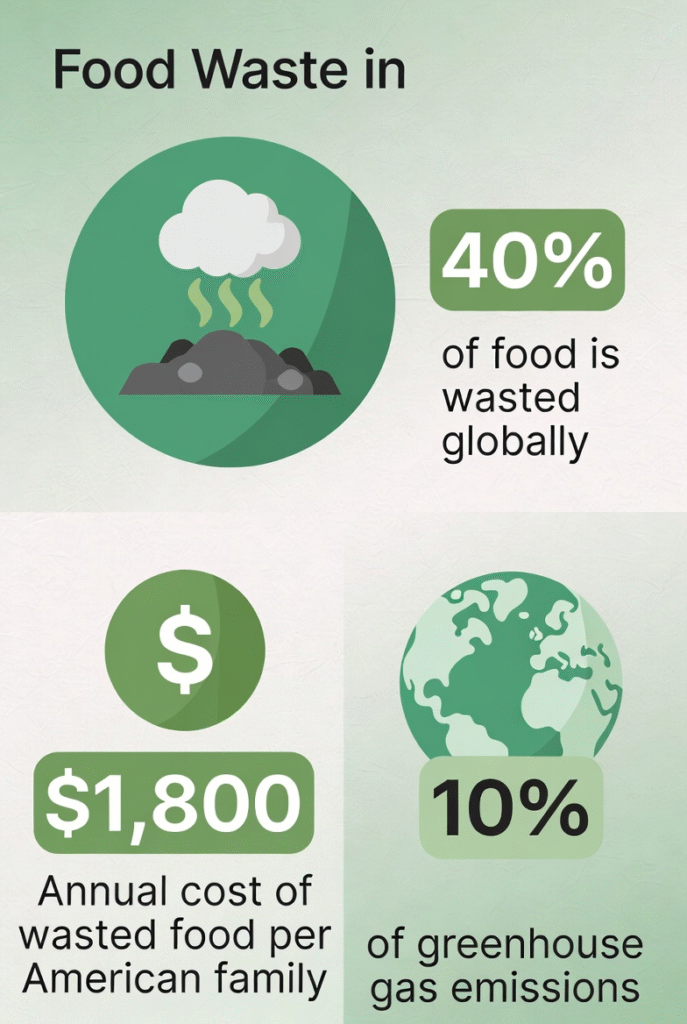
Quick Answer: Learn how to reduce food waste by planning meals, shopping with a list, storing food properly, and understanding date labels. The average American family wastes $1,800 per year on food, and food waste accounts for 10% of global emissions. Small daily changes save money and protect the planet.
At HEMCbags, we have worked with households, municipalities, and waste management programs across North America. Based on that experience, we have seen one thing consistently: reducing food waste is one of the most impactful actions a household can take, yet most people don’t know where to start.
This guide covers practical, research-backed strategies to cut food waste at home — from smart shopping and proper storage to creative use of leftovers and composting the rest.
Why Reducing Food Waste Matters
Food waste is a massive problem with serious environmental and financial consequences.
The scale of the problem:
- Roughly 40% of all food produced globally by weight is wasted between farm and fork
- The average American throws away nearly 300 pounds of food per year
- A family of four spends about $1,800 annually on food that is never consumed
- Food waste accounts for up to 10% of all global greenhouse gas emissions — more than four times the emissions of global airlines
Why it matters:
When food ends up in landfills, it decomposes without oxygen and produces methane — a greenhouse gas more potent than carbon dioxide. According to the U.S. Environmental Protection Agency (EPA), the average American household loses $728 per person annually to food waste — nearly $3,000 for a family of four. The U.S. Environmental Protection Agency (EPA) also estimates that food waste is responsible for 58% of methane emissions from municipal solid waste landfills — making it the single largest source.
According to the United Nations Environment Programme (UNEP), roughly 60% of all food waste comes from households — more than 1 billion meals wasted every day. Food waste also accounts for up to 10% of all greenhouse gas emissions. The World Resources Institute (WRI) estimates that reducing consumer food waste by just 20-25% by 2030 could save the world $120-$300 billion annually.
The good news is that reducing food waste is one of the easiest environmental problems to fix. Small changes in daily habits can make a significant difference, and can be part of a holistic zero-waste approach.
What We’ve Learned from Working with Waste Management Programs
After supplying compostable trash bags to municipalities and waste management partners, we have observed one key pattern: most household food waste comes from three areas — overbuying, improper storage, and confusion about date labels.
Based on feedback from households we’ve worked with, the most successful waste reduction strategies are simple and practical, not complicated. People who start with one or two small changes are more likely to stick with them long-term.
How to Reduce Food Waste: Step-by-Step Guide
Step 1: Plan Your Meals
Meal planning is the single most effective way to reduce food waste. According to UNEP, roughly 60% of all food waste comes from households, often starting with impulse purchases and lack of planning.
What to do:
- Check your fridge and pantry before making a shopping list. See what you already have and plan meals around those items.
- Write a specific shopping list based on your meal plan. Stick to it at the store. People who shop with a list buy fewer impulse items and waste less food.
- Plan for days you’ll eat out so you don’t overbuy. If you know you’re ordering pizza on Friday, don’t buy ingredients for a Friday dinner.
- Buy only what you need. Avoid bulk buying unless you have a specific plan for using the extra food.
As cookbook author Carleigh Bodrug notes, “If you head to the grocery store with a list, you’re buying items with intention”.
Step 2: Shop Smarter
Smart shopping habits prevent waste before it starts.
Practical tips:
- Don’t shop hungry. Impulse buys are more likely when you’re hungry.
- Buy “ugly” produce. Imperfect fruits and vegetables are just as nutritious and often cheaper.
- Choose frozen options when possible. Frozen spinach, for example, allows you to defrost only what you need.
- Resist bulk deals. Buying in bulk only saves money if you actually eat the food.
Step 3: Store Food Properly
Proper storage extends shelf life and prevents spoilage.
Storage guidelines:
| Food Type | Storage Method |
|---|---|
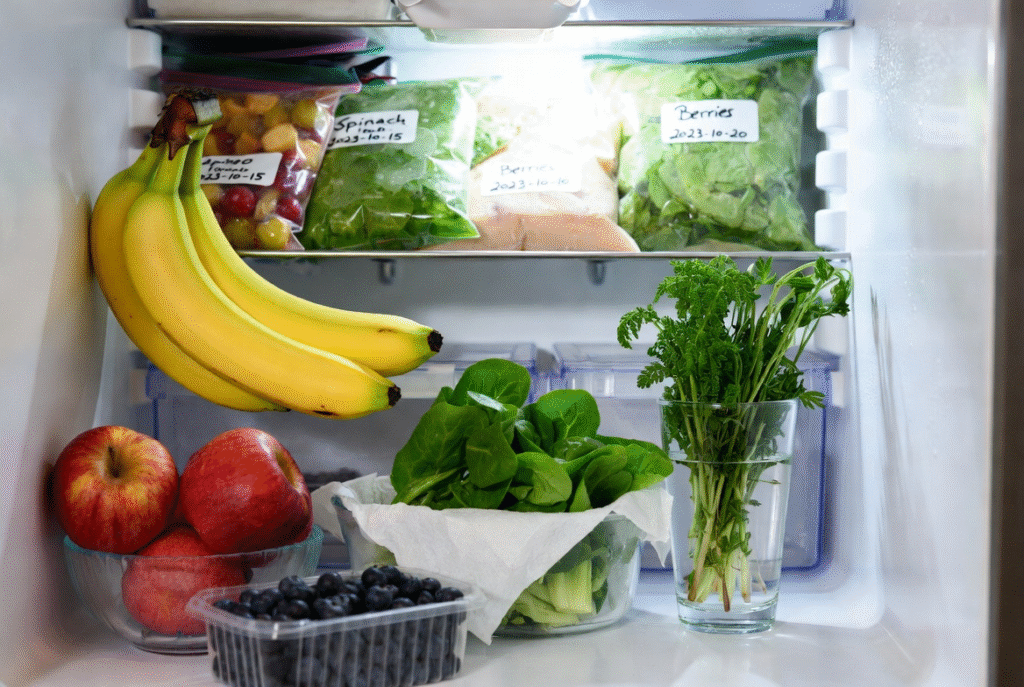
| Leafy greens | Store with a paper towel to absorb moisture. Keeps them dry and prevents wilting |
| Fresh herbs | Place stems in water like a bouquet to stay fresh longer |
| Apples, berries, vegetables | Keep in the fridge |
| Bananas, potatoes, onions | Keep outside the fridge in a cool, dark place |
| Dry goods | Store in airtight containers to maintain freshness |
| Meat and leftovers | Freeze immediately if not using within a few days |
Freeze liberally. You can freeze almost anything — eggs, meats, produce, sauces — whether fresh or cooked. Freeze in portions for easy access, and date and label everything.
Step 4: Understand Date Labels
Confusion about date labels is one of the biggest causes of food waste. According to the U.S. Food and Drug Administration (FDA), confusion over date labeling accounts for an estimated 20% of consumer food waste.
What date labels actually mean:
| Label | What It Means |
|---|---|
| “Best if Used By/Before” | Indicates when a product will be at its best flavor or quality. Not a safety date. Food is often perfectly safe to eat after this date |
| “Sell-By” | Tells the store how long to display the product for inventory management. Not a safety date |
| “Use-By” | The last date recommended for peak quality. For most foods, it is not a safety date (except infant formula) |
What to do: Trust your senses. If food looks, smells, and tastes fine, it’s probably safe to eat. As the New Jersey Department of Environmental Protection notes, “Food that is past the ‘sell by date’ is often edible. Taste it, smell it, and then decide”.
Step 5: Get Creative with Leftovers
Leftovers are often thrown away, but they can be transformed into new meals.
Chef-recommended ideas:
- Pesto can be made from almost any green. Arugula, kale, peas, or a combination.
- Frittata is a savory catch-all. Eggs + any leftovers (vegetables, meat, cheese scraps).
- Fried rice works with almost anything. Vegetable trimmings, leftover meats, and even cauliflower leaves.
- Smoothies are great for lumpy fruit and wilting greens.
- Stock from scraps. Save onion skins, garlic skins, carrot and celery ends in the freezer. When full, boil with water and spices for homemade stock.
Use parts you usually throw away:
- Chop parsley and cilantro stems into dishes — they’re perfectly edible
- Use carrot greens in pesto
- Use radish tops in salad
- Use broccoli stalks in stir fry
- Don’t peel carrots and potatoes unless necessary

Step 6: Share or Donate Surplus Food
Sometimes you have more than you can use. Don’t let it go to waste.
Options:
- Share with neighbors. Use apps like Olio to connect with people who can use your surplus food.
- Donate to food banks. Non-perishable goods that haven’t reached their sell-by date can feed others.
- Buy discounted food. Apps like Too Good To Go offer unsold meals from restaurants and shops at reduced prices.
Step 7: Compost the Rest
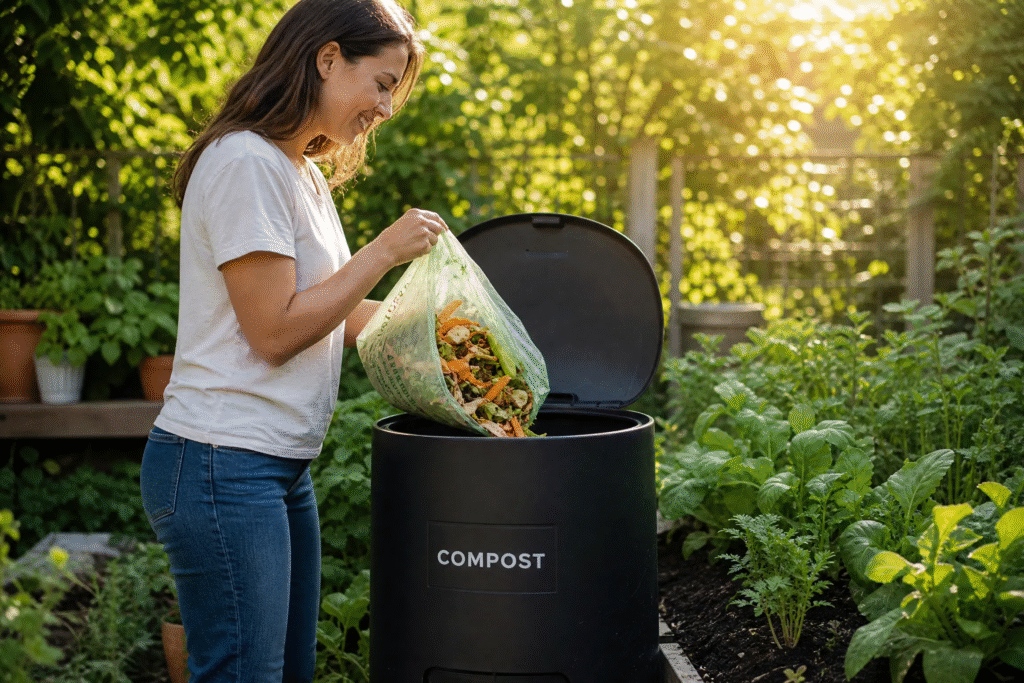
Some food waste is unavoidable — eggshells, watermelon rinds, onion skins, coffee grounds. Composting is the most environmentally responsible way to handle these scraps.
Why compost?
- Composting keeps food waste out of landfills, where it would produce methane.
- Compost returns nutrients to the soil, improves soil structure, and sequesters carbon.
- Your garden will thank you — compost is free, nutrient-rich fertilizer.
How to compost:
- Backyard compost pile: Combine greens (food scraps) and browns (dry leaves) in a bin.
- Municipal green bin: Many cities offer curbside collection for food scraps. Use compostable trash bags to collect kitchen waste cleanly.
- Worm bin (vermicomposting): For apartments and indoor spaces.
Using compostable trash bags: When collecting food scraps for municipal composting, use compostable trash bags to keep your countertop bin clean. In a home composting environment, certified home-compostable bags break down within weeks — no mess, no fuss.
FAQ
How to basic food waste?
Food waste happens when edible food is thrown away at any stage — from farms and stores to our homes. At the household level, it starts with overbuying, improper storage, cooking too much, or letting leftovers spoil. The average American family wastes about $1,800 worth of food each year.
What to do with food waste?
What you do depends on what kind of food waste it is. For unavoidable scraps like eggshells, coffee grounds, and vegetable peels, the best option is composting — in a backyard pile, with a worm bin, or through municipal green bin programs. For leftovers and surplus food, prioritize eating them, freezing them, or sharing them before they spoil. According to the EPA, the most effective approach is to follow the Food Recovery Hierarchy: first reduce surplus food at the source, then feed hungry people, then feed animals, then compost.
What are 5 steps to reduce food waste?
1) Plan your meals and shop with a specific list. 2) Store food properly to extend shelf life. 3) Understand date labels — most are about quality, not safety. 4) Get creative with leftovers and use parts you usually throw away. 5) Compost unavoidable food scraps.
How can we reduce food waste habits?
Start with one small habit and build from there. The most effective habits include: checking your fridge before shopping, freezing leftovers immediately, using up food before buying more, and making a meal plan every week. People who start with one habit are more likely to stick with it than those who try to change everything at once.
How to reduce ways?
The most impactful ways to reduce food waste are: meal planning, smart shopping with a list, proper food storage, understanding date labels, creative use of leftovers, and composting unavoidable scraps. These six actions cover the entire food journey from shopping to disposal.
How can I reduce my food waste?
Start with meal planning — it’s the single most effective action. Check your fridge and pantry before shopping, write a specific list, and stick to it. Store food properly to extend shelf life. Understand that most date labels are about quality, not safety. Get creative with leftovers and freeze extras. Finally, compost any unavoidable food scraps using a backyard bin or municipal program.
Conclusion
Reducing food waste is one of the simplest and most effective ways to save money and protect the planet. You don’t need to be perfect — small changes add up.
Key takeaways:
- Plan meals and shop with a list to avoid overbuying
- Store food properly to extend shelf life
- Understand date labels — most are about quality, not safety
- Get creative with leftovers and use parts you usually throw away
- Share surplus food with neighbors or donate to food banks
- Compost unavoidable food scraps to keep them out of landfills
Ready to start reducing food waste in your kitchen?
If your city offers municipal composting, compostable trash bags make collecting food scraps clean and simple. Learn more about composting basics to get started.