
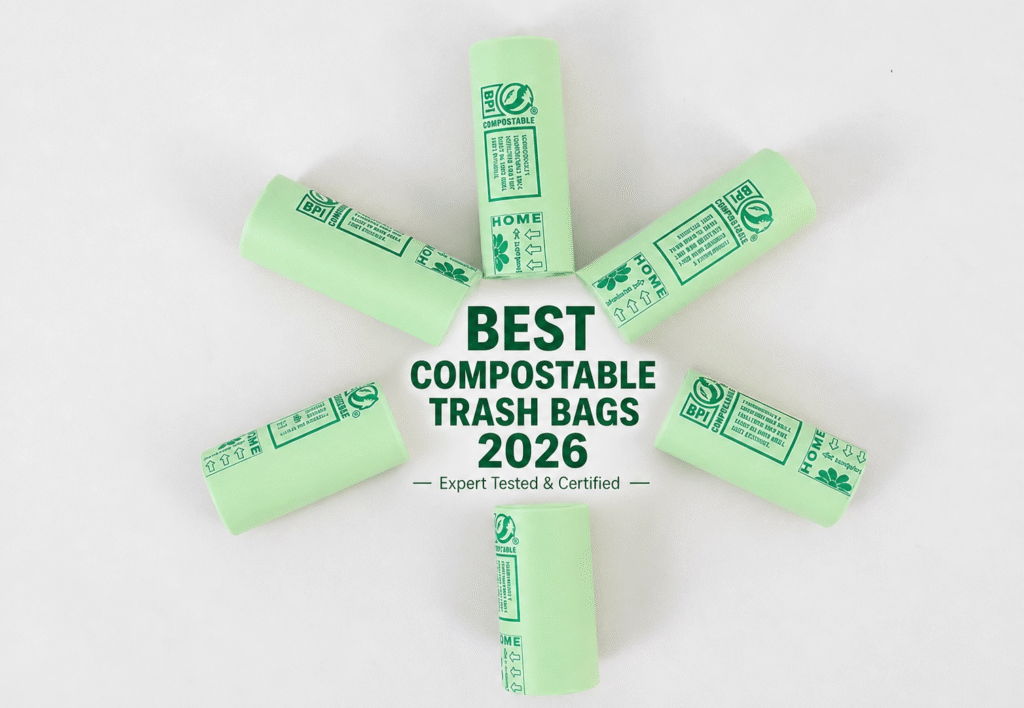
Quick Answer: The best compostable trash bags are those certified to ASTM D6400 or EN 13432 standards — never settle for a vague “biodegradable” label. Our top pick is the UNNI Compostable Trash Bag for its rare home-compost certification and reliable strength. If you see no BPI or TÜV logo on the box, put it back. Uncertified bags can leave behind invisible microplastic pollution.
Switching to compostable trash bags is one of the simplest and most impactful changes you can make for a greener home. Traditional plastic bags can take over 1,000 years to degrade in a landfill, all the while leaving behind harmful microplastics. In contrast, certified compostable bags are designed to break down into non-toxic organic matter, returning valuable nutrients to the earth. This comprehensive guide will help you navigate the world of eco-friendly trash bags — whether you search for compostable garbage bags, biodegradable trash bags, or biodegradable garbage bags, the rules for choosing wisely are the same.
Quick Picks (At a Glance)
- Best Overall: UNNI Compostable Trash Bags
- Best for Home Composting: UNNI Compostable Trash Bags (with OK Compost HOME certification)
- Best Heavy-Duty: Simply Bio 13 Gallon Drawstring Bags
- Best Value Heavy-Duty: Hippo Sak Plant-Based Tall Kitchen Bags
- Best Premium Pick: HoldOn Compostable Tall Kitchen Bags
- Best Budget Option: Reli. Eco-Friendly Trash Bags
- Need help with sizing? Check our Comprehensive Trash Bag Size Guide to find the perfect fit for your bin.
Biodegradable Bags vs. Compostable Bags: The Critical Difference
Before you buy, it’s crucial to understand that “biodegradable” and “compostable” are not interchangeable. The terms are often used as if they mean the same thing, but their differences have serious environmental consequences.
Compostable Trash Bags are a strictly certified subset of biodegradable products. They are engineered to break down completely into water, CO₂, and non-toxic organic matter within a defined timeframe (typically 90–180 days) under specific composting conditions. By law, they must meet standards like ASTM D6400 or EN 13432 and leave behind zero microplastics.
Biodegradable Garbage Bags, by contrast, carry a broad and largely unregulated label. The term “biodegradable” has no universal legal timeframe attached to it. Many of these bags are petroleum-based plastics formulated to merely fragment into smaller pieces. They can persist in the environment for years as microplastic pollution, sometimes carrying toxic residues with them.
The Golden Rule: All compostable bags are biodegradable, but very few biodegradable bags are compostable. Whether you call them compostable garbage bags or compostable trash bags, the only way to guarantee an eco-friendly choice is to look for the BPI certification logo or TÜV logo every single time.
What to Look For Before You Buy: A Quick Guide
To ensure you’re choosing a high-quality, genuinely eco-friendly product, look for these key indicators:
- Trusted Certifications: This is non-negotiable. Look for logos from these recognized bodies:
- BPI (Biodegradable Products Institute): Certifies compliance with ASTM D6400 (the U.S. standard) for industrial composting.
- TÜV Austria: Certifies products for both industrial (“OK Compost INDUSTRIAL”) and home (“OK Compost HOME“) composting environments, meeting the European EN 13432 standard.
- Plant-Based Materials: Quality bags are made from renewable resources like cornstarch, PLA (polylactic acid), and PBAT. If the material isn’t disclosed, be suspicious.
- Thickness (Mil) & Durability: Mil measures bag thickness. A 0.9 mil to 1.1 mil bag handles regular kitchen waste well. For heavy, wet scraps, stay above 1.0 mil and look for “tear-resistant” or “leak-proof” in the description.
- Home vs. Industrial: Be honest about where your waste goes. The “OK Compost HOME” mark means a bag is safe for your backyard pile. Without it, the bag likely needs the sustained high heat of a municipal or commercial composting facility to break down.
If you see a BPI logo but want to understand exactly what that certification guarantees — from lab testing to real-world composting — we’ve covered every detail in our guide: What Does BPI Compostable Mean? (2026 Guide).
Our Rigorous Testing Methodology: How We Picked the Best
To bring you the most accurate and reliable recommendations, our team conducted extensive real-world testing and evaluation of numerous compostable trash bags. Our methodology focused on several key performance indicators:
- Certification Verification: We meticulously checked for valid certifications (BPI, OK Compost HOME/INDUSTRIAL, EN 13432) to ensure genuine compostability.
- Material Analysis: We examined the composition (PLA, PBAT, cornstarch, etc.) and transparency of each brand.
- Durability & Strength Tests: Bags were subjected to various stress tests, including filling with typical kitchen waste (wet and dry), sharp objects, and heavy loads to assess tear and puncture resistance.
- Leak-Proof Performance: We specifically monitored for leaks over extended periods with wet organic waste.
- Fit & Usability: We tested bags in standard kitchen bins (13-gallon) and other common sizes to evaluate fit, ease of tying, and removal.
- Odor Control: We observed how effectively bags contained odors over several days.
- Decomposition Observation (Home Composting): For bags certified ‘OK Compost HOME’, we conducted controlled backyard composting experiments to observe their breakdown process.
Our goal is to provide you with insights based on scientific principles and practical experience, ensuring you can make an informed decision for your home or business.
Top 6 Best Compostable Trash Bags of 2026, Expert Tested
Here are our top picks for the best compostable trash bags this year, ranked by certification integrity, material quality, real-world durability, and overall value.
| Rank | Brand & Model | Best For | Key Certifications & Material | Thickness & Features | Available Sizes (Gallons) | Price Range |
|---|---|---|---|---|---|---|
| 1 | UNNI Compostable Trash Bags | Best Overall | ASTM D6400, BPI, OK Compost HOME | 0.9 Mil, Extra strong | 2.6-65 | $18.98 USD–$85.95 USD |
| 2 | HoldOn Compostable Tall Kitchen Bags | Best Premium Pick | BPI | 1.1 Mil, Drawstring handles | 4,13 | $13 USD–$25.7 USD |
| 3 | BioBag 13 Gallon Kitchen Bags | Best Made in USA | ASTM D6400, BPI | Plant-based resin, Breathable | 13 | $62.25 ($0.43 / count) |
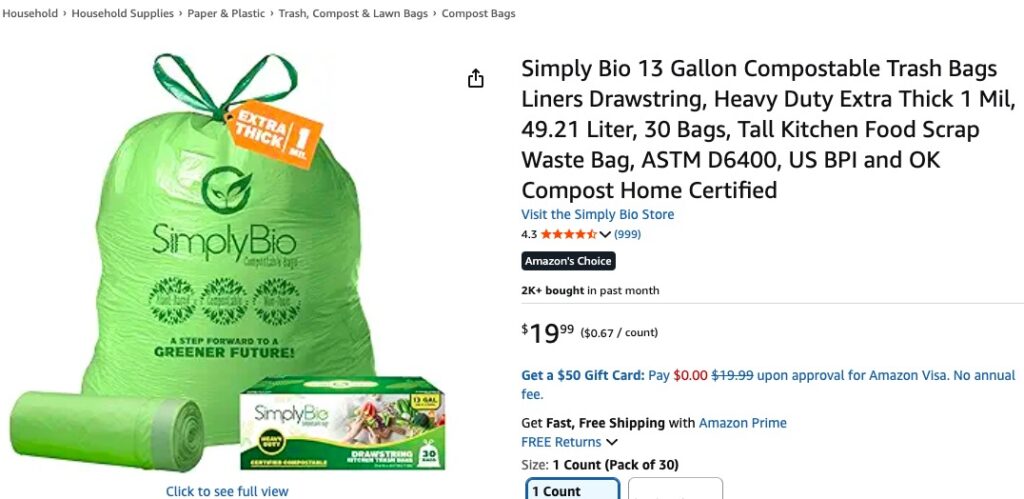
| 4 | Simply Bio 13 Gallon Drawstring Bags | Best Heavy-Duty | BPI, OK Compost | 1.0 Mil, Tear & puncture-resistant | 13 | $19.99 ($0.67 / count) |
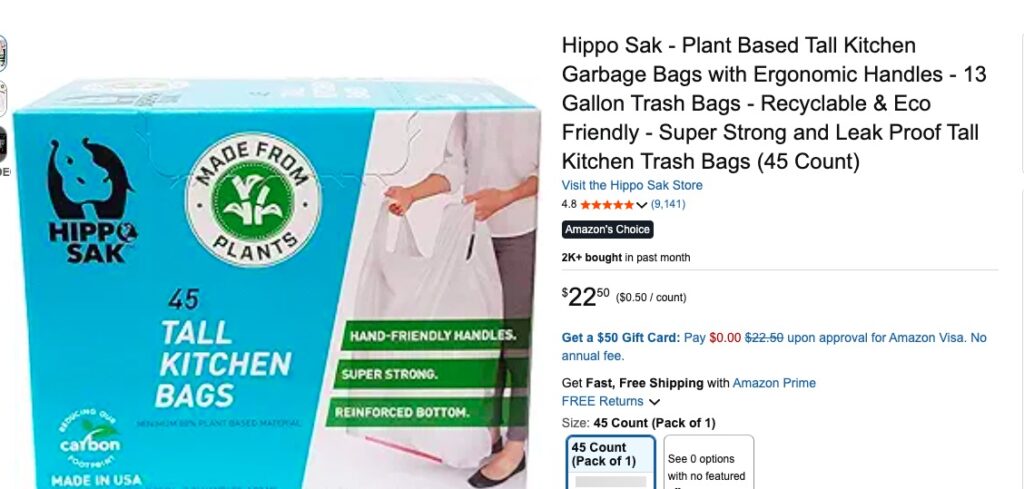
| 5 | Hippo Sak Plant-Based Tall Kitchen Bags | Best Value Heavy-Duty | BPI | Reinforced bottom, Strong | 13 | $22.50 ($0.50 / count) |
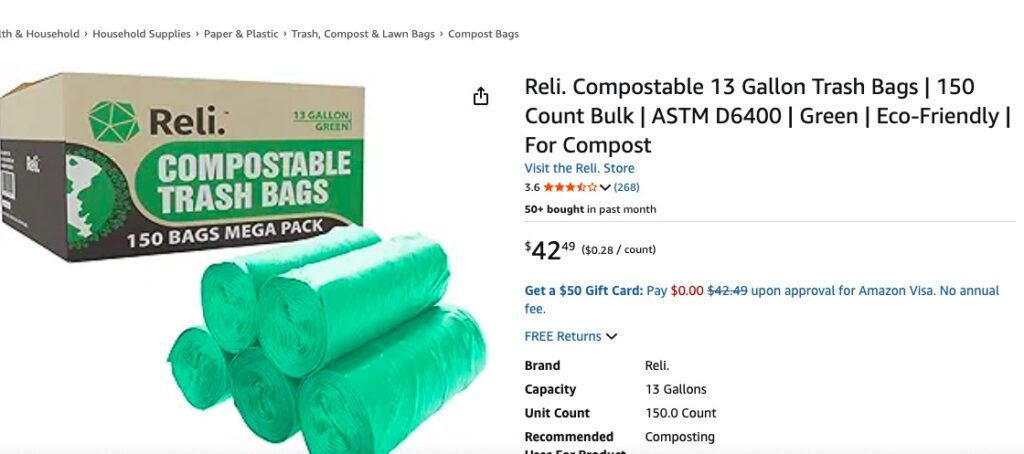
| 6 | Reli. Eco-Friendly Trash Bags | Best Budget Option | ASTM D6400 | Good for light, dry waste | 13 | $41.99 ($0.28 / count) |
UNNI Compostable Trash Bags — Best Overall
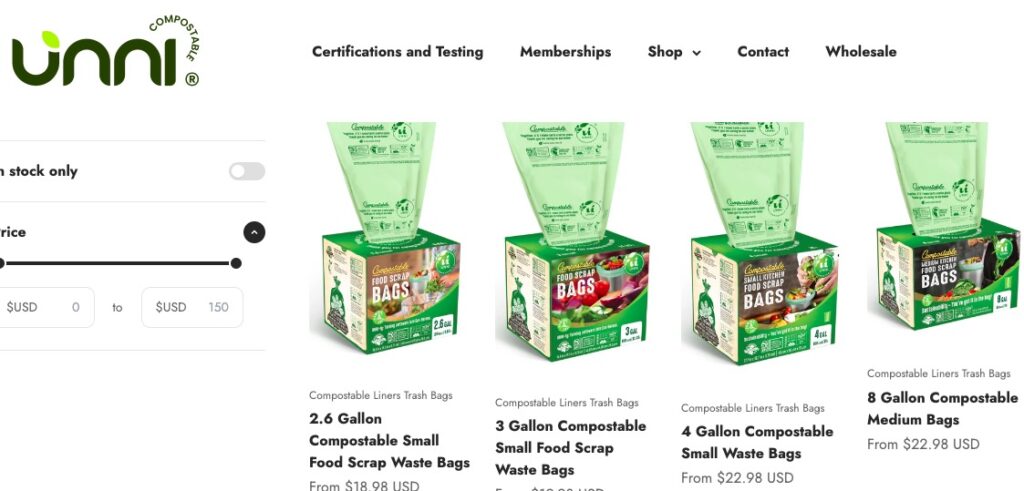
UNNI remains the gold standard. These 13-gallon bags are extra strong at 0.9 mil, holding up to heavy, wet kitchen scraps without the bottom giving out. Their triple certification — BPI, CMA, and critically, OK Compost HOME — means they are verified to decompose in both industrial facilities and your own backyard compost pile. A 50-count roll offers excellent per-bag value, making it a reliable choice you can stick with long-term.
HoldOn Compostable Tall Kitchen Bags — Best Premium Pick
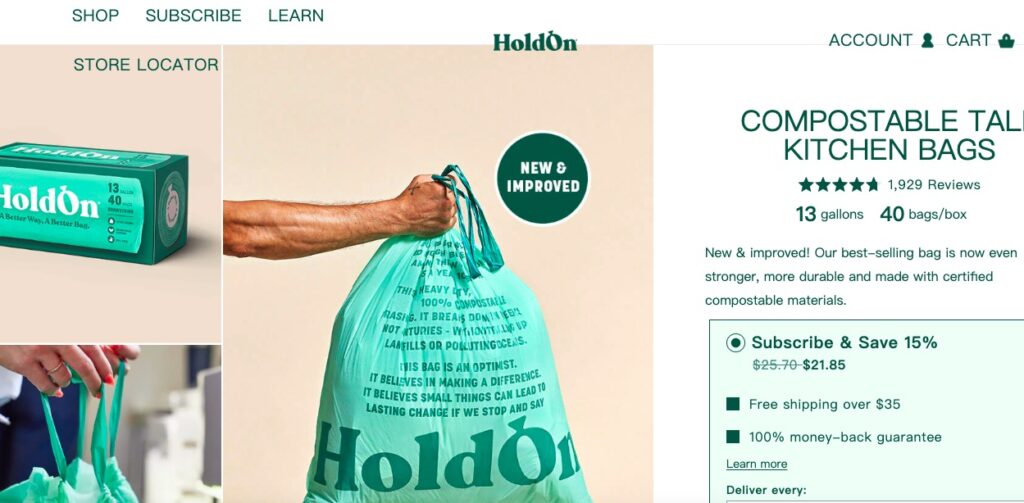
If you want the best experience money can buy, HoldOn is it. Their 13-gallon, 1.1 mil bags are made entirely from PBAT, PLA, and cornstarch with absolutely zero petroleum plastics. The standout feature is the convenient drawstring handles, a genuine rarity in the compostable market. HoldOn is also a certified B Corporation, meaning its entire business model meets high standards of social and environmental performance. These bags handle wet scraps without incident and carry BPI certification.
BioBag 13 Gallon Kitchen Bags — Best Made in USA
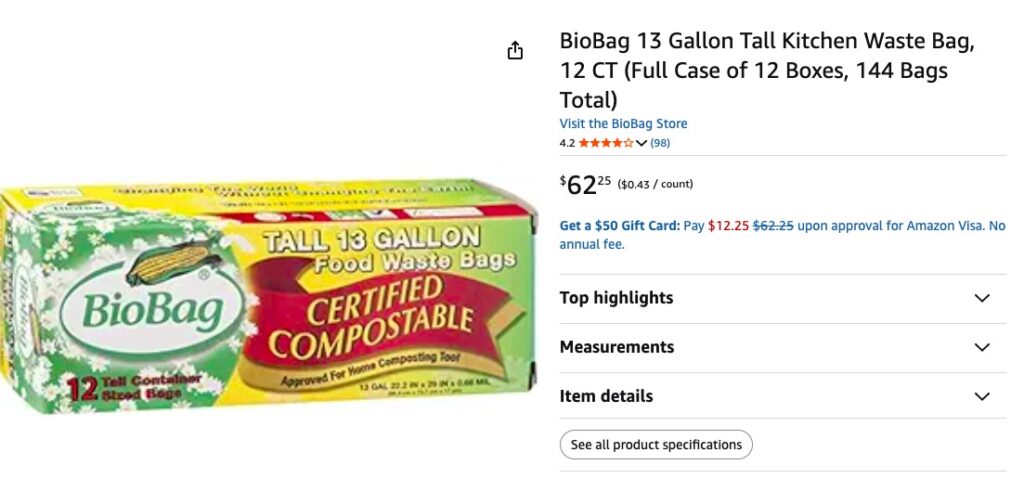
BioBag pioneered this category, and its products are made in the USA. These bags are BPI-certified, ASTM D6400-compliant, and manufactured from a proprietary plant-based resin containing no polyethylene. A unique advantage is that they are breathable, which helps reduce moisture buildup and odors in your kitchen bin. They are widely accepted in municipal composting programs, making them a superb choice if your city offers curbside organics collection. A 48-count box provides solid, reliable value.
Simply Bio 13 Gallon Drawstring Bags — Best Heavy-Duty
When strength is your absolute priority, Simply Bio delivers. At a thick 1.0 mil, these bags are purpose-built to be tear-resistant and leak-proof, managing the most demanding kitchen waste without failing. They carry both BPI and OK Compost certifications, confirming that heavy-duty performance doesn’t come at the expense of verifiable eco-credentials. The drawstring top reinforces their user-friendly, no-compromise design.
Hippo Sak Plant-Based Tall Kitchen Bags — Best Value Heavy-Duty
Hippo Sak is the budget-friendly workhorse. While it sits at a lower price than other heavy-duty options, it does not sacrifice core strength. These BPI-certified bags are known for their reinforced bottom seam and ability to carry significant weight without tearing. They are an ideal pick when you need a durable solution for larger bins or heavier waste streams but need to control your monthly costs.
Reli. Eco-Friendly Trash Bags — Best Budget Option
For light, dry waste streams — think office paper or bathroom trash — Reli. offers an accessible entry point. While noticeably thinner than premium brands and not recommended for wet or heavy organic kitchen waste, their ASTM D6400 certification guarantees genuine compostability. They are a smart choice for bulk purchasing and reducing your plastic footprint without putting pressure on your finances.
The brands above represent excellent consumer-facing picks, but the compostable packaging industry itself runs much deeper. For a broader look at the global players shaping this space — including factory-direct suppliers and wholesale innovators — see our companion guide: Top 10 Compostable Bags Manufacturers and Suppliers in the World (2026).
How to Properly Use & Dispose of Compostable Bags
Follow these essential practices to actually capture the environmental benefit you’re paying for:
- Verify Local Guidelines First: Always check with your local waste authority. Some only accept BPI-certified bags. Others, frustratingly, reject all compostable plastics regardless of certification. Know before you throw.
- Manage Moisture and Weight: Compostable bags are strong by design, but they remain more moisture-sensitive than conventional plastic. Avoid overfilling beyond the stated weight limit, and drain excess liquid from food scraps before they go in to prevent premature breakdown.
- Store Them Correctly: Keep unused bags in a cool, dry place away from direct sunlight and heat sources. Exposure to humidity and high temperatures can activate the decomposition process on the shelf, degrading the bags before you even get to use them.
- Never Put Them in Recycling: Compostable plastics cannot be recycled with conventional plastics. They will contaminate an entire batch. They must go into a composting bin or, only as a last resort, the landfill-bound trash.
FAQ
Are biodegradable garbage bags the same as compostable trash bags?
No, and the difference is critical. “Biodegradable” is an unregulated term with no set timeframe, and such bags can break into microplastics. “Compostable” bags are certified to break down completely into non-toxic organic matter within a defined timeframe under specific conditions.
What is the best compostable garbage bag?
After hands-on testing, the UNNI Compostable Trash Bag earned our top overall spot. Its triple certification—BPI, CMA, and the critical OK Compost HOME—proves it can break down in both industrial facilities and your backyard pile. For heavy-duty, leak-prone loads, Simply Bio provides the best strength with its 1.0 mil thickness and a reliable drawstring handle.
Are compostable garbage bags worth it?
Yes — if you buy certified and dispose of them correctly. They cost more than conventional plastic bags, but the value comes from diverting organic waste from landfills, avoiding long-term microplastic pollution, and returning nutrients to the soil.
What are the most eco-friendly trash bags that help the environment?
The most eco-friendly trash bags carry trusted third-party certifications like BPI or TÜV’s OK Compost HOME, are made from renewable plant-based materials (cornstarch, PLA, PBAT), and are disposed of through active composting — whether your city’s curbside organics program or a home pile.
What is the difference between compostable and biodegradable bags?
Compostable bags are a strictly certified category designed to break down completely into water, CO₂, and non-toxic biomass within a set timeframe (approx. 90–180 days) under specific conditions. They leave behind no microplastics. Biodegradable bags have no such legal definition; they can be petroleum-based and merely fragment into smaller plastic pieces that persist in the environment. Always look for a certification logo — “biodegradable” alone doesn’t guarantee anything.
What are the drawbacks of biodegradable bags?
The main drawback of bags labeled only “biodegradable” is the lack of regulation. They can fragment into microplastics, contain chemical additives that leave toxic residues, and still fail to decompose in real-world land or marine environments.
Can I put compostable bags in my home compost pile?
Some can. You must see a specific “OK Compost HOME” or similar certification on the packaging. Most standard bags require the higher, consistent heat of an industrial composting facility to degrade fully.
How long do compostable bags take to decompose?
In a commercial composting facility, certified bags are designed to biodegrade within 10–45 days. In ideal home composting conditions, they can take 90–180 days. Low-temperature or passive backyard piles can extend that timeline significantly.
Conclusion
Making the switch to certified compostable trash bags is a practical, daily action that supports a healthier planet. The key is choosing a bag that fits your specific disposal reality — from the backyard-ready UNNI to the relentlessly strong Simply Bio. Start by checking your local composting guidelines, pick one of our top-rated bags that aligns with them, and begin confidently diverting your kitchen waste from landfills. Your soil, and the oceans, will be better for it.
If you’re comparing compostable vs. traditional kitchen bags, we’ve also ranked the best standard 13 gallon trash bags of 2026 based on Consumer Reports’ latest lab tests.
About the Author
Chris Xiang
Chris Xiang is a compostable packaging specialist with over a decade of hands-on experience in the industry. A firm believer that the best compostable bag is the one that actually gets composted correctly, Chris combines real-world supply-chain knowledge with a practical, no-greenwashing approach to sustainable packaging.