
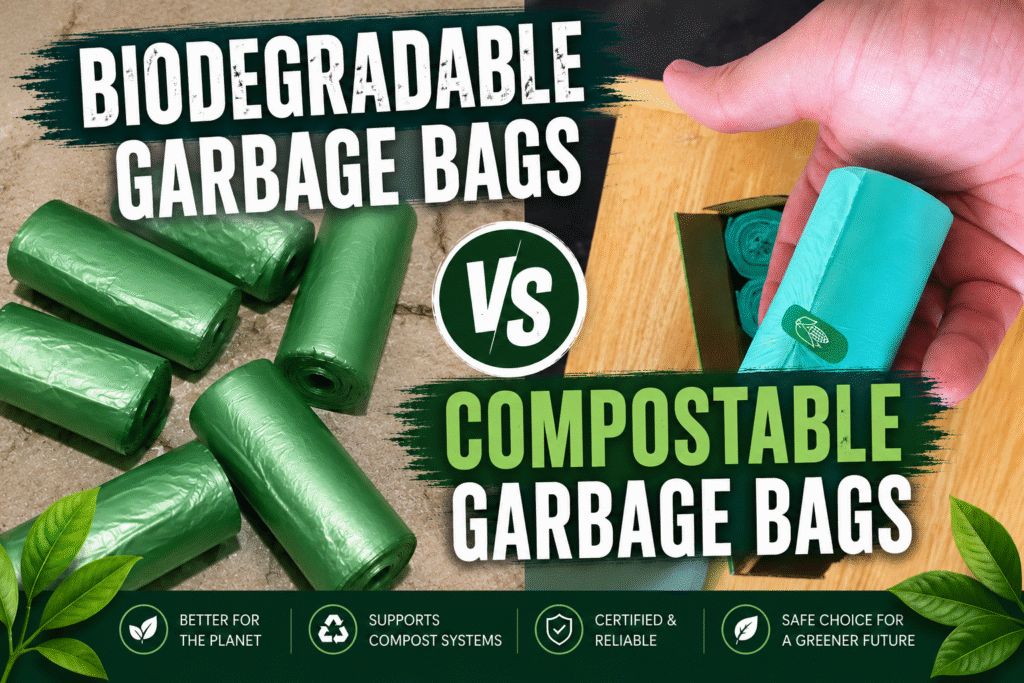
Compostable garbage bags must meet certification standards such as ASTM D6400 or EN 13432 and break down into water, CO₂, and biomass within 90–180 days under composting conditions. Biodegradable garbage bags have no universal standard, no required timeframe, and may leave microplastic residues behind.
Over the years, we have spoken with multiple municipal composting programs and waste management companies that rejected products labeled “biodegradable” because they lacked recognized compostability certifications.
At HEMCbags, we have supplied more than 50 million certified compostable bags to distributors, retailers, and waste management companies across North America and Europe. Over the past decade, we have seen one misunderstanding cause more problems than any other: the confusion between “biodegradable” and “compostable.”
This guide explains the real difference — not just definitions, but what actually happens when these bags reach disposal facilities.
➡️ Looking for product recommendations? See our top-rated compostable trash bags.
What We’ve Learned After Supplying 50 Million Compostable Bags
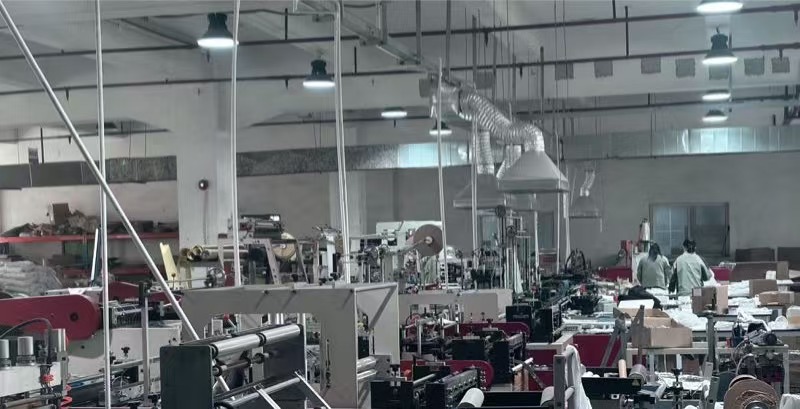
After manufacturing and supplying compostable bags for more than 10 years, we have found that most customer complaints and compliance issues originate from three mistakes:
1. Assuming “biodegradable” means the same as “compostable”
One of our distributor partners in Texas told us they had to recall 50,000 units of a “biodegradable” bag that didn’t meet the certification they promised. Their customers — mostly municipal composting programs — rejected the entire shipment. That’s when they stopped selling anything without BPI or OK Compost logos.
2. Ignoring certification logos
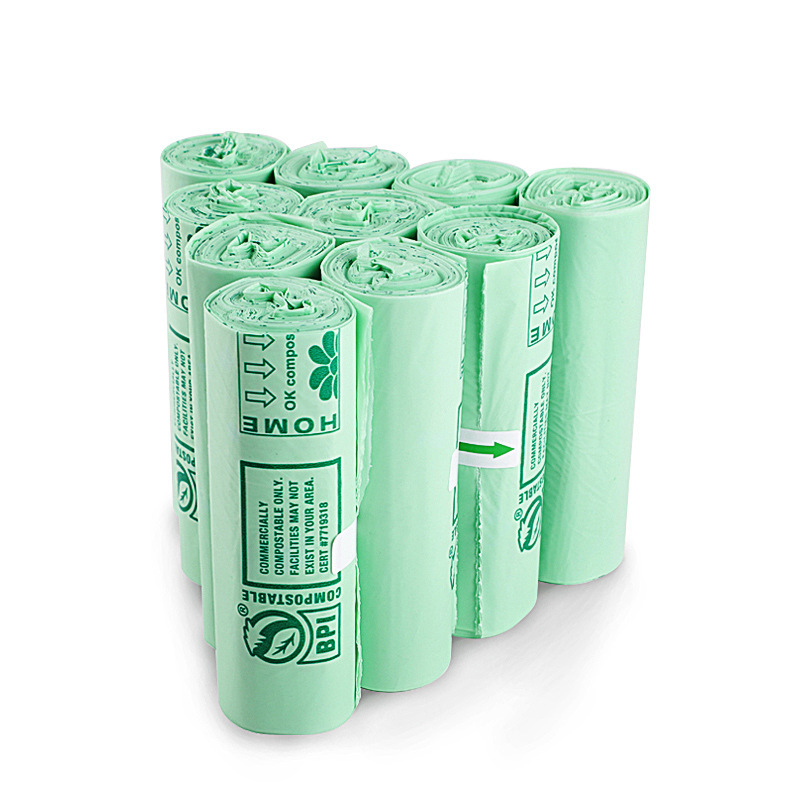
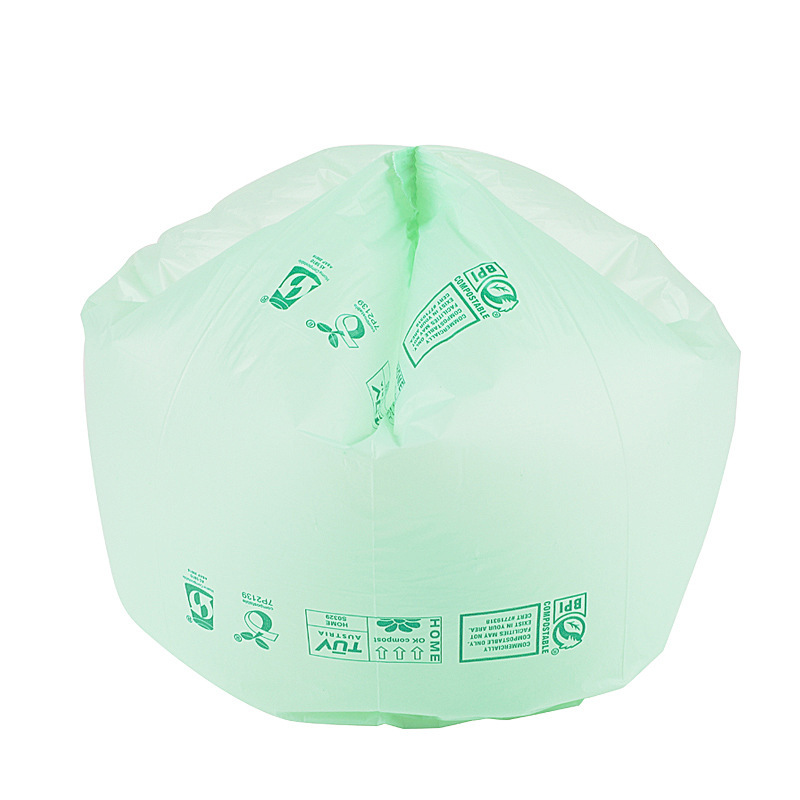
BPI, OK Compost, and ASTM D6400 logos are not decorative. They are legal requirements for many composting programs. Based on conversations with hundreds of buyers over the past decade, many first-time buyers initially assume biodegradable and compostable mean the same thing.
3. Choosing price over verification
The lowest-cost “compostable” bags often lack proper certification. We have seen countless cases where a buyer saved $0.05 per bag but ended up with rejected waste loads, failed compliance audits, and damaged customer relationships.
Why Most Buyers Get Confused
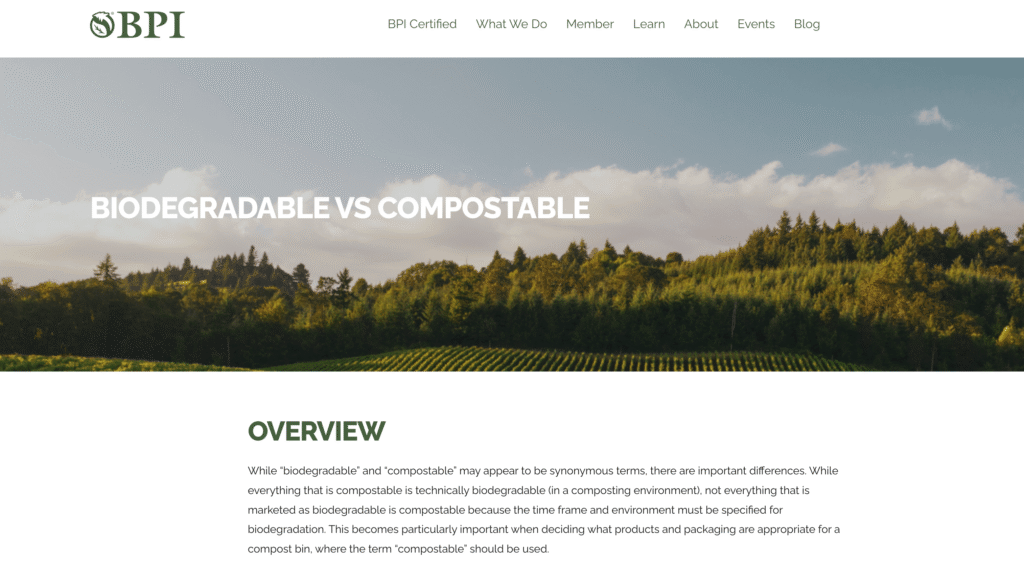
The term “biodegradable” sounds scientific and credible. But in sales and marketing for single-use products, the Biodegradable Products Institute (BPI) states that “biodegradable” is not an appropriate marketing claim because it lacks specificity on timeframe and environment.
A product can be called “biodegradable” whether it takes 1 year, 50 years, or 500 years to break down. There is no legal requirement to specify conditions, no required timeframe, and no third-party verification.
In contrast, compostable is a legally defined term. Products labeled “compostable” must meet ASTM D6400 (US) or EN 13432 (Europe) standards, including:
- 90% biodegradation within 180 days
- Disintegration into pieces smaller than 2mm
- No toxic residue
- Third-party testing and annual renewal
Under California’s SB 567, any product labeled “compostable” must meet specific ASTM standards or face civil penalties. Similarly, the FTC Green Guides warn against using unqualified “biodegradable” claims that cannot be substantiated.
Biodegradable vs Compostable Trash Bags: Quick Comparison
| Feature | Biodegradable Trash Bags | Compostable Trash Bags |
|---|---|---|
| Legal standard | None | ASTM D6400 / EN 13432 |
| Breakdown timeframe | Unspecified (years to decades) | 90-180 days |
| Conditions required | Unknown | Industrial composting (50-60°C / 122-140°F) |
| Leaves microplastics | Often yes | No (when composted correctly) |
| Third-party certification | No | Yes (BPI, OK Compost) |
| Works in landfill | No | No |
| Works in composting | Rarely | Yes |
Are Biodegradable Garbage Bags Really Biodegradable?
Yes, biodegradable garbage bags can break down under certain conditions, but the term “biodegradable” has no universal legal standard or required timeframe. Most biodegradable bags require oxygen, heat, and moisture to decompose and may remain intact for years in landfills where these conditions are limited.
The University of Plymouth’s International Marine Litter Research Unit tested biodegradable bags in soil for three years. Many remained intact. Some could still carry groceries after this period.
According to the U.S. Environmental Protection Agency (EPA) , landfills are designed as “dry tombs” — engineered to keep waste dry and minimize moisture infiltration, which actively works against biodegradation
If you don’t have access to a municipal composting facility nearby, look for compostable garbage bags featuring the OK Compost HOME or Seedling logo. These are specifically designed for backyard composting and are the most eco-friendly choice for home use.
Why Several U.S. States Restrict Biodegradable Claims
Because the term “biodegradable” has been widely misused, four US states have banned it on single-use products:
| State | Restriction |
|---|---|
| California (SB 567) | Prohibits “biodegradable,” “degradable,” and similar terms on single-use plastic bags |
| Washington | Restricts “biodegradable” claims on disposable plastic products |
| Minnesota | Similar restrictions on misleading environmental claims |
| Oregon | Limits use of “biodegradable” in marketing |
These laws reflect a growing regulatory recognition that uncertified “biodegradable” claims mislead consumers. The FTC Green Guides further warn that unqualified “biodegradable” claims are deceptive unless the product breaks down within a reasonably short time after customary disposal.
What Certifications Actually Matter?
For a bag to be truly compostable, it must carry one or more of these recognized certifications:
| Certification | Market | Environment | Key Requirement |
|---|---|---|---|
| ASTM D6400 | US | Industrial composting | 90% degradation in 180 days |
| EN 13432 | Europe | Industrial composting | 90% degradation in 180 days, disintegration in 12 weeks |
| BPI | North America | Industrial composting | Verifies ASTM D6400 compliance + annual testing |
| OK Compost INDUSTRIAL | Global | Industrial composting | TÜV Austria certification |
| OK Compost HOME | Global | Home composting | Ambient temperature degradation |
If a product has no logo, the claim is unverified. Do not rely on “biodegradable” claims without third-party certification.
Industrial Compostable vs Home Compostable: What’s the Difference?
| Industrial Compostable | Home Compostable | |
|---|---|---|
| Environment | Municipal composting facility | Backyard compost pile |
| Temperature | 50-60°C (122-140°F) | Ambient (~25°C / 77°F) |
| Timeframe | 90-180 days | 6-12 months |
| Certification | BPI, OK Compost INDUSTRIAL | OK Compost HOME, TÜV HOME |
Most certified compostable bags are industrial compostable only. If you compost at home, look for the OK Compost HOME logo.
Best Compostable Trash Bags in 2026
If you are looking for certified compostable trash bags that actually work, we have tested and compared the top options.
➡️ See our full guide: Best Compostable Trash Bags 2026 – Top Picks, Reviews & Buying Guide
Includes UNNI, BioBag, Simply Bio, Green Paper Products, and more — with certification verification, thickness comparisons, and pricing.
Not sure what size you need? Check our Trash Bag Size Guide before ordering.
How Commercial Buyers Choose Compostable Garbage Bags
For businesses, distributors, and waste management companies, choosing the right bag requires additional considerations. Here is what we recommend based on hundreds of commercial projects:
Verify Certification Before Ordering
Ask for current BPI or TÜV certificates. Do not accept “our materials are certified” — the finished product must be certified. We provide certificates with every quote.
Match the Bag to the Disposal Facility
| Disposal Method | Required Certification |
|---|---|
| Municipal composting (US) | BPI + ASTM D6400 |
| Municipal composting (Europe) | OK Compost INDUSTRIAL + EN 13432 |
| Home / backyard composting | OK Compost HOME or TÜV HOME |
Custom Sizes and Printing
For commercial buyers, standard retail sizes are often not the most cost-effective. We offer custom sizes from 2.6 to 100 gallons, custom thickness from 0.65 to 3 mil, and full-color printing with eco-friendly inks.
MOQ and Lead Time
| Order Type | Typical MOQ | Lead Time |
|---|---|---|
| Standard retail sizes | 10,000 pieces | 15-20 days |
| Custom sizes | 10,000 pieces | 15-20 days |
| Custom printing | 10,000 pieces | 15-20 days |
| Private label packaging | 10,000 pieces | 15-20 days |
Request Samples Before Bulk Orders
We recommend testing the bag with your actual waste stream. We provide sample rolls at no cost for qualified commercial buyers.
➡️ For commercial buyers: Contact us for wholesale pricing, custom options, and sample requests
FAQ
Are biodegradable garbage bags really biodegradable?
Yes, biodegradable garbage bags can break down under certain conditions, but the term “biodegradable” has no universal legal standard or required timeframe. Most biodegradable bags require oxygen, heat, and moisture to decompose and may remain intact for years in landfills where these conditions are limited.
Do compostable garbage bags break down in the landfill?
No. Compostable bags are designed for industrial composting facilities, not landfills. Landfills lack the oxygen, heat, and moisture needed for composting.
What is the difference between biodegradable plastic and compostable plastic?
Compostable plastic meets strict standards (ASTM D6400/EN 13432) and breaks down within 90-180 days. Biodegradable plastic has no legal standard, no required timeframe, and may leave microplastics.
How to tell if a bag is biodegradable?
Look for certification logos — not the word “biodegradable” alone. BPI, OK Compost, ASTM D6400, or EN 13432 logos indicate verified compostability. Without these logos, the claim is unverified.
What are the drawbacks of biodegradable bags?
Biodegradable bags have no legal standard, don’t break down in landfills, may create microplastics, contaminate compost streams, and cost 2-3x more than regular plastic. Four US states have banned the term on single-use products.
How long does it take for biodegradable garbage bags to decompose?
It depends on the environment. In industrial composting: 90-180 days for certified compostable bags. In landfills: unknown — many never fully decompose. The term “biodegradable” does not guarantee any specific timeframe.
Final Verdict
| If you want… | Choose… |
|---|---|
| A legally defined, tested, verified product | Certified compostable bags |
| A product that breaks down within a known timeframe | Certified compostable bags |
| No microplastic residue | Certified compostable bags |
| To avoid regulatory risk under CA SB 567 or FTC guidelines | Certified compostable bags |
| A vague, unregulated label | Biodegradable bags (not recommended) |
The real difference comes down to certification. Compostable means tested, verified, and guaranteed to break down. Biodegradable means nothing without a standard.
For most households and businesses, certified compostable trash bags are the better choice.
If you’re a business looking for certified compostable trash bags with custom sizes, custom printing, or private label options, request a quote. We typically respond within 24 hours with sample pricing, and free sample for your test.
➡️ Ready to switch? See our top-rated compostable trash bags → | Request a wholesale quote →