
Introduction
What does BPI compostable mean? If you’ve ever picked up a cup, bag, or takeout container labeled “compostable” and wondered whether it’s actually trustworthy, you’re asking exactly the right question. The answer comes down to three letters: BPI.
BPI stands for the Biodegradable Products Institute, the organization that runs North America’s most recognized compostability certification program. When you see the BPI Certification Mark on a product, it means that item has passed rigorous independent testing and will break down completely in a commercial composting facility—typically within 90 to 180 days—leaving behind no toxic residue or microplastics.
In a marketplace flooded with vague claims like “eco-friendly” and “biodegradable,” what does BPI compostable mean in practical terms? It means the product delivers on its promise. Think of it as the difference between a handshake and a signed contract. This article explains exactly how BPI certification works, what it proves, and why it matters for your everyday shopping decisions.
What Does BPI Compostable Mean in Simple Terms?
Let’s break it down to the absolute basics.
What does BPI compostable mean? It means a product has been tested and certified by the Biodegradable Products Institute to meet the strict requirements of ASTM D6400 (for plastics) or ASTM D6868 (for paper and fiber products). These are scientific standards developed over years of research, recognized across North America as the benchmark for genuine compostability.
A self-declared “compostable” claim means nothing. Anyone can print that word on a package. But the BPI mark means an independent third party—not the manufacturer—verified that the product actually breaks down as promised.
The bottom line: When you see the BPI Certification Mark, you can trust that the item will turn into healthy soil in a commercial composting facility, not sit in a landfill for decades. Understanding BPI certification meaning is the first step toward making informed, eco-conscious purchases.
What Exactly Is BPI?
BPI is the Biodegradable Products Institute, a non-profit organization founded to bring clarity and accountability to the compostable products industry. Their entire mission revolves around one simple goal: making sure that when a product says “compostable,” it genuinely is.
BPI doesn’t manufacture anything. They don’t sell bags or cups. They operate a certification program that tests products against the ASTM D6400 and ASTM D6868 standards mentioned earlier. If a product passes, it earns the right to display the BPI Certification Mark. If it fails, it doesn’t.
This independent, science-backed approach is why municipal composting programs across the United States and Canada trust BPI certification. When a facility accepts “BPI certified compostable” items, they know those materials won’t contaminate their compost stream.
What Does the BPI Mark Actually Prove?
What does BPI compostable mean when you look beyond the logo? It means the product has survived three demanding tests that most “biodegradable” items would fail.
| Test | What It Measures | Requirement |
|---|---|---|
| Disintegration | Does the product physically fall apart? | Must break into pieces smaller than 2 millimeters within 12 weeks |
| Biodegradation | Does it actually turn into natural elements? | At least 90% must convert to CO₂, water, and biomass within 180 days |
| Ecotoxicity | Is the resulting compost safe? | Must support plant growth with no harmful chemicals or heavy metals |
Passing all three tests is no small feat. It means the product doesn’t just disappear—it transforms into something beneficial. The finished compost can be used on farms, in gardens, or for landscaping, returning nutrients to the soil rather than polluting it.
This is the core of what does BPI compostable mean: complete, verified, soil-safe breakdown.
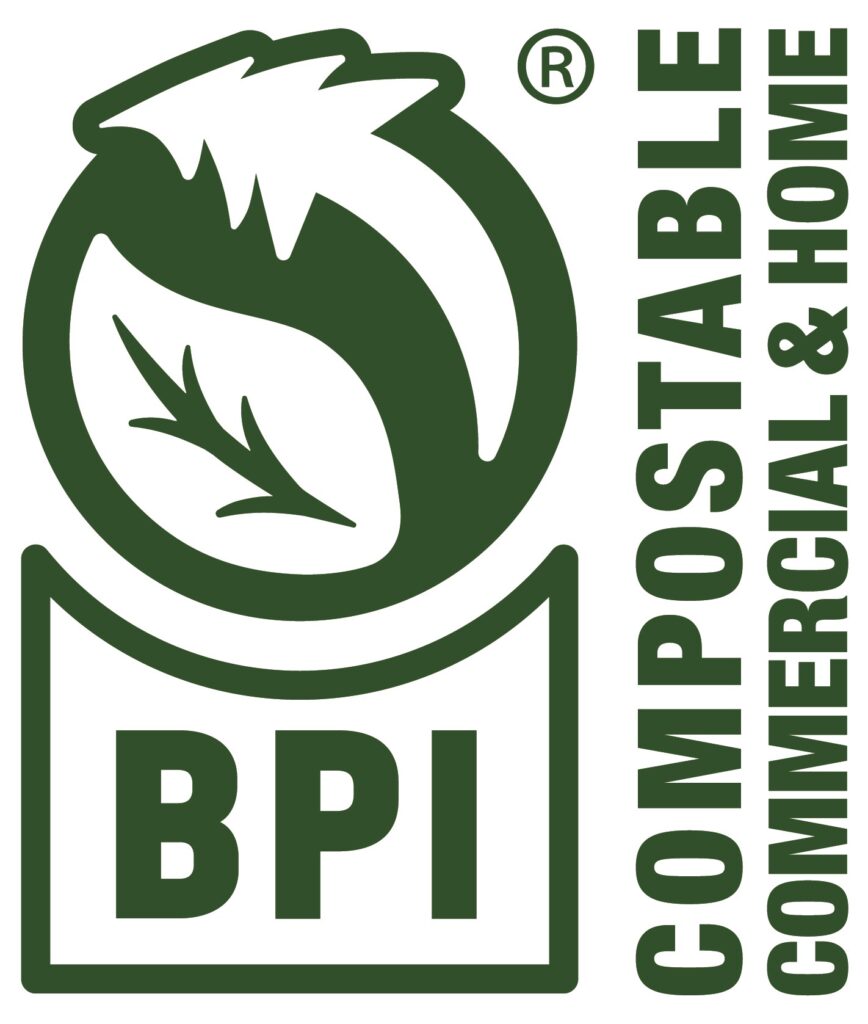
Important: BPI Compostable Does Not Mean Home Compostable
Here’s a crucial distinction that many shoppers misunderstand. What does BPI compostable mean for your backyard bin? In most cases, very little.
The vast majority of BPI certified products are designed and tested for commercial composting facilities—large-scale operations that maintain high temperatures (around 58°C or 136°F), controlled moisture, and active aeration. These conditions accelerate microbial activity and ensure breakdown within the 90-to-180-day window.
Your home compost pile rarely reaches or sustains those temperatures. As a result, a standard BPI-certified item might sit in your backyard for a year or more without fully degrading.
The good news: BPI now recognizes this gap and offers a “Commercial & Home” certification for products that perform well in both environments. When browsing BPI’s online product catalog, look for the house icon to identify items suitable for home composting. Without that icon, assume the product belongs in a municipal organics bin, not your backyard.
BPI Compostable vs. “Biodegradable”: The Critical Difference
If there’s one thing to remember from this article, it’s this: “biodegradable” and “compostable” are not synonyms.
What does BPI compostable mean compared to something merely labeled “biodegradable”? The difference is night and day. The confusion between BPI compostable vs biodegradable claims is one of the biggest sources of greenwashing in the marketplace.
“Biodegradable” is a vague, unregulated term with no timeframe, no required conditions, and no verification. Theoretically, a material could take 500 years to break down and still be called “biodegradable.” There is no independent testing requirement, no certification body, and no legal definition.
“Compostable,” by contrast, has a strict, enforceable definition. A compostable product must:
- Break down within a specific timeframe (180 days under ASTM D6400)
- Do so in a composting environment (not a landfill or the ocean)
- Leave behind no toxic residue
When a product carries the BPI Certification Mark, you know it meets these requirements. When it just says “biodegradable,” you know nothing at all.
Red flags to watch for when shopping:
- Products labeled “biodegradable” with no certification logo
- Vague terms like “eco-friendly,” “earth-safe,” or “green”
- The chasing-arrows recycling symbol on compostable items (compostable products go in the compost bin, not the recycling bin)
The BPI mark cuts through the confusion and greenwashing.
Where Can I Find BPI Certified Products?
BPI maintains a publicly accessible, searchable online catalog containing over 50,000 certified items. This database is free to use and updated continuously as new products earn certification.
Common categories of BPI certified products include:
- Compostable trash bags and kitchen liners
- Produce bags and retail shopping bags
- Foodservice ware (cups, plates, bowls, utensils, takeout containers)
- Pet waste bags
- Flexible packaging films
- Compostable resins used by manufacturers
You can browse the complete catalog directly on BPI’s website. If you are searching for the best BPI certified compostable bags or specifically need BPI certified compostable bags for kitchen food scrap collection, this database is your most reliable verification tool. Always cross-check a product’s certification status before purchasing—it takes seconds and prevents disappointment.
Why Should You Care About BPI Certification?
For everyday shoppers, BPI certification provides confidence and clarity. You know the product you’re buying won’t linger in a landfill for generations. You’re also supporting the circular economy—helping divert food scraps and organic waste from landfills, where they would otherwise generate methane, a potent greenhouse gas.
For businesses, BPI certification is rapidly becoming a legal requirement. States including Washington and Minnesota have enacted laws mandating third-party certification (like BPI) for any product labeled or marketed as “compostable.” Selling uncertified “compostable” products in these states can result in fines. Other states are considering similar legislation.
In short, what does BPI compostable mean for the future? It means the baseline standard for trust and compliance in an industry that desperately needs both.
Quick Summary: Key Takeaways
- What does BPI compostable mean? A product has been independently tested and certified by the Biodegradable Products Institute to meet ASTM D6400 or D6868 standards.
- Certified products break down completely in commercial composting facilities within 90 to 180 days, leaving no toxic residue.
- Look for the BPI Certification Mark on packaging—not just the BPI name or logo.
- Most BPI items are designed for commercial composting only. Check for the “Home” certification icon if you plan to compost in your backyard.
- “Biodegradable” does not mean “compostable.” Certification is the only reliable differentiator.
- Over 50,000 products are BPI certified. Always verify before you buy using BPI’s public database.
Frequently Asked Questions
Q: What does BPI compostable mean in simple words?
A: It means the product has been tested and certified by the Biodegradable Products Institute to break down completely in a commercial compost facility within about six months, leaving behind only healthy soil—no plastic fragments or toxic chemicals.
Q: Is BPI compostable the same as home compostable?
A: Not usually. Most BPI certified products require the high heat and controlled conditions of a commercial composting facility. However, BPI now offers a “Commercial & Home” certification for products that work in both settings. Look for the house icon in BPI’s catalog.
Q: Can I throw BPI certified items in my recycling bin?
A: No. Compostable items belong in the compost bin, not the recycling bin. They can contaminate recycling streams and cause entire batches of recyclable material to be rejected.
Q: How can I verify if a product is genuinely BPI certified?
A: Visit BPI’s online product catalog and search by product name, manufacturer, or certification number. Never rely solely on the claim printed on the package.
Q: Are all BPI certified bags suitable for kitchen food waste?
A: Many are, but durability varies. When choosing BPI certified compostable bags for kitchen use, look for bags labeled specifically for food scrap collection and check the thickness specification—typically 0.7 mil or higher for wet kitchen waste. The BPI mark confirms compostability, but product design determines leak resistance.