
Quick Answer
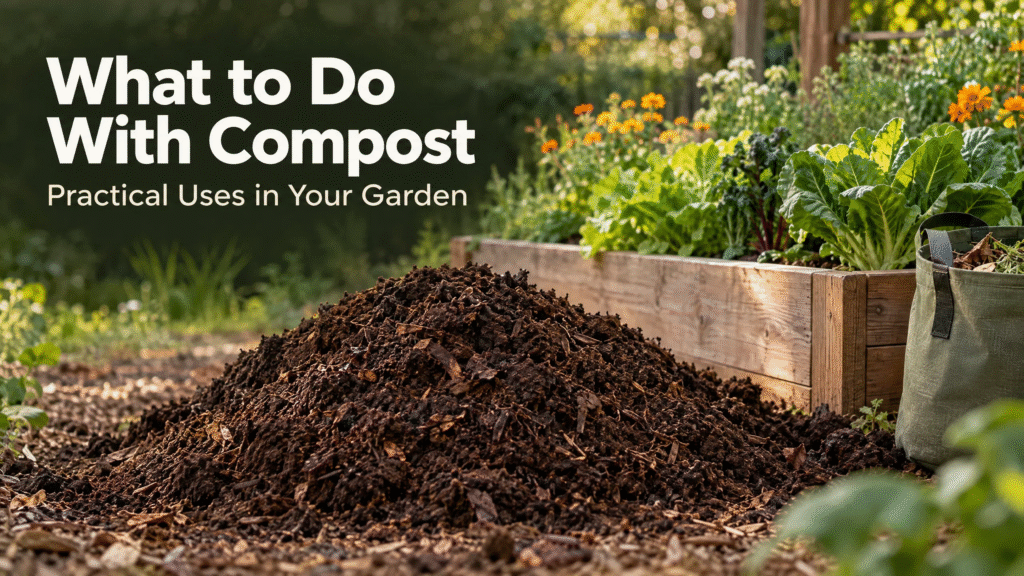
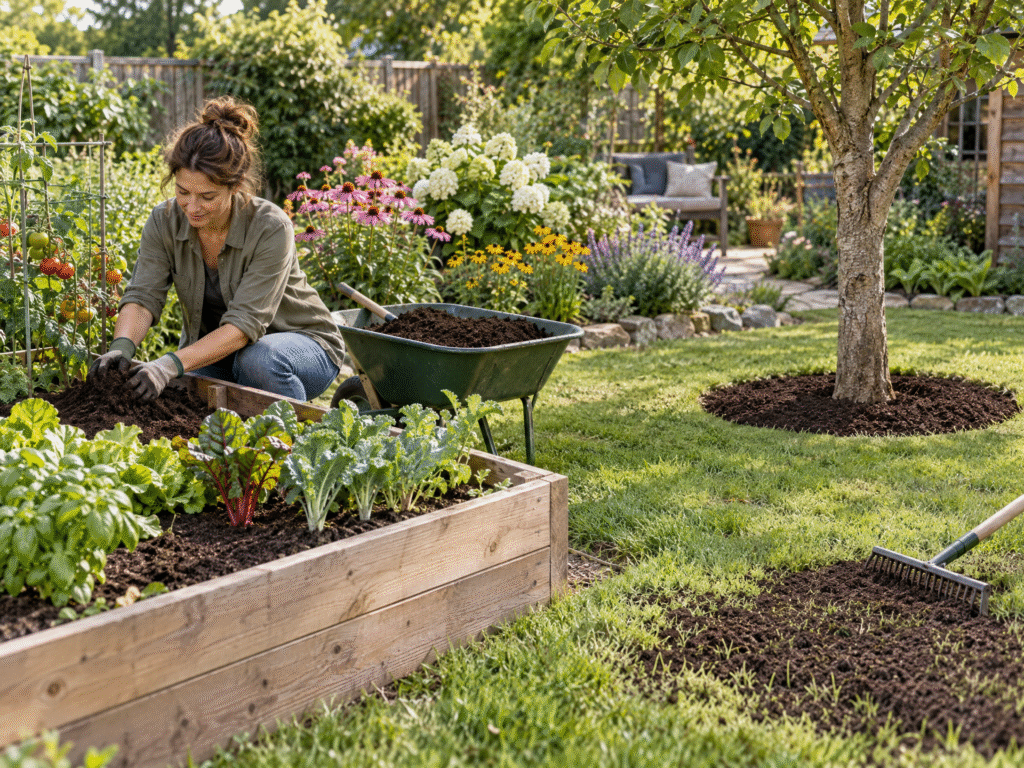
Finished compost is most commonly used as a soil amendment. It can be incorporated into garden soil, added to vegetable and flower beds, used around established trees and shrubs, incorporated into lawn soil, or included as part of a container or raised-bed growing mix.
How much compost to use depends on the crop, soil condition, compost quality, and local guidance. There is no single application rate that fits every garden.
If you collect kitchen scraps before they reach a composting system, the bag you use matters. A bag labelled “biodegradable” is not automatically suitable for composting. Check whether it is certified for home composting or accepted by your local commercial composting facility.
If you are new to composting itself, our Composting Basics Guide explains what composting is, how it works, and what can be composted. This article picks up where that guide leaves off: you already have finished compost, and now you need to know what to do with compost.
How to Tell When Compost Is Finished
Before using compost, it helps to know whether it is actually finished. Finished compost is dark, crumbly, and earthy-smelling. It should no longer resemble most of the original food scraps or plant material, and it should not heat up significantly when turned.
If it still heats up when turned, it may not be fully mature. If it has a strong ammonia or sour smell, it likely needs more time. Unfinished compost can inhibit seed germination and harm young plants, so it is worth waiting until it is fully mature.
Once you know it is finished, the next question is what to do with compost in your specific garden situation.
Where Can You Use Finished Compost?
| If you want to… | A practical use |
|---|---|
| Improve garden soil | Incorporate compost into the soil |
| Grow vegetables | Add compost to vegetable beds |
| Improve flower beds | Apply compost around established plants |
| Improve soil around trees and shrubs | Apply a thin surface layer, keeping it away from trunks |
| Improve lawn soil | Use compost as a thin top dressing |
| Grow in containers | Use compost as part of a growing mix |
| Improve raised beds | Combine compost with soil and other growing media |
| Have too much compost | Share or donate the excess |
How to Use Finished Compost in the Garden
Improve Garden Soil
The most fundamental use of compost is improving soil structure and health. Adding compost can increase soil organic matter, which may improve water-holding capacity, aeration, and microbial activity depending on soil conditions and compost quality. Compost is a soil amendment rather than a direct fertilizer replacement.
How much to apply depends on who you ask:
- UC Master Gardeners: Spread ½–3 inches over the planting bed and incorporate into the top 4 inches of soil. For fall application, apply at the same rate again.
- Oregon State University Extension: For new garden beds, apply a 3–4 inch layer and incorporate. For existing beds, apply ¼–1 inch each year.
Use Compost in Vegetable Gardens
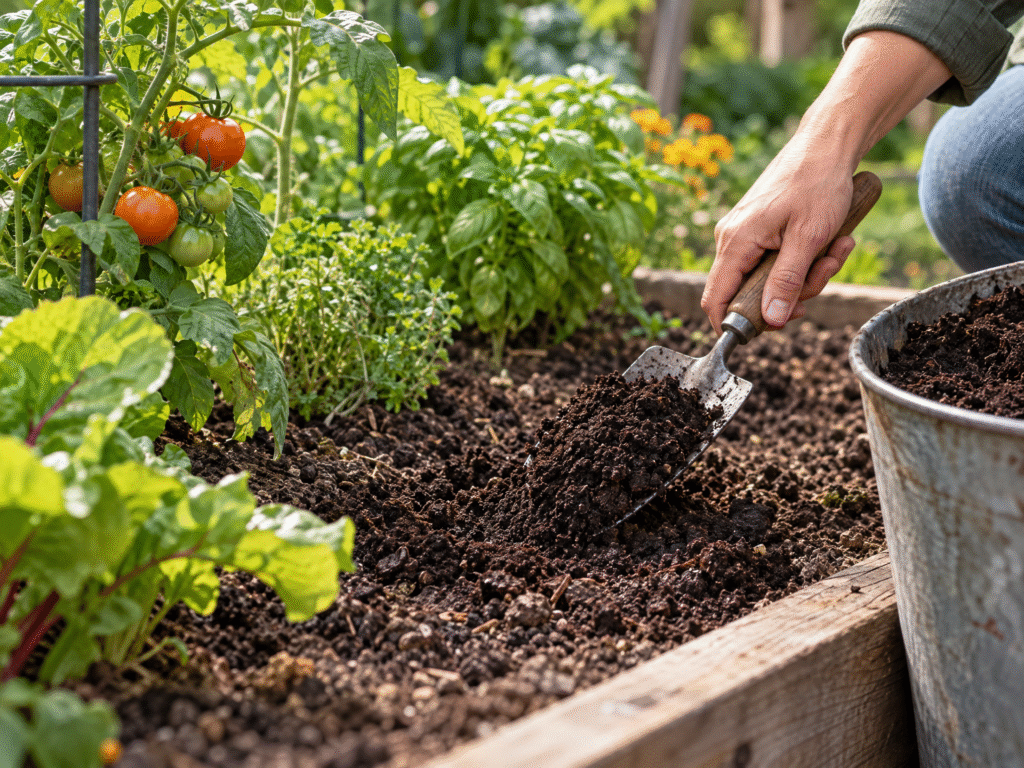
Compost is particularly useful in vegetable gardens because it adds organic matter, supports soil structure, and provides some nutrients over time. It is not a complete substitute for every fertilizer — the nutrient content varies depending on the raw materials used, and heavy-feeding crops may still need supplemental fertilization.
A cautionary note on over-application: Penn State Extension warns that when compost is over-applied, excess nitrogen and phosphorus can leach into nearby water bodies. Their research suggests that if you do not have a compost analysis report, a practical approach is to apply compost no more than about ¼ inch thick, and only every few years.
Add Compost to Flower Beds
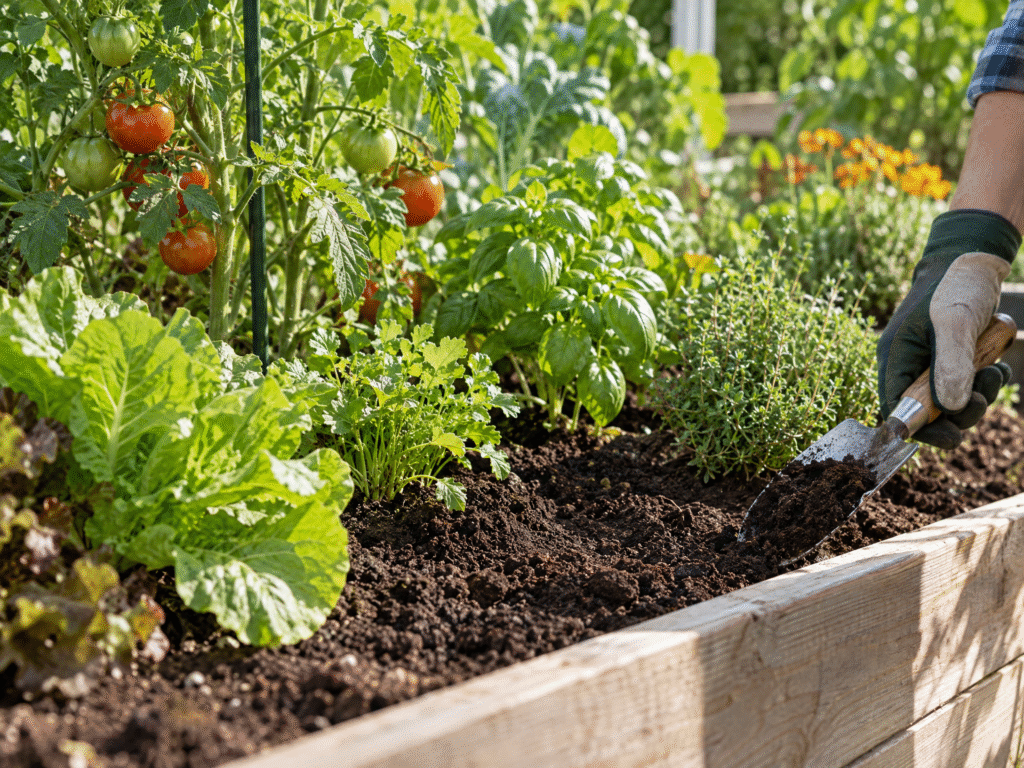
Fine, well-decomposed compost can benefit both annual and perennial flowers. UC Master Gardeners recommend applying a 1-inch thick layer around flowers and shrubs as mulch.
For new flower beds, compost can be incorporated into the existing soil before planting. The appropriate amount depends on the soil and compost being used.
Use Compost Around Trees and Shrubs
Compost can be applied around established trees and shrubs as a thin surface layer. UC Master Gardeners recommend applying a 1-inch layer of compost in a ring around the tree, starting about two feet away from the trunk and extending to one foot beyond the drip line. For shrubs, keep the compost 6–12 inches from the base of the plant.
A critical detail from RHS (UK): When mulching around woody stems, leave a 10cm (4in) mulch-free circle. Mulch can stay damp and cause rotting if piled up around the base of shrubs and trees.
What not to do: Do not pile compost directly against the trunk. Do not fill planting holes with pure compost. For newly planted trees and shrubs, follow local Extension guidance — amendments may not be necessary in the planting hole.
Use Compost in Container Growing Mixes
Can you use pure compost in a pot? Generally, no. Straight compost in containers can pack down too tightly for good aeration, may not have a balanced nutrient profile, and over time phosphorus can build up.
What sources recommend:
- UC Master Gardeners: Use ¾ potting mix and ¼ compost.
- University of Minnesota Extension: Compost with high salinity should be used with caution, especially in raised beds or containers. High salt levels can inhibit germination and cause plant stress. Consider mixing compost with soil to dilute salts.
Cooperative Extension guidance notes that pure compost can dry out too quickly or hold too much moisture depending on the situation, and recommends amending potting soil or in-ground soil rather than planting directly in pure compost.
Use Compost in Raised Beds
Oregon State University Extension recommends using a soil mix when filling framed raised beds — don’t fill them with compost by itself. A balanced raised-bed mix typically includes topsoil, compost, and an aeration material such as perlite or pine bark.
Pure compost is generally not recommended as the sole growing medium for raised beds because it can compact, drain poorly, and develop nutrient imbalances over time.
Top-Dress a Lawn With Compost
Compost can be used as a lawn top dressing. UC Master Gardeners recommend spreading about one-half inch (about 1.25 cm) over the surface of the grass after aerating in the spring. Rake lightly to help work it down into the holes made by the aerator. Water in after application.
How Much Compost Should You Use?
| Use case | Conservative starting point | Important note |
|---|---|---|
| Existing garden beds | ¼–1 inch | Adjust according to soil test |
| New garden beds | Follow local Extension guidance | Recommendations vary by soil and compost |
| Flower beds | About 1 inch | Keep away from stems |
| Lawn top dressing | About ½ inch | Apply after aeration |
| Containers | Up to 25% of the mix | Do not use pure compost |
| Around trees and shrubs | About 1 inch | Keep away from trunks |
These are practical starting points, not universal rules. Recommendations vary because compost quality, soil type, crop, and application method vary. Adjust based on your soil test results and local Extension guidance.
Why Compost Application Rates Vary
The variation is not a contradiction. Different recommendations are based on different soil conditions, compost characteristics, crops, application methods, and management goals.
- Soil type — sandy soils with low organic matter may need more compost than clay or already-rich soils
- Compost maturity and quality — immature compost can harm plants; mature compost behaves differently
- Compost analysis — compost made from different feedstocks has different nutrient and salt profiles
- Crop — heavy-feeding vegetables have different requirements than established perennials
- Application method — incorporated compost behaves differently from a surface top-dressing
- Local climate and rainfall — rainfall affects salt leaching and decomposition rates
- Local Extension guidance — recommendations are calibrated to regional conditions
What Kind of Bag Should You Use to Collect Compostable Waste?
If you collect kitchen scraps before they go into a composting system, the bag you use affects whether the material can actually be composted.
- “Biodegradable” does not mean “compostable.” A bag labelled biodegradable is not automatically suitable for home or industrial composting.
- Home compostable and industrially compostable are not the same. A bag certified for industrial composting has been tested under industrial composting conditions and may not break down reliably in a home compost bin.
- Not all commercial composting facilities accept compostable bags. Check with your local collection program or facility before assuming they will accept them.
- Look for recognized certifications. EN 13432 and ASTM D6400 are compostability standards. OK compost HOME and AS 5810 are certification schemes or standards used to verify compostability under specific conditions.
- Do not put compostable bags in plastic recycling. They are not compatible with conventional plastic recycling streams.
Our article on can compostable bags be composted explains the conditions and certifications that matter. If you are comparing options for home versus commercial composting, our guide to compostable bags for compost bins covers the differences. For kitchen scrap collection specifically, see our guide to compostable food waste bags.
Common Mistakes When Using Finished Compost
Don’t assume all compost is mature. Penn State Extension notes that unfinished compost has phytotoxic compounds that inhibit seed germination. A simple germination test with cress or bean seeds can indicate whether compost is mature enough to use.
Don’t use pure compost as a universal growing medium. Straight compost in containers can compact, drain poorly, and develop nutrient imbalances. University of Minnesota Extension warns that high salt levels in compost can inhibit germination and cause plant stress.
Don’t apply large amounts without considering soil conditions. Penn State Extension warns that over-application can cause nutrient runoff that harms water bodies.
Don’t pile compost against tree trunks. RHS recommends a 10cm (4in) mulch-free circle around woody stems. UC Master Gardeners suggest keeping compost 6–12 inches from the base of shrubs.
Don’t assume every compostable bag belongs in a home compost pile. Check whether your local facility accepts compostable collection bags and which certification it requires.
Using or Sharing Excess Compost
If you produce more compost than you can use, consider sharing it with school gardens, community gardens, gardening friends, or local farms that may accept compost. Some communities have compost drop-off or sharing programs.
You can also store finished compost for later use if it is kept in suitable conditions. It may continue to decompose slowly during storage.
Quick Reference: Finished Compost Uses
| Use | Practical starting point | Important note |
|---|---|---|
| Garden soil | Follow the application rate recommended for your soil and compost | Depends on existing soil organic matter |
| Vegetable beds | Apply compost according to crop and soil conditions | Don’t over-apply; test your compost if possible |
| Flower beds | Use compost as a soil amendment or surface application | — |
| Containers | Use compost as part of a growing mix | Avoid pure compost as sole medium; watch for salts |
| Raised beds | Combine compost with topsoil and aeration material | Avoid pure compost as sole medium |
| Lawn | Apply a thin layer suitable for top-dressing | Don’t smother grass |
| Trees and shrubs | Follow local Extension guidance; avoid excessive amendment | Keep compost away from trunks |
| New plantings | Follow local Extension guidance | Amendments may not be needed in the planting hole |
FAQs
Can you use compost as potting soil?
Not pure compost. UC Master Gardeners recommend ¾ potting mix to ¼ compost. University of Minnesota Extension warns that high salt levels in compost can inhibit germination and cause plant stress in containers.
Can you use compost directly on plants?
Compost can be applied around established plants as a top dressing, but keep it away from stems and trunks. For new plantings, follow local Extension guidance rather than assuming amendments are necessary.
Can you put compost on top of soil?
Yes. Applying compost as a surface layer is common. UC Master Gardeners recommend 1 inch around flowers and shrubs, ½ inch on lawns.
How much compost should you use?
What to do with compost depends on the application and the source you consult. It depends on the application and the source you consult. UC Master Gardeners recommend ½–3 inches for garden beds, while Penn State suggests no more than ¼ inch if you don’t have a compost analysis, and only every few years. The difference reflects different application conditions and management goals, including soil improvement and nutrient management.
Can compost replace fertilizer?
Not entirely. Compost is primarily a soil amendment. University of Georgia Extension states that “compost is not a substitute for fertilizer if you’re trying to grow crops that have a high nutrient demand.” Compost’s main role is to improve soil structure, water management, and biological activity while providing some nutrients over time.
Can you use compost in a vegetable garden?
Yes. UC Master Gardeners recommend spreading ½–3 inches over planting beds in spring, with the same rate again in fall if growing winter edibles. Oregon State University suggests 3–4 inches for new beds and ¼–1 inch for existing beds.
Can you use compost for indoor plants?
Yes, but not pure compost. UC Master Gardeners recommend ¾ potting mix to ¼ compost for indoor plants. For indoor composting setups, see our Indoor Composting Guide.
What should you not do with compost?
Do not use pure compost in containers, do not pile it against tree trunks, do not use immature compost, and do not over-apply. Penn State Extension specifically warns that over-application can cause nutrient runoff that harms water bodies.
Conclusion
Compost is a versatile soil amendment with applications ranging from vegetable gardens and flower beds to lawns and container plants. Its primary value lies in improving soil structure, supporting beneficial microorganisms, and slowly releasing nutrients — not in serving as a complete fertilizer replacement.
The key to using compost effectively is matching the application to the situation. The recommendations from Extension sources vary because the “right” amount depends on your soil, your climate, your compost quality, and what you are growing. UC Master Gardeners’ ½–3 inches and Penn State’s ¼ inch are not contradictory — they reflect different priorities and different assumptions about compost nutrient content.
For most home gardeners, a reasonable starting point is to follow local Extension guidance, adjust based on soil test results and compost analysis, and avoid using pure compost as a sole growing medium.
If you collect food scraps before taking them to a composting facility, the bag you use needs to match your disposal route. Our guide to compostable food waste bags covers the differences between home-compostable and commercially compostable options. For businesses sourcing compostable bags in bulk, HemcBags offers custom sizes, printing, and wholesale options.
If you are thinking about the broader picture — reducing waste, choosing compostable materials, and building more sustainable daily habits — our Zero Waste Lifestyle Guide covers the practical steps that connect composting to a larger system.
Sources and Further Reading
- UC Master Gardeners — How to Use Compost
- Oregon State University Extension — Soil and Compost
- Penn State Extension — Applying Compost to Vegetable Gardens
- University of Minnesota Extension — Interpreting Your Compost Report
- University of Georgia Extension — Compost
- RHS (UK) — Mulches and Soil Conditioners
- UF/IFAS — Composting Quick Tutorial