
Author: HEMCbags Technical Team | BPI and OK Compost Certified Manufacturer | 10+ Years Experience | 50+ Million Bags Supplied
Quick Answer: Composting is the natural process of breaking down food scraps, yard waste, and other organic materials into nutrient-rich soil known as compost.
Most home compost takes 3 to 6 months to fully decompose, depending on moisture, oxygen, and the balance of materials.
To start composting at home, you only need three things:
- Green waste (fruit and vegetable scraps)
- Brown waste (dry leaves or paper)
- A compost bin or outdoor space
At HEMCbags, we have supplied more than 50 million certified compostable bags to households, municipalities, and waste management companies across North America and Europe. Based on that experience, we have seen one thing consistently: most people want to compost, but they don’t know where to start.
This guide covers everything you need to know about composting basics — from what can be composted to how to start a compost bin and what to avoid.
What Is Composting? Understanding Composting Basics
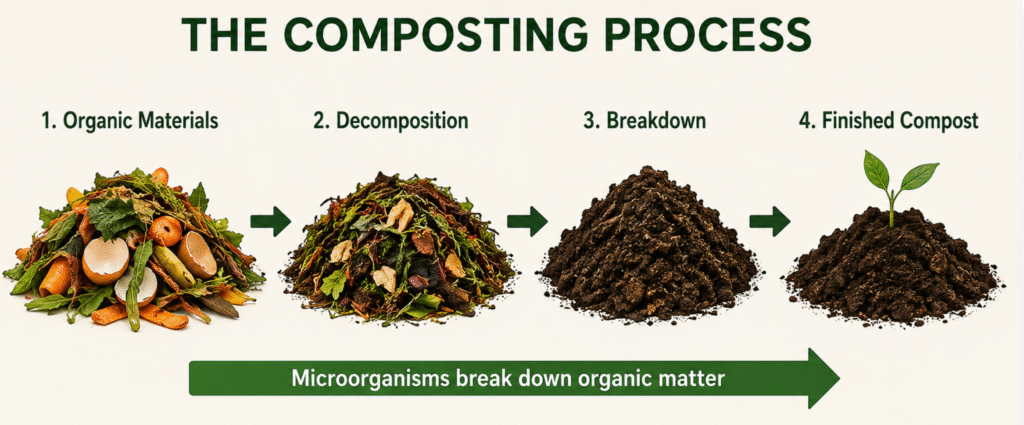
Composting is the controlled biological decomposition of organic waste under aerobic (oxygen-rich) conditions, where microorganisms break down materials into stable, soil-like organic matter called compost.
This process is carried out by naturally occurring microorganisms, fungi, and bacteria that convert organic matter into stable compost.
According to the U.S. Environmental Protection Agency, composting is one of the most effective methods to reduce landfill waste and greenhouse gas emissions such as methane.
Why composting matters:
| Benefit | Why It Matters |
|---|---|
| Reduce landfill waste | Less organic waste enters landfill |
| Lower methane emissions | Helps reduce greenhouse gases |
| Improve soil | Adds nutrients and organic matter |
| Save money | Reduces fertilizer use |
Composting Mistakes Most Beginners Make
Based on field observations from composting households and waste programs, beginners usually make 3 common mistakes:
1. Using plastic bags for food scraps
Regular plastic or non-certified biodegradable bags do not break down in compost systems. They contaminate finished compost and defeat the purpose of composting.
2. Adding meat and dairy waste
These attract pests and slow decomposition. Meat and dairy also create unpleasant odors that make composting less enjoyable for beginners.
3. Wrong carbon-to-nitrogen balance
Too many food scraps cause odor and slow breakdown. The ideal ratio is about 1 part green material (food scraps) to 2-3 parts brown material (dry leaves, paper).
How to Start Composting at Home (Step-by-Step)
Starting a compost pile is easier than most beginners think. By following a few simple steps and maintaining the right balance of materials, you can produce nutrient-rich compost in just a few months.
These composting basics will help you build a healthy compost pile.
Step 1: Choose Your Composting Method
| Method | Best For | Features |
|---|---|---|
| Outdoor compost bin | Homeowners with yard space | Holds 10-20 gallons, low cost |
| Compost tumbler | Anyone who doesn’t want to turn manually | Rotating drum, faster decomposition |
| Worm bin (vermicomposting) | Apartment dwellers, indoor use | Small, odorless |
| Municipal compost collection | City residents with green bin program | Easiest — use compostable bags and set out for pickup |
Not sure what size bin fits your space? Check our trash bag size guide to match your container with the right liner.
Step 2: Prepare Your Compost Bin
- Place the bin in a semi-shaded area with good drainage
- Make sure it has a lid to keep out rain and animals
- Start with a layer of browns (dry leaves, shredded paper) at the bottom
Why this step matters
A well-positioned compost bin maintains proper moisture and airflow, helping beneficial microorganisms thrive while reducing odors and speeding up decomposition.
Step 3: Collect Kitchen Scraps
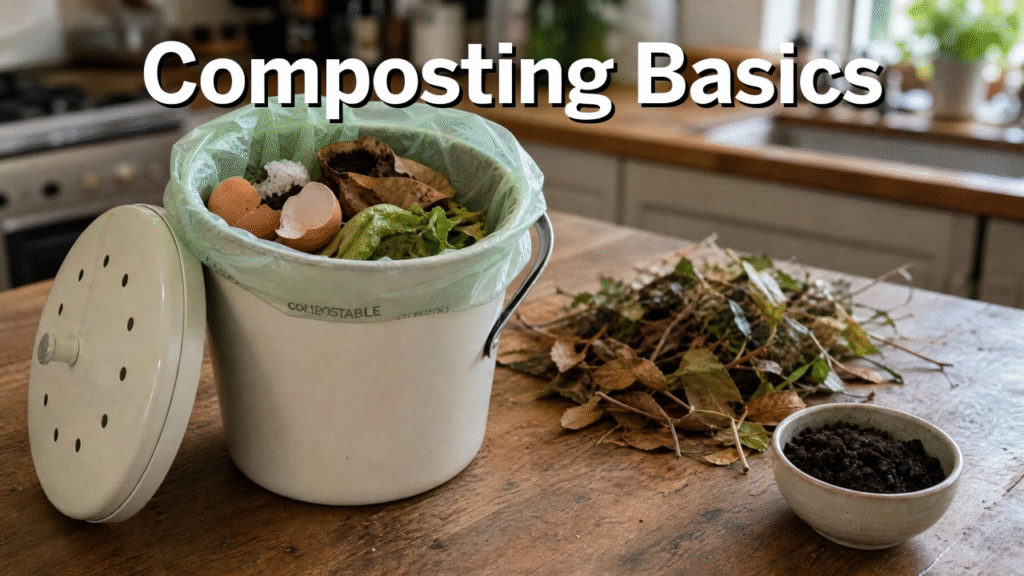
Use a countertop container to collect food scraps during the day.
Line it with a certified compostable bag to keep it clean and odor-free.
Empty the container into your outdoor compost bin when full.
Related: Learn more about compostable bag materials — what they are made of and why it matters.
To make collecting kitchen scraps clean and odor-free, use a bin liner that is TÜV-certified for home composting. These bags can be tied closed and placed directly in your compost bin, where they break down within weeks — no mess, no fuss.
Step 4: Build the Compost Pile
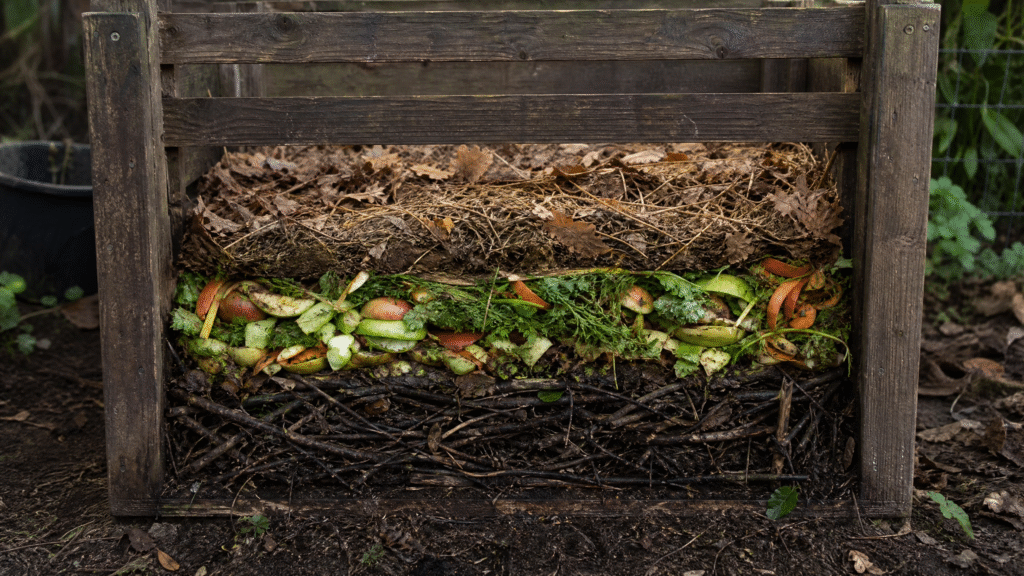
- Add greens (food scraps) and browns (dry leaves) in layers
- Aim for 1 part greens to 2-3 parts browns
- Keep the pile moist — like a wrung-out sponge
Why this step matters
Maintaining the correct balance of greens and browns provides microorganisms with the carbon and nitrogen they need to decompose organic matter efficiently while preventing unpleasant odors.
Step 5: Maintain the Compost
- Turn the pile every 1-2 weeks to add oxygen
- Add water if it looks dry
- Add more browns if it smells bad or looks wet
Odor is the most common concern for beginners. However, when properly managed, even a kitchen compost bin can be completely odorless. To learn more about the secrets to smell-free success, check out our Indoor Composting Guide: How to Achieve Odor-Free Success
Why this step matters
Turning the pile introduces oxygen, which aerobic microorganisms need to break down organic materials. Without enough oxygen, the pile may become compacted, smell unpleasant, and decompose much more slowly.
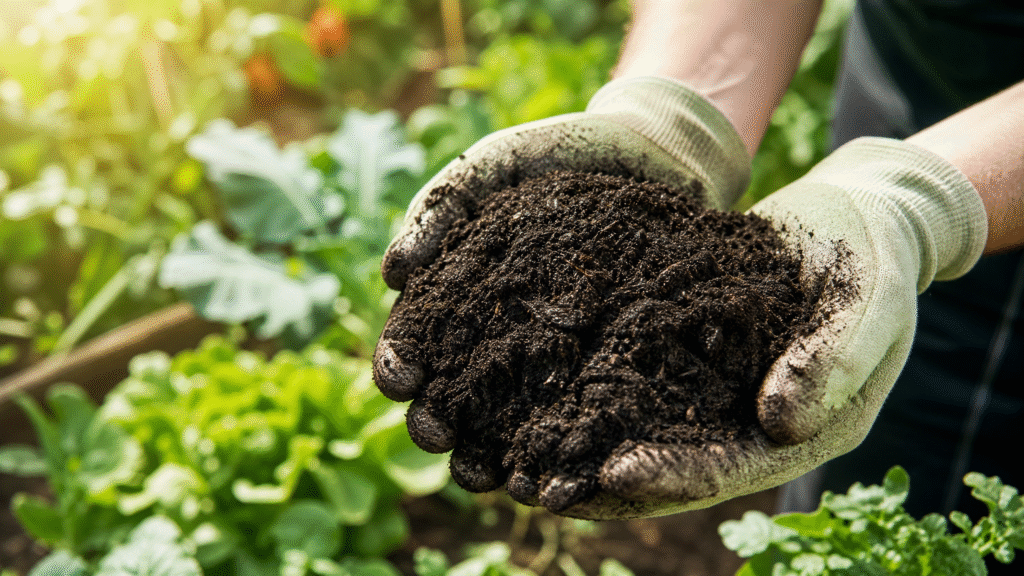
Step 6: Harvest Compost
Finished compost is:
- Dark brown or black
- Crumbly texture
- Earth-like smell
Typically ready in 3–6 months.
What Can Be Composted?
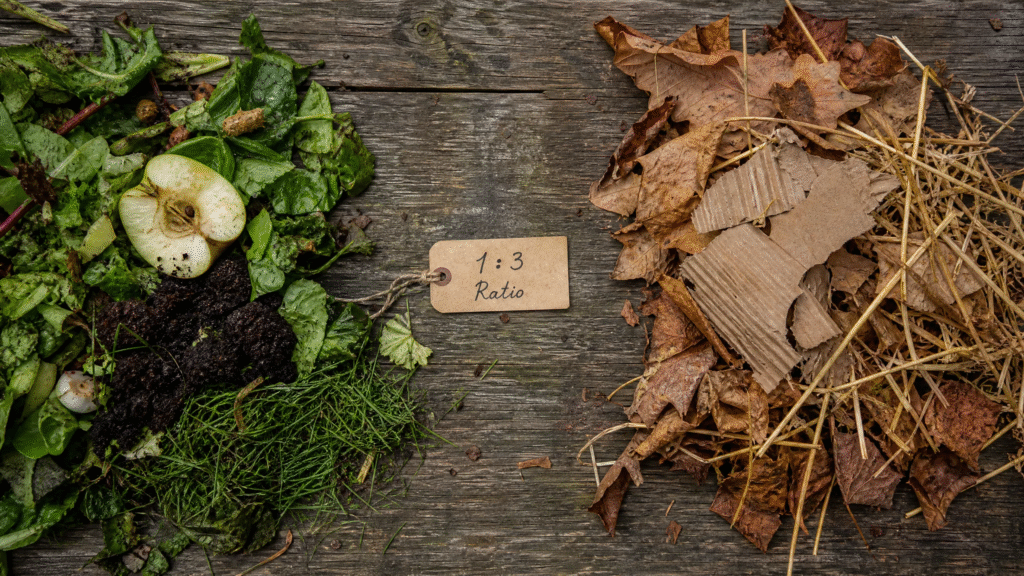
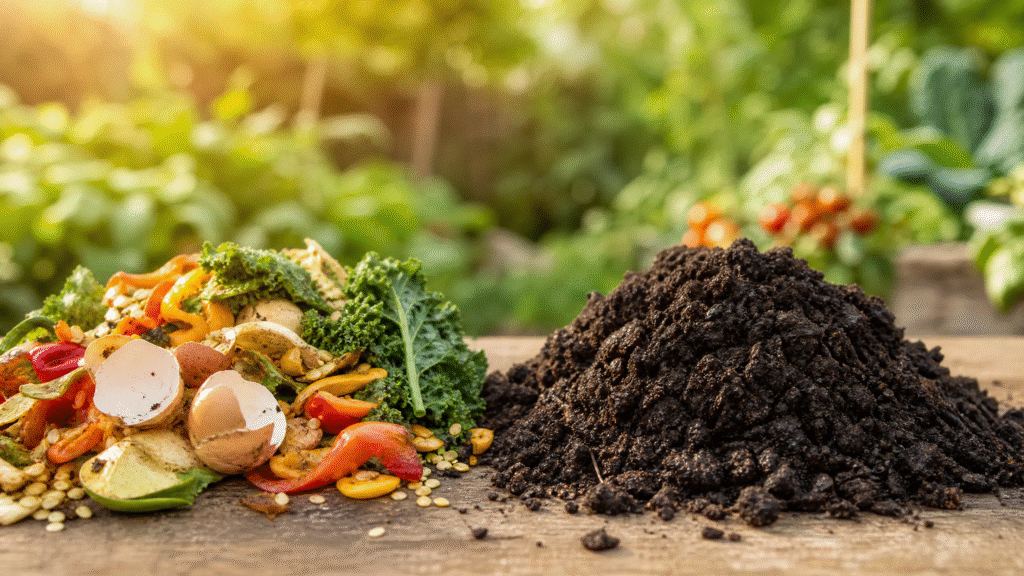
Fruit and vegetable scraps, coffee grounds, tea leaves, eggshells, dry leaves, cardboard, newspaper, and untreated plant materials can all be composted. Successful composting requires a balance of nitrogen-rich greens and carbon-rich browns.
| Category | Items | Notes |
|---|---|---|
| Greens (Nitrogen) | fruit scraps, coffee grounds, tea leaves, fresh grass clippings, plant trimmings | add moisture, break down quickly |
| Browns (Carbon) | dry leaves, cardboard, newspaper, paper bags, sawdust (untreated wood), wood chips | add structure, provide carbon |
| Safe extras | eggshells (crushed), paper tea bags (no staples) | compost-friendly, add in moderation |
For a complete list of compostable items and common questions, see our compostable bags FAQ.
What Cannot Be Composted?
These materials should never be added to compost because they cause odor, attract pests, or contaminate soil:
- Meat, fish, dairy → pest attraction
- Oils and grease → slow decomposition
- Plastic or non-certified bags → do not break down
- Diseased plants → spread pathogens
How to Make a Compost Bin
You don’t need an expensive bin to start composting. Here are several options:
Option 1: DIY Wire Bin
- Materials: Chicken wire or hardware cloth, zip ties or wire
- Cost: $20-40
- Steps: Form a circle with the wire, secure with ties, place on bare soil
Option 2: DIY Pallet Bin
- Materials: 4 wooden pallets, screws or nails
- Cost: Free to $50
- Steps: Form a square or U-shape with pallets, secure together
Option 3: Trash Can Bin
- Materials: Large plastic trash can with lid, drill
- Cost: $15-30
- Steps: Drill 10-15 holes in the bottom and sides for aeration
Option 4: Store-Bought Bin
- Materials: Tumbler or stationary bin
- Cost: $50-200
- Steps: Follow manufacturer instructions
Quick Reference Table: What Can and Cannot Be Composted
| Can Compost | Cannot Compost |
|---|---|
| Fruit scraps | Meat |
| Vegetable scraps | Fish |
| Coffee grounds | Dairy |
| Eggshells | Cooking oils |
| Dry leaves | Pet waste |
| Cardboard | Plastic bags |
| Newspaper | Diseased plants |
| Untreated plant materials | Non-certified “biodegradable” bags |
Ideal Compost Ratio (Science-Based)
The optimal compost balance is:
1 part green : 2–3 parts brown
Scientifically, the ideal carbon-to-nitrogen ratio is around 25–30:1, which supports efficient microbial activity.
- Too many browns → slow decomposition
- Too many greens → odor + anaerobic conditions
Signs Your Compost Has Too Many Greens
Symptoms:
- Strong ammonia smell
- Wet or slimy texture
- Fruit flies
- Poor airflow
How to fix it:
- Add dry leaves
- Add shredded cardboard
- Turn the pile
- Stop adding kitchen scraps for a few days
Signs Your Compost Has Too Many Browns
Symptoms:
- Compost stays dry
- Little heat
- Decomposition is slow
- Materials remain unchanged after weeks
How to fix it:
- Add vegetable scraps
- Sprinkle water
- Turn the pile
- Chop materials into smaller pieces
| Problem | Likely Cause | Solution |
|---|---|---|
| Bad smell | Too many greens | Add dry leaves |
| Compost too dry | Too many browns | Add water and greens |
| Not heating up | Lack of nitrogen | Add fresh kitchen scraps |
| Fruit flies | Food exposed | Cover with brown materials |
How Long Does Compost Take to Make?
Most home compost systems take 3 to 6 months to produce finished compost under normal conditions.
Industrial composting facilities can complete the process in 10–45 days due to controlled temperature and aeration.
| Environment | Temperature | Timeframe |
|---|---|---|
| Industrial composting | 50-60°C (122-140°F) | 10-45 days |
| Home composting | Ambient (~25°C / 77°F) | 3-6 months |
| Lazy composting | Ambient | 12+ months |
The Lazy Way to Compost
What is the laziest way to compost?
The laziest way to compost is the “dig and drop” method: simply dig a hole in your garden, bury food scraps directly in the soil, and let nature do the work. No bin, no turning, no maintenance — just bury and forget.
Other lazy methods:
- Sheet mulching: Layer cardboard, compost materials, and mulch directly on garden beds
- Trench composting: Dig a trench in your garden, fill it with food scraps, and cover with soil
- Green cone: A buried food digester that naturally processes scraps without maintenance
Note: These methods are slower than active composting but require almost no work.
How to Compost at Home (Quick Summary)
- Choose a method: Bin, tumbler, worm bin, or municipal collection
- Collect food scraps: Use a countertop bin with a certified compostable bag
- Add greens and browns: 1 part greens to 2-3 parts browns
- Keep it moist: Like a wrung-out sponge
- Turn the pile: Every 1-2 weeks for faster decomposition
- Harvest: After 3-6 months, your compost is ready
FAQ
What is the fastest way to compost?
Maintain proper moisture, aeration, and a balanced carbon-to-nitrogen ratio.
Can I compost in an apartment?
Yes, using worm bins or sealed indoor compost systems.
Do compostable bags break down in home compost?
Certified home compostable bags break down within weeks under proper conditions.
What should I do if my compost pile smells bad?
Add more brown materials (dry leaves, cardboard) and turn the pile to increase oxygen. Bad odor usually means the pile is too wet or has too many greens.
How often should I turn my compost pile?
Turning the pile every 1-2 weeks provides oxygen, speeds up decomposition, and prevents odors.
Can lentils be composted?
Yes. Cooked or uncooked lentils break down like other legumes. Chop or crush them for faster decomposition, and bury them deep in the pile to avoid attracting pests.
How Often Should I Pee on Compost?
Yes. Urine is rich in nitrogen and acts as a compost activator. Add 1-2 times per week directly to the pile. Dilute with water if the pile is already wet.
How do the Amish make compost?
Amish composting uses livestock manure mixed with bedding materials like straw and hay. Piles are left to age for 6-12 months before being applied to crop fields — a low-technology method that works at scale.
Conclusion
Once you understand these composting basics, maintaining your compost becomes much easier.
Composting is a simple but highly effective process that converts organic waste into valuable soil amendment. With proper balance of materials and maintenance, most households can produce usable compost within a few months. These composting basics work for any home, whether you have a backyard or just a small balcony.
If you are looking for certified compostable bags in bulk, HEMCbags supplies TÜV-certified home compostable options with custom sizes, custom printing, and private label packaging. Contact us for wholesale pricing.
Author Bio
Chris is the founder of HEMCbags, a BPI and OK Compost certified manufacturer of compostable bags with over 10 years of experience. He has supplied more than 50 million bags to distributors, municipalities, and waste management companies across North America and Europe.