
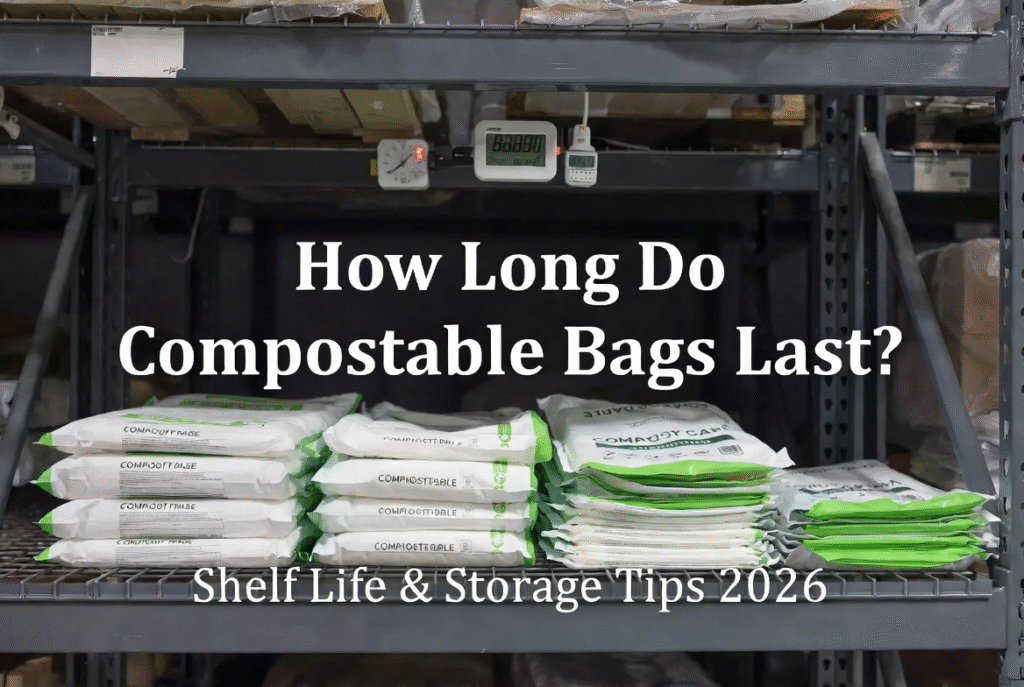
Author: HEMCbags Technical Team | BPI and OK Compost Certified Manufacturer | 10+ Years Experience
Quick Answer: Most certified compostable bags last 6 to 18 months when stored properly. The shelf life depends primarily on storage conditions — temperature, humidity, and light exposure — not on the material alone. In ideal conditions (15-25°C / 59-77°F, humidity below 55%, away from sunlight), bags can reach the higher end of that range. After this period, they may become brittle, sticky, or lose strength — but they don’t “expire” overnight.
Key Takeaways:
- ✔ Most compostable bags have a shelf life of 6–18 months under proper storage conditions
- ✔ Heat, moisture, and sunlight are the main factors that accelerate degradation
- ✔ Ideal storage: 15–25°C (59–77°F) with humidity below 55%
- ✔ Shelf life is not the same as certification — certification confirms compostability, not storage durability
- ✔ FIFO inventory rotation (First In, First Out) helps prevent stock loss for commercial buyers
Compostable Bags Shelf Life: What “Shelf Life” Actually Means
Shelf life refers to the period during which compostable bags maintain their expected performance when stored correctly. Unlike an expiration date on food, the “shelf life” of a compostable bag does not mean it suddenly becomes unusable after a certain date.
Compostable bags Shelf life does NOT mean:
- The bag suddenly decomposes after a specific date
- The bag becomes unsafe to use overnight
- The bag is no longer compostable
Compostable bags Shelf life DOES mean:
- The period during which the bag is expected to remain flexible, strong, and free from premature aging
- A performance window, not a guaranteed expiration date
Biodegradable and compostable plastics begin to degrade once exposed to moisture and heat — this is by design, as they are meant to break down in composting conditions. However, even on their own, compostable bags will begin to weaken after about a year of sitting on a shelf — seams may lose some strength, and the material may become more brittle.
The shelf life of a compostable bag is not an inherent property of the material alone. It depends on three factors: material formulation (PLA, PBAT, starch blends), packaging method, and storage environment. Understanding this helps distributors and consumers avoid stock loss, customer complaints, and disputes with suppliers.
What Happens When Compostable Bags Exceed Their Shelf Life?
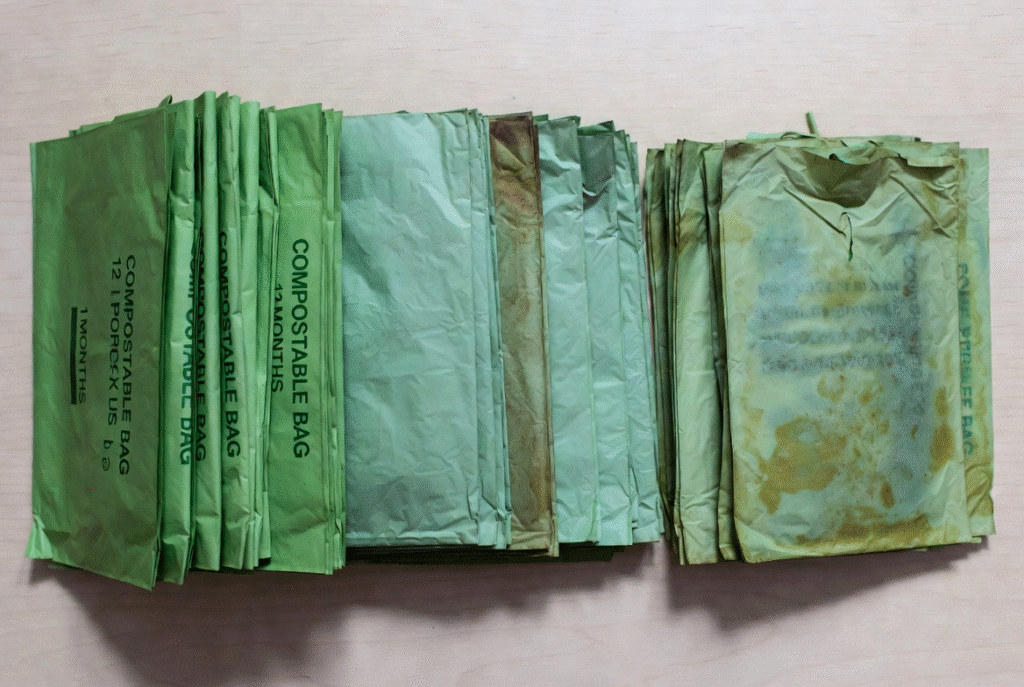
When a compostable bag exceeds its shelf life, it typically experiences one or more of the following changes:
Common changes after shelf life:
| Change | What It Looks Like | Impact on Use |
|---|---|---|
| Brittleness | Bags become stiff and crack when stretched | Increased risk of tearing during use |
| Stickiness | Bags cling to each other or feel tacky | Difficult to open and separate |
| Loss of tensile strength | Bags tear more easily under weight | May not hold heavy loads |
| Discoloration | Yellowing or cloudiness | Cosmetic only, does not affect compostability |
Can expired compostable bags still be used?
Yes — but with caution. Bags that have exceeded their shelf life are still safe to use for light, dry waste (paper, packaging). However, they are not recommended for wet food waste or heavy loads because the risk of tearing or leaking increases significantly.
For commercial buyers: If your inventory has exceeded the recommended shelf life, test a sample batch with your specific waste load before using the entire stock. If bags show visible signs of degradation (cracking, sticking, or weakness), consider using them for light-duty applications or disposing of them responsibly.
HEMCbags Technical Insight
At HEMCbags, we’ve supplied more than 50 million certified compostable bags to distributors, retailers, and waste management partners across North America and Europe.
One of the most common questions we receive is: “Why did my compostable bags start sticking together after just a few months?”
The answer almost always comes down to storage conditions. The materials that make these bags compostable — PLA, PBAT, and cornstarch blends — are naturally sensitive to moisture and heat. When stored incorrectly, even the highest-quality bag can degrade prematurely on the shelf.
That’s why we always tell our customers: certification matters for composting, but storage matters for shelf life. A BPI-certified bag can lose strength if left in a hot, humid warehouse, even though it’s still technically compostable. The two are independent characteristics — a bag can be certified for compostability but still degrade on the shelf if stored poorly.
Typical Shelf Life of Compostable Bags
The compostable bags shelf life varies by manufacturer because formulations, packaging, and storage conditions differ. The ranges below summarize publicly available guidance rather than a universal industry standard.
| Source | Reported Shelf Life |
|---|---|
| HEMCbags | ~12 months |
| BioBag | ~12 months |
| Nata Home | 9 months |
Variation by material and formulation:
| Bag Type | Typical Shelf Life | Notes |
|---|---|---|
| PBAT/starch blends | 6–12 months | Most common; moisture-sensitive |
| PLA-based bags | 9–18 months | More stable than starch-heavy blends |
| Cornstarch-heavy blends | 6–9 months | More moisture-sensitive |
The exact compostable bags shelf life depends on the specific formulation, packaging, and storage environment. Shelf life varies slightly by formulation, but storage conditions are the main factor across all bag types.
Why Compostable Bags Age Over Time
Compostable bags are made from materials designed to biodegrade under controlled conditions. This means they are more sensitive to the environment than traditional plastics.
Common Factors That Accelerate Aging
| Factor | Effect on Bags |
|---|---|
| Heat | Accelerates molecular breakdown, shortens shelf life |
| High Humidity | Starch molecules swell, bags become soft and sticky |
| Direct Sunlight/UV | UV rays break down biodegradable materials |
| Poor Ventilation | Traps moisture, accelerates degradation |
| Open/Damaged Packaging | Exposes bags to air and moisture |
The underlying chemistry is straightforward: biodegradable polymers like PLA and PBAT undergo hydrolysis when exposed to moisture and heat. Standard commercially available bags typically have lower resistance to humid conditions.
Research from ScienceDirect indicates that biodegradable polymers primarily composed of polyesters are hydrolyzed by atmospheric moisture, reducing their durability and shelf life. Improving the resistance of biodegradable polymers to moisture-induced hydrolysis is crucial for maintaining performance.
How to store compostable bags
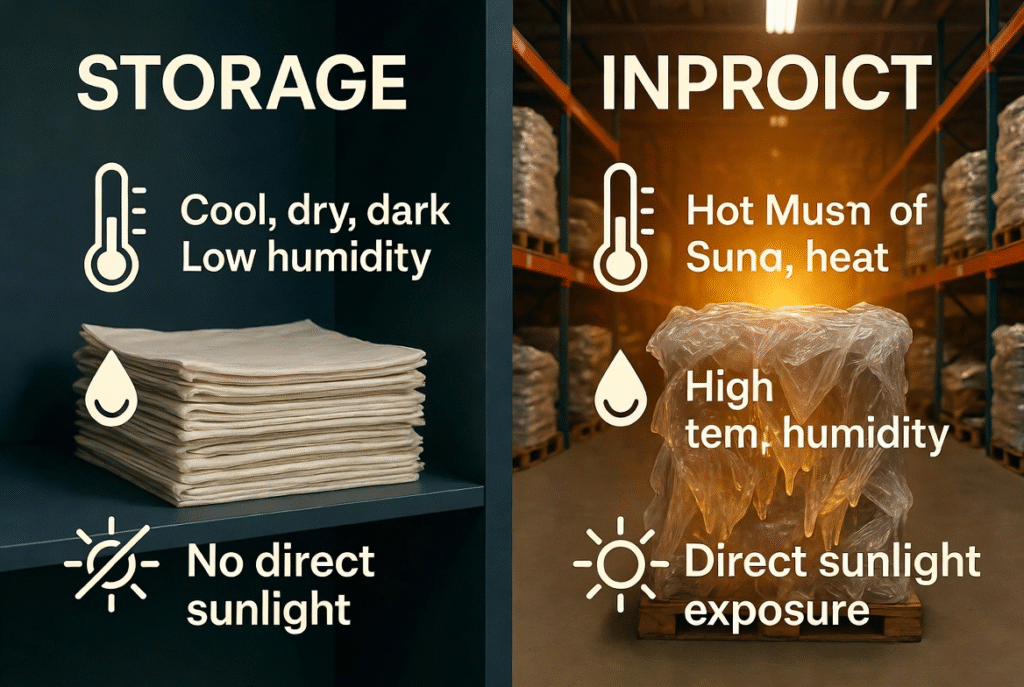
Compostable bags shelf life is highly dependent on how compostable bags are stored. Here are the exact conditions you need to maintain.
Recommended Storage Conditions
| Factor | Ideal Range | Why It Matters |
|---|---|---|
| Temperature | 15–25°C (59–77°F) | Keeps structure stable; slows degradation |
| Humidity | Below 50–55% relative humidity | Prevents starch swelling and material breakdown |
| Light | Dark / No direct sunlight | UV rays accelerate degradation |
| Packaging | Sealed in original packaging | Minimizes air and moisture exposure |
| Storage Location | Interior, climate-controlled area | Avoids temperature swings near loading docks or exterior walls |
Temperature
Temperature matters more than most people think. Compostable bags may look and feel like plastic, but they’re made from plant-based materials such as corn starch and PLA — materials that start breaking down when exposed to heat. The ideal storage temperature is between 15–25°C (59–77°F).
Key warning: High temperatures can significantly accelerate molecular breakdown and shorten the shelf life of compostable bags. Avoid storing bags near heat sources, radiators, hot ceilings, or windows with direct sunlight.
Humidity
Moisture is the biggest threat to compostable bags — it accelerates decomposition. Compostable bags, especially those made of starch-based materials, absorb moisture from the air. When humidity rises, starch molecules swell, making the film soft and sticky.
Key warning: To maintain the stability of the bags, keep the humidity below 55%. If you live in a humid area, a small dehumidifier can help. In warehouses, sealed storage boxes or moisture-absorbing bags can be very effective.
Light
UV rays break down biodegradable materials. Store bags in a dark area or in opaque containers or boxes. Avoid placing pallets near windows or outdoors.
Warehouse Storage Checklist
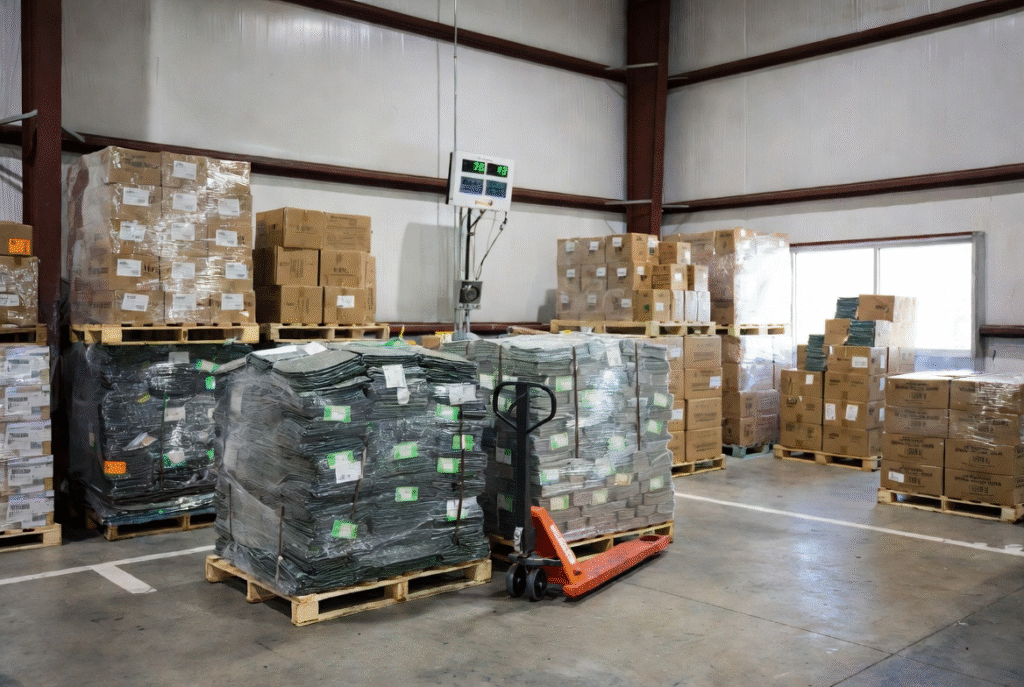
Use this checklist to maintain optimal storage conditions for compostable bags in your warehouse or facility.
| Item | Check | Ideal Condition |
|---|---|---|
| ☐ | Temperature | 15–25°C (59–77°F) |
| ☐ | Humidity | Below 50–55% relative humidity |
| ☐ | Packaging | Sealed in original cartons or boxes |
| ☐ | Sunlight | No direct sunlight or UV exposure |
| ☐ | Ventilation | Good air circulation in storage area |
| ☐ | FIFO Rotation | Use older stock before newer stock |
| ☐ | Heat Sources | Keep bags away from radiators, hot ceilings, and windows |
| ☐ | Floor Storage | Store pallets off the floor to prevent moisture absorption |
Storage Do’s and Don’ts
| ✅ DO | ❌ DON’T |
|---|---|
| Store at moderate temperatures (15–25°C / 59–77°F) | Store near heat sources or hot ceilings |
| Keep bags sealed in original packaging | Open cartons and expose bags to air |
| Use FIFO inventory rotation | Let older stock sit behind new stock |
| Store in dry, ventilated areas | Store in damp or humid warehouses |
| Protect from sunlight and UV | Place pallets near windows or outdoors |
| Store in kitchen pantry, cupboard, or drawer | Store in garages, attics, or basements with temperature swings |
Practical Recommendations
For Home Users
- Store compostable bags in a kitchen pantry, cupboard, or drawer — not under the sink where moisture is high
- Keep bags in their original resealable packaging after opening
- Use bags within 6-9 months of purchase for best performance
- If bags feel sticky or brittle, use them for light, dry waste only
For Retailers
- Monitor warehouse temperature and humidity regularly
- Train staff on proper storage conditions
- Use FIFO inventory rotation — put newer stock behind older stock
- Check compostable bags shelf life labels before restocking
- Offer storage tips to customers to reduce returns or complaints
For Importers/Distributors
- Verify compostable bags shelf life and storage requirements before ordering
- Ask suppliers for material formulation details (higher PLA = more stable)
- Ensure shipping containers are climate-controlled
- Store pallets off the floor in warehouses
- Test sample batches before large orders if storage conditions are uncertain
For Warehouses
- Install temperature and humidity monitoring systems
- Ensure good air circulation throughout storage areas
- Keep bags away from exterior walls where temperature fluctuates
- Use opaque packaging to block UV light
- Implement FIFO rotation at the pallet level
Shelf Life vs Certification
Certification confirms that a bag meets compostability standards. It does not guarantee unlimited compostable bags shelf life.
According to the Biodegradable Products Institute (BPI), the BPI Certification Mark is an official third-party certification symbol that verifies a product meets ASTM D6400 or D6868 standards for compostability. However, certification confirms compostability under the right conditions — not storage durability.
As the U.S. Environmental Protection Agency (EPA) notes in its federal purchasing recommendations, BPI Commercial Compostability is one of the recognized ecolabels for certified commercially compostable products. This government endorsement reinforces the credibility of BPI certification — but again, it applies to compostability, not shelf life.
Even certified products can lose performance if stored incorrectly. That’s why distributors should always verify both: the certification logo on the bag (you can search the BPI online catalog to confirm a product’s certification status), and the storage conditions in their warehouse.
| Concept | What It Means |
|---|---|
| Certification | Bag meets ASTM D6400/EN 13432 for compostability |
| Shelf Life | How long the bag maintains performance when stored |
FAQ
Do compostable bags have a shelf life?
Yes. Most certified compostable bags last 6 to 18 months when stored properly. After that, the material may become brittle, sticky, or lose strength.
Do compostable bags expire?
They don’t “expire” suddenly like food. Instead, performance gradually declines. After the shelf life, bags may become brittle, sticky, or lose strength, but they remain safe to use for light loads.
Can expired compostable bags still be used?
Yes — but with caution. Expired bags are safe to use for light, dry waste (paper, packaging). They are not recommended for wet food waste or heavy loads because the risk of tearing or leaking increases significantly. Test a sample batch before using large quantities.
Why do compostable bags become sticky?
Moisture causes the starch in the bag material to swell, making the film soft and sticky. This is a sign that the bags have been exposed to high humidity. Once sticky, the bags may become difficult to separate and less effective.
Why do compostable bags become brittle?
Heat and UV exposure break down the polymer structure, causing the material to become stiff and brittle. Brittle bags tear more easily and should be used only for light-duty applications.
Can you freeze compostable bags?
Yes, but with caution. Freezing can make the bags more brittle, but they remain usable. Allow frozen bags to warm to room temperature before use to reduce the risk of tearing. Do not store bags in the freezer long-term — it can accelerate brittleness.
Can compostable bags be vacuum sealed?
Yes, but with caution. Compostable bags can be vacuum sealed for short-term storage, but the seal may not hold as long as conventional plastic bags because the material is slightly breathable. Use a gentle setting, seal dry items only, and avoid sharp or very moist foods. For long-term freezer storage, conventional vacuum bags are more reliable.
What’s the ideal temperature for storing compostable bags?
15–25°C (59–77°F).
What’s the ideal humidity level for storing compostable bags?
Below 50-55% relative humidity.
How to store compostable bags?
Store compostable bags in a cool, dry, dark place. Keep bags sealed in their original packaging, away from direct sunlight, heat sources, and moisture. Use older stock first.
How long do compostable bags take to degrade?
In industrial composting: 90-180 days. In home composting: 6-12 months (only if OK Compost HOME certified). In landfills: may not degrade at all.
Can you just throw away compostable items?
Technically yes, but it undermines their environmental purpose. In a landfill, without the proper conditions for composting, they may not break down effectively and can produce methane. The correct destination is a composting facility.
What happens if I store compostable bags in a hot warehouse?
Heat accelerates degradation. High temperatures can significantly accelerate molecular breakdown and shorten the shelf life of compostable bags, causing them to become brittle or sticky much faster.
Do compostable bags break down on the shelf?
Not significantly. The degradation process doesn’t truly start until exposed to composting conditions. However, they will begin to weaken after about a year.
What should I do with expired compostable bags?
If they are still usable for light dry waste, use them for that purpose. If they are degraded, contact your local composting facility to see if they can accept them. Otherwise, dispose of them in the trash.
Do compostable bags degrade in the ocean or soil?
Compostable certifications apply only to controlled composting environments. In the ocean or soil, they may not break down as intended.
Conclusion
The compostable bags shelf life of compostable bags is not a fixed number — it depends primarily on how you store them. Under proper conditions (15-25°C / 59-77°F, humidity below 55%, away from sunlight), most certified compostable bags will last 6 to 18 months. Poor storage can cut that time in half.
Key takeaways:
- Most compostable bags last 6–18 months when stored properly
- Temperature, humidity, and light are the main factors affecting shelf life
- Ideal storage: 15–25°C (59–77°F), humidity below 55%, in dark, sealed packaging
- Shelf life is not certification — certification proves compostability, not durability
- Use FIFO inventory rotation to prevent stock loss
- Expired bags can still be used for light, dry waste — but test before using for heavy loads
Ready to buy certified compostable bags with confidence?
Browse HEMCbags compostable bags | Learn more about compostable certifications