
Author: HEMCbags Team | Sustainable Packaging Specialists
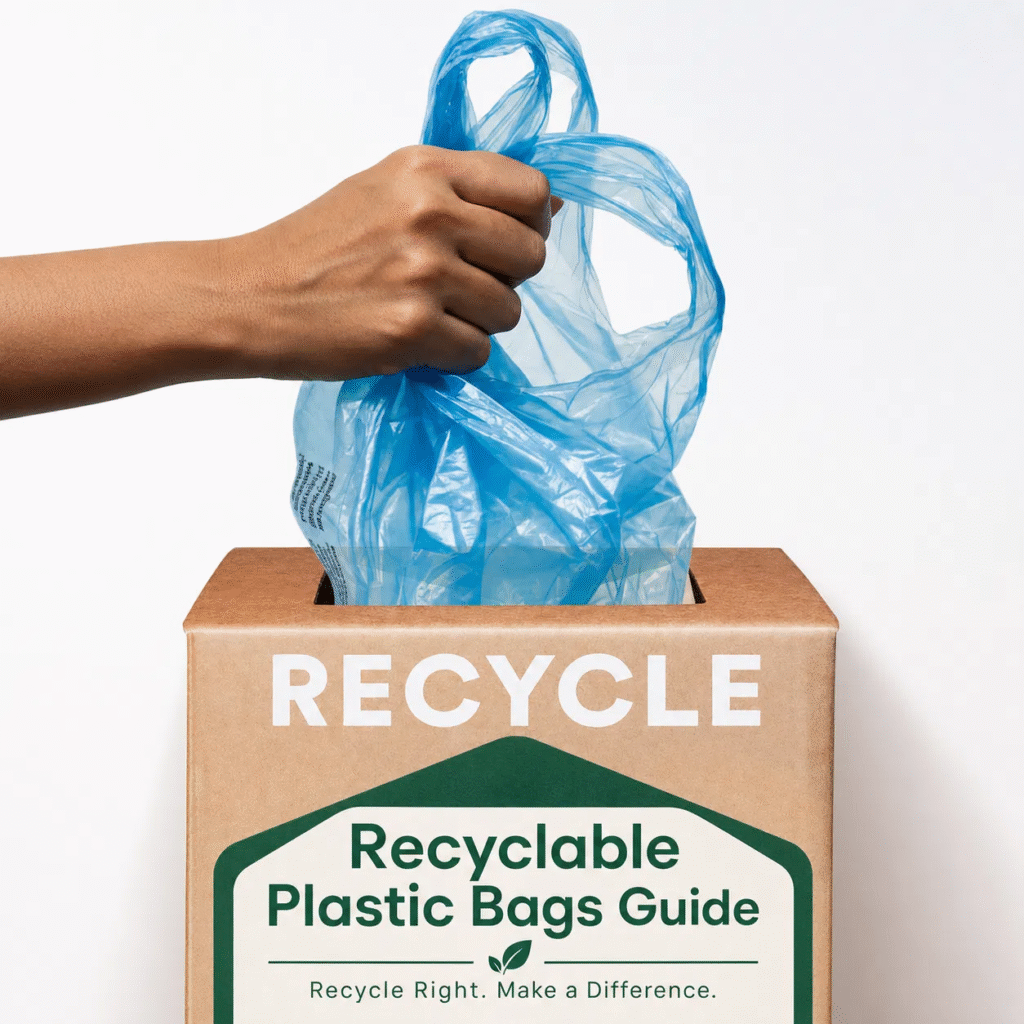
Quick Answer: Recyclable plastic bags are widely available, but not all of them can be recycled through curbside programs. Yes, many plastic bags are recyclable — but only through store drop-off programs, not curbside bins. Plastic bags made from polyethylene (HDPE #2 or LDPE #4) can be recycled through specialized programs at grocery and retail stores . However, bags must be clean, dry, and free of food residue. Biodegradable and compostable bags are not recyclable and will contaminate the recycling stream .
Key Takeaways:
- ✔ Recyclable bags: Grocery bags, bread bags, produce bags, dry cleaning bags, clear plastic shopping bags, and plastic film — if they are clean, dry, and made from #2 (HDPE) or #4 (LDPE) plastic
- ✔ NOT recyclable: Biodegradable bags, compostable bags, heavily soiled bags, bags with food residue, or bags made from other plastic types
- ✔ Where to recycle: Store drop-off locations at grocery and retail chains — not curbside recycling bins
- ✔ Why not curbside: Plastic bags tangle in recycling machinery, causing costly shutdowns and equipment damage
- ✔ What happens next: Recycled bags are cleaned, shredded, melted into pellets, and turned into composite lumber, new bags, and construction materials
What Does “Recyclable Plastic Bag” Actually Mean?
A recyclable plastic bag is one that can be collected, processed, and turned into new products rather than ending up in a landfill. However, the term “recyclable” doesn’t mean you can toss it in your curbside bin. Most plastic bags are technically recyclable but require special handling due to their lightweight, flexible nature .
Why the confusion exists:
- Many consumers assume the recycling symbol on a bag means it goes in the curbside bin
- The resin identification code (numbers 1-7) indicates the plastic type, not whether it’s recyclable in your local program
- Different municipalities have different rules, making it difficult to know what’s accepted
Which Plastic Bags Can Be Recycled?
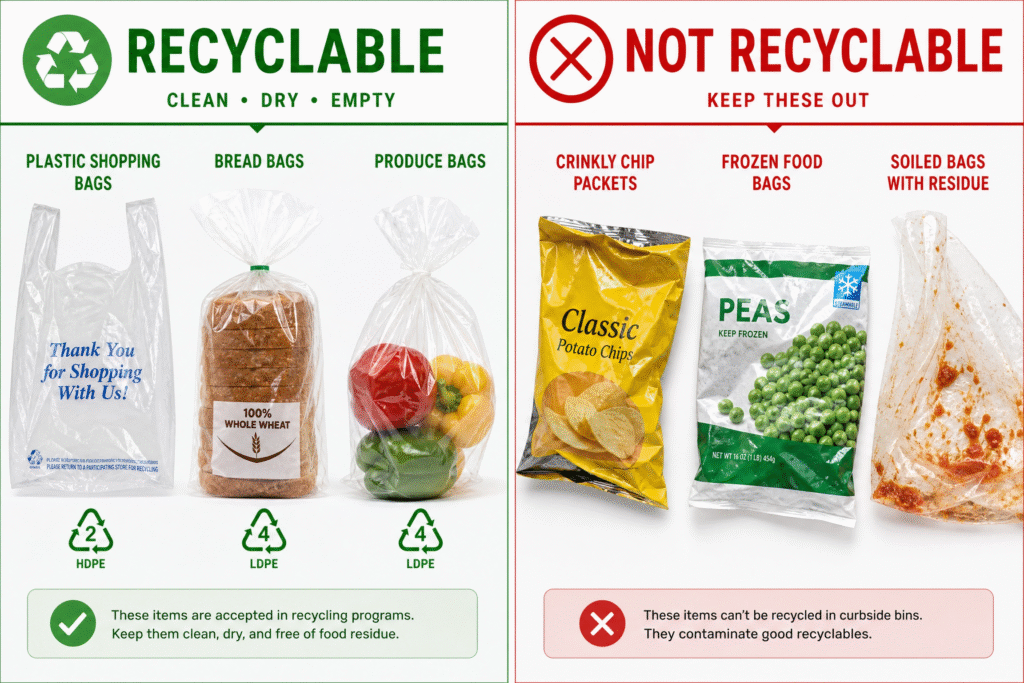
Acceptable Plastic Bags (Clean and Dry)
According to MAWEB and the NexTrex program, the following types are accepted at most store drop-off locations if they are clean, dry, and free of food residue :
| Type | Examples | Resin Code |
|---|---|---|
| Grocery bags | Shopping bags, retail bags, clear plastic shopping bags | #2 HDPE or #4 LDPE |
| Bread bags | Loaf bags, bun bags | #4 LDPE |
| Produce bags | Fruit and vegetable bags | #4 LDPE |
| Dry cleaning bags | Garment bags | #4 LDPE |
| Bubble wrap | Packaging air pillows | #4 LDPE |
| Plastic shipping envelopes | Peel-and-seal mailers | #4 LDPE |
| Ziplock bags | Resealable food storage bags | #4 LDPE |
| Newspaper bags | Home delivery sleeves | #4 LDPE |
| Case wrap | Water bottle and bulk packaging wrap | #4 LDPE |
Quick Test: If you pull the plastic with both hands and it stretches, it’s likely recyclable polyethylene. If it tears like paper or makes a crinkly sound, it is not accepted .
NOT Recyclable Plastic Bags
| Type | Why Not |
|---|---|
| Biodegradable bags | Not compatible with film recycling; contaminate the stream |
| Compostable bags | Made from PLA or other bioplastics; not accepted |
| Heavily soiled bags | Food residue contaminates the recycling process |
| Bags with labels/stickers | Labels are different materials and must be removed |
| Metallic or foil-lined bags | Chip packets, coffee bags — multi-material |
| Frozen food bags | Different plastic type, not compatible |
| Candy wrappers | Multi-layer plastic, not recyclable |
Understanding Resin Codes
According to MAWEB, the numbers on plastics are not recycling symbols — they are resin identification codes that indicate the type of plastic . This distinction is important because a #4 plastic bag made from LDPE can be recycled through store drop-off programs, but the same #4 code on a different type of product might not be accepted everywhere .
| Code | Plastic Type | Recyclable? | Common Uses |
|---|---|---|---|
| #1 | PET | ✅ Curbside | Water bottles, food containers |
| #2 | HDPE | ✅ Store drop-off | Grocery bags, milk jugs, clear plastic bags |
| #3 | PVC | ❌ Not recyclable | Cling film, pipes |
| #4 | LDPE | ✅ Store drop-off | Bread bags, produce bags, bubble wrap |
| #5 | PP | ⚠️ Limited | Yogurt containers, medicine bottles |
| #6 | PS | ❌ Not recyclable | Styrofoam, packing peanuts |
| #7 | Other | ❌ Not recyclable | PLA, polycarbonate |
Key takeaway: Look for #2 (HDPE) or #4 (LDPE) on plastic bags. These are the types accepted at most store drop-off programs .
Types of Plastic Bags
| Type | Examples | Resin Code | Recyclable? |
|---|---|---|---|
| Grocery / Shopping bags | Retail bags, clear shopping bags | #2 HDPE or #4 LDPE | ✅ Store drop-off |
| Clear plastic bags | Clear shopping bags, produce bags, garment bags | #2 HDPE or #4 LDPE | ✅ Store drop-off |
| Bread bags | Loaf bags, bun bags | #4 LDPE | ✅ Store drop-off |
| Produce bags | Fruit and vegetable bags | #4 LDPE | ✅ Store drop-off |
| Dry cleaning bags | Garment bags | #4 LDPE | ✅ Store drop-off |
| Bubble wrap | Packaging air pillows | #4 LDPE | ✅ Store drop-off |
| Ziplock bags | Resealable food storage bags | #4 LDPE | ✅ Store drop-off |
| Biodegradable bags | Plant-based, cornstarch | Not applicable | ❌ Not recyclable |
| Compostable bags | PLA, PBAT, starch blends | Not applicable | ❌ Not recyclable |
| Multi-material bags | Foil-lined, chip packets | Not applicable | ❌ Not recyclable |
Where to Recycle Plastic Bags
NexTrex Program (Recommended)
The NexTrex program is the most reliable plastic bag recycling network in the U.S. According to Trex Company, the program has approximately 10,000 drop-off locations across all 50 states, including Alaska and Hawaii . Trex is one of the largest recyclers of polyethylene (PE) film in North America, reclaiming and repurposing more than 300 million pounds of discarded plastic material annually .
Key features of the NexTrex program:
- Locations tracked through to Trex’s manufacturing facilities
- Materials are confirmed to be used in composite decking products
- Directory includes chains like Food Lion, Giant, Harris Teeter, and Wegmans
- Search for locations at NexTrex
Store Drop-Off Programs
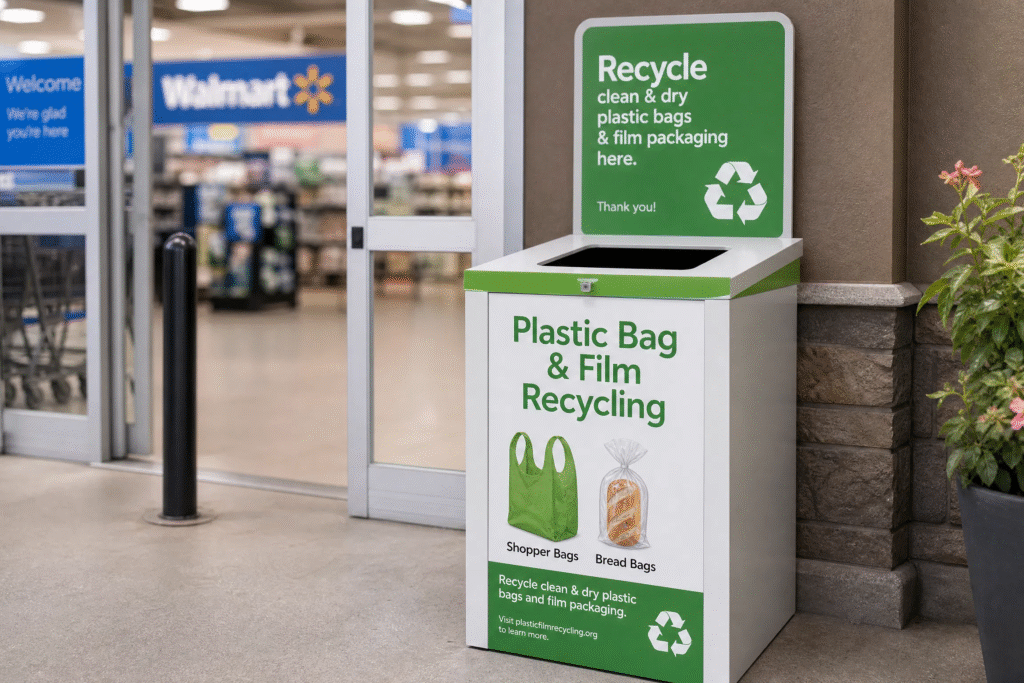
Many grocery and retail stores offer plastic bag recycling bins near their entrances :
- Walmart – Most locations have recycling bins near entrances
- Target – Accepts plastic bags and film at many stores
- Kroger – Participates in store drop-off programs
- Safeway – Accepts clean, dry plastic bags
Specialized Recycling Programs
Ridwell: Mail-in recycling service for hard-to-recycle plastics, including plastic film. Costs start with prepaid bags available in select areas .
Flexible Film Recycling Alliance Directory: Launched a directory of over 20,000 drop-off locations across all 50 states and Puerto Rico, with a commitment to third-party verification .
What About Curbside Recycling?
Most curbside recycling programs do not accept plastic bags because they tangle in machinery, causing damage and costly shutdowns . According to the New Hampshire Department of Environmental Services, plastic bags and film “do not belong in your recycling bin with plastic containers” .
Do not put plastic bags in your curbside recycling bin. They cause significant problems at recycling facilities .
How to Recycle Plastic Bags: Step-by-Step
Step 1: Check if the Bag Is Recyclable
- Look for #2 (HDPE) or #4 (LDPE) on the bag
- Ensure the bag is clean and dry — no food residue
- Remove any labels, stickers, or receipts
- Check that the bag is not biodegradable, compostable, or multi-material
Pro Tip: If your plastic bag has a paper label that won’t come off, cut it out with scissors .
Step 2: Collect and Bundle
- Gather enough bags to make the trip worthwhile
- Bundle bags together in one plastic bag to keep them contained
- Keep them dry before dropping off
Step 3: Find a Verified Drop-Off Location
- Use the NexTrex directory for verified locations
- Ask your local grocery store if they have a recycling bin
- Check the Flexible Film Recycling Alliance directory
Step 4: Prepare for Drop-Off
- Ensure bags are clean, dry, and free of residue
- Remove any paper receipts or labels
- Do not include biodegradable or compostable bags
Step 5: Drop Off
- Place bags in the designated store collection bin
- If bins are full, come back another time or find another location
What Happens to Recycled Plastic Bags?
The recycling process for plastic bags follows these steps according to GreenCitizen:
1. Collection: Bags are collected from store drop-off bins and transported to specialized facilities.
2. Sorting: Bags are manually or automatically separated from other materials .
3. Cleaning: Bags are washed to remove any remaining residue or contaminants .
4. Shredding: Cleaned bags are shredded into small pieces .
5. Pelletizing: Shredded plastic is melted and reformed into pellets .
6. Manufacturing: Pellets are melted again and molded into new products .
Products Made from Recycled Bags
According to GreenCitizen and NexTrex, recycled plastic bags are transformed into a variety of products :
- Composite lumber for decking and outdoor furniture — the most common use
- New plastic bags (partially or fully recycled content)
- Recycling bins and compost bins
- Construction materials (pipes, floor tiles, sheeting, playground equipment)
- Fence posts and park benches
Plastic Bag Recycling Flowchart
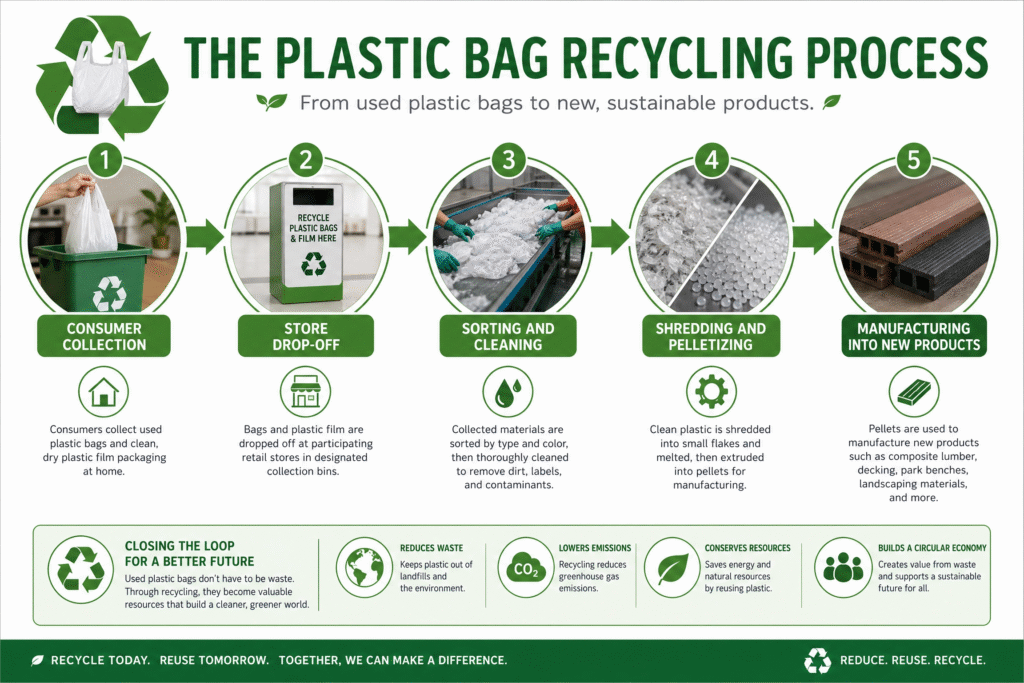
Consumer ↓ Store Drop-off Location ↓ Sorting (manual/automatic separation) ↓ Cleaning (removing contaminants) ↓ Shredding (reducing to small pieces) ↓ Pelletizing (melting into plastic pellets) ↓ Manufacturing (composite lumber, new bags, bins, construction materials)
Common Mistakes to Avoid
| Mistake | Why It’s Wrong | What To Do Instead |
|---|---|---|
| Putting plastic bags in curbside recycling | They tangle in machinery and cause costly damage | Use store drop-off bins |
| Recycling dirty or wet bags | Contaminates the entire recycling batch | Only recycle clean, dry bags |
| Including biodegradable or compostable bags | Not compatible with film recycling | Keep them out; they contaminate the stream |
| Not removing labels or receipts | Labels are different materials and cannot be processed | Cut out labels before recycling |
| Assuming “biodegradable” means “recyclable” | Biodegradable bags are not recyclable | Check for #2 or #4 resin code |
Plastic Bag Recycling Challenges
Despite technical recyclability, plastic bag recycling faces significant obstacles:
1. Infrastructure Limitations: A 2025 report from the Henry Royce Institute found that although flexible plastics make up more than a quarter of consumer plastic packaging, only around 7% is recycled each year in the UK . The report identified four major barriers: insufficient UK recycling infrastructure, packaging that’s difficult to recycle by design, weak end markets, and poor data .
2. Contamination: Food residue, labels, and non-recyclable materials contaminate batches and cause entire loads to be rejected .
3. Machinery Issues: Plastic bags tangle in sorting equipment, causing costly shutdowns and damage .
4. Low Recycling Rates: According to the EPA, only 9% of plastics overall are recycled .
5. Consumer Confusion: Different rules in different municipalities make it difficult for consumers to know what to do .
Are Biodegradable or Compostable Bags Recyclable?
No. Biodegradable and compostable bags should not be placed in plastic bag recycling streams .
Why:
- They are made from different materials (PLA, PBAT, starch blends) that are not compatible with polyethylene film recycling
- They contaminate the recycling process, potentially rendering entire batches unusable
- They cannot be processed in standard plastic film recycling facilities
What to do instead: Compostable bags should go to industrial composting facilities. Biodegradable bags should go to landfill as a last resort — they are not designed for any disposal system that reliably works at scale.
FAQ
Are plastic bags recyclable?
Yes, many plastic bags made from #2 HDPE or #4 LDPE are recyclable — but only through store drop-off programs, not curbside recycling bins .
Why can’t plastic bags go in the recycling bin?
Plastic bags tangle in sorting machinery, causing costly damage and shutdowns. They are lightweight and easily blown away, creating litter and contamination .
Can biodegradable plastic bags be recycled?
No. Biodegradable bags are made from different materials and contaminate the plastic film recycling stream .
Where can I recycle plastic bags?
At store drop-off bins in major grocery chains like Target, Walmart, Kroger, and Safeway . Use verified programs like NexTrex for confidence that bags are actually recycled .
Are bread bags recyclable?
Yes, if they are clean, dry, and made from #4 LDPE plastic .
What do the numbers on plastic bags mean?
The numbers (#1-#7) are resin identification codes indicating the plastic type, not whether it’s recyclable . #2 (HDPE) and #4 (LDPE) are the types accepted in store drop-off programs.
Are plastic grocery bags recyclable?
Yes. Grocery bags are typically made from #2 HDPE or #4 LDPE and are accepted at store drop-off recycling bins .
Are clear plastic bags recyclable?
Yes. Clear plastic shopping bags are typically made from #2 HDPE or #4 LDPE and can be recycled through store drop-off programs. Like other plastic bags, they must be clean, dry, and free of food residue.
Are Ziplock bags recyclable?
Yes, if they are clean, dry, and free of food residue. They are made from #4 LDPE and can go in store drop-off bins .
Can bubble wrap be recycled?
Yes, bubble wrap is made from polyethylene and can be recycled through store drop-off programs. Remove any labels and ensure it is clean and dry .
What happens to recycled plastic bags?
They are cleaned, shredded, melted into pellets, and turned into new products like composite lumber, new bags, construction materials, and more .
Can recycled plastic bags be made into new bags?
Yes, recycled plastic film can be made into new garbage bags, liners, and other plastic films .
Further Reading
Explore related topics in our sustainable packaging series:
- Plastic Bags Guide – Types, materials, uses, recycling, and environmental impact of plastic bags.
- Compostable Bags Explained – Materials, certifications, and everything you need to know about compostable bags.
- Biodegradable Explained – What “biodegradable” really means, why it’s often misleading, and how it compares to compostable.
- Compostable Certifications Explained – BPI vs TÜV vs ASTM D6400 vs EN 13432 – what each certification means and which you need.
Conclusion
Plastic bags are recyclable — but only if you know the rules. The most important things to remember:
Key takeaways:
- Look for #2 or #4 — these are the recyclable plastic types
- Clean, dry bags only — food residue contaminates the stream
- Store drop-off, not curbside — curbside recycling cannot handle bags
- Verify your store — use NexTrex or FFRA directories to ensure bags are actually recycled
- Keep out biodegradable/compostable — they contaminate the recycling process
The reality is that plastic bag recycling rates remain low (around 7-12% in some regions) , and many store drop-off programs have faced scrutiny about whether collected bags actually end up recycled. The most effective strategy is still reduction — using reusable bags and minimizing single-use plastic consumption.
Ready to explore better alternatives?
Browse HEMCbags sustainable packaging solutions | Learn more about compostable alternatives