
Quick Answer:
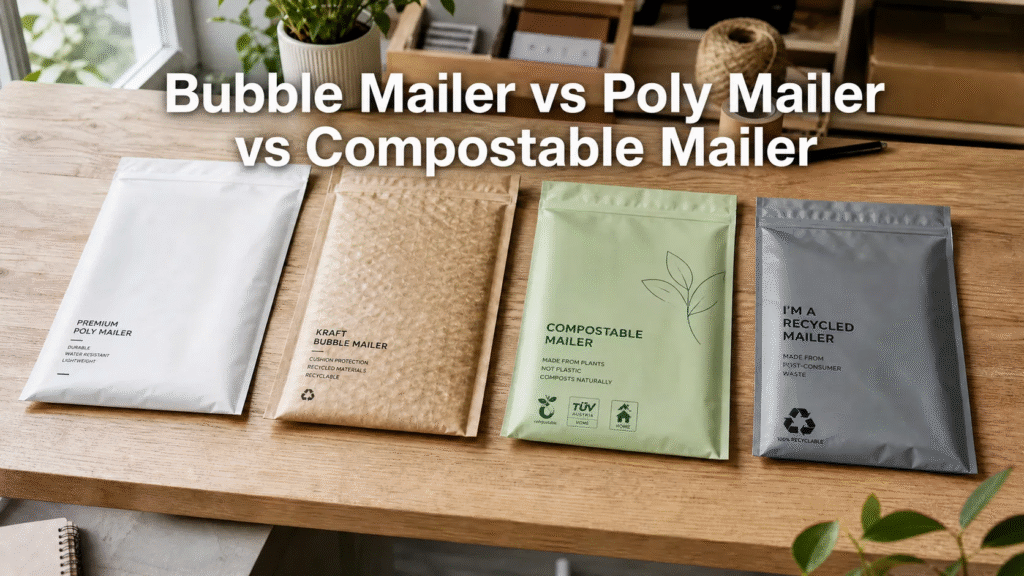
Poly mailers are generally best for low-cost shipping of soft goods, bubble mailers are better for fragile products that need cushioning, and certified compostable mailers are best for brands with a suitable composting pathway. Recycled poly mailers offer another option for reducing reliance on virgin plastic while retaining conventional poly performance. The right choice depends on product protection, cost, shipping requirements, and end-of-life infrastructure.
Key Takeaways:
- Poly Mailers are lightweight, waterproof, cost-effective, and ideal for soft goods and non-fragile items
- Bubble Mailers provide cushioning for fragile items like cosmetics, electronics, and books
- Compostable Mailers are commonly made from compostable polymer blends such as PBAT/PLA and may include starch or other bio-based components depending on the formulation. They are designed to biodegrade under specified industrial composting conditions rather than persist as conventional plastic fragments. Some products may also be certified for home composting, depending on the specific product and certification
- Recycled Poly Mailers (PCR) offer a middle ground: reduced reliance on virgin plastic, similar performance, and modest cost premium
Why This Guide Is Different:
This guide is based on practical experience working with international packaging buyers and manufacturers, including material selection, custom printing, certification requirements, sampling, and bulk production. The recommendations reflect real sourcing considerations rather than theoretical comparisons.
The Three Mailer Types (Plus a Fourth Option)
| Feature | Poly Mailing Bags | Bubble Mailer | Compostable Courier Bags | Recycled Poly Mailer |
|---|---|---|---|---|
| Material | Virgin LDPE | LDPE + bubble | Compostable polymer blend (e.g., PBAT/PLA/starch) | PCR LDPE |
| Protection Level | Basic (waterproof, tear-resistant) | Moderate (shock absorption) | Basic (comparable to poly) | Basic (same as virgin poly) |
| Weight | Lightest | Moderate | Moderate | Lightest |
| Cost | Lowest | Medium | Highest | Low-medium |
| Shelf Life | Generally long under proper storage | Generally long under proper storage | Varies by formulation and storage conditions | Generally long under proper storage |
| Best For | Apparel, soft goods, high-volume e-commerce | Cosmetics, small electronics, books | Sustainable brands, organic products, zero-waste businesses | High-volume brands reducing virgin plastic |
| Certification / Verification | None specific | Depends on construction | BPI, EN 13432, OK Compost, depending on market/product | GRS or other recycled-content verification |
| End-of-Life | Store drop-off recycling where accepted | Store drop-off recycling where accepted | Industrial composting; some products certified for home composting | Store drop-off recycling where accepted |
| Custom Printing | Excellent | Good | Excellent | Excellent |
Custom Poly Mailers: The E-Commerce Default
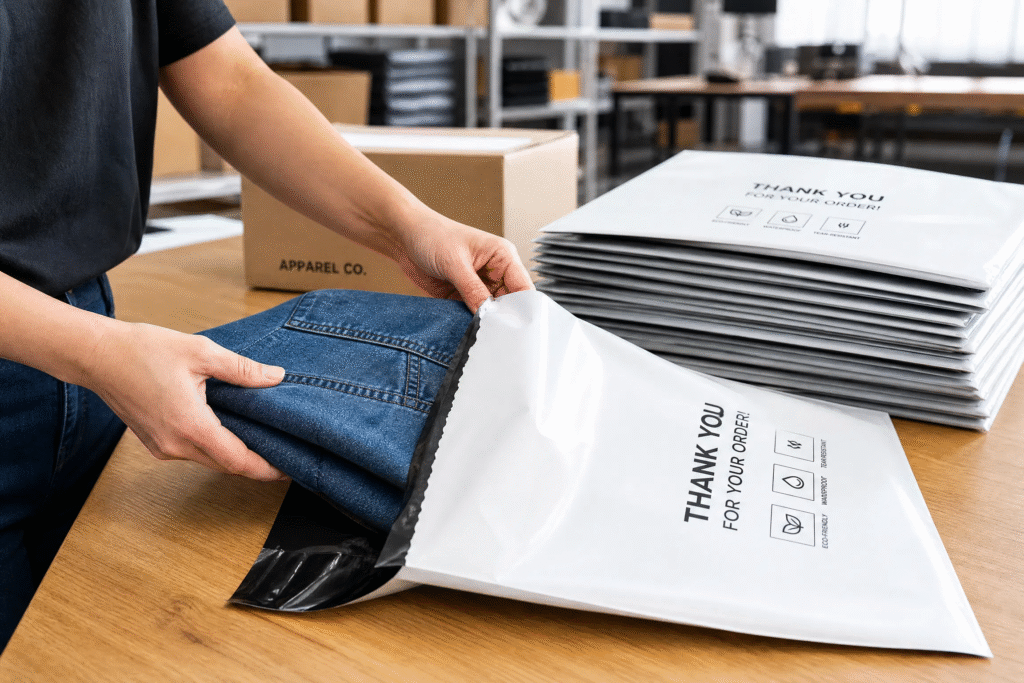
Custom poly mailing bags are the workhorses of e-commerce shipping. Made from polyethylene (PE) film, they are lightweight, waterproof, and cost-effective. Poly mailers are lightweight and compact, which can help reduce packaging weight and, depending on the carrier and shipment dimensions, shipping costs.
Advantages
- Lightweight: Reduces packaging weight and shipping costs
- Waterproof and dustproof: Protects contents from moisture and dirt
- Tear-resistant: Withstands handling in transit
- Cost-effective: The most affordable option
- Customizable: Full-surface printing available
Disadvantages
- No cushioning: Unsuitable for fragile items
- Plastic-based: Even recycled poly mailing bags are still plastic
- Recycling complexity: Requires store drop-off, not curbside
Best For
Apparel, accessories, soft goods, documents, and any non-fragile items shipped in high volume.
Padded Mailer Bag: Protection Without the Box
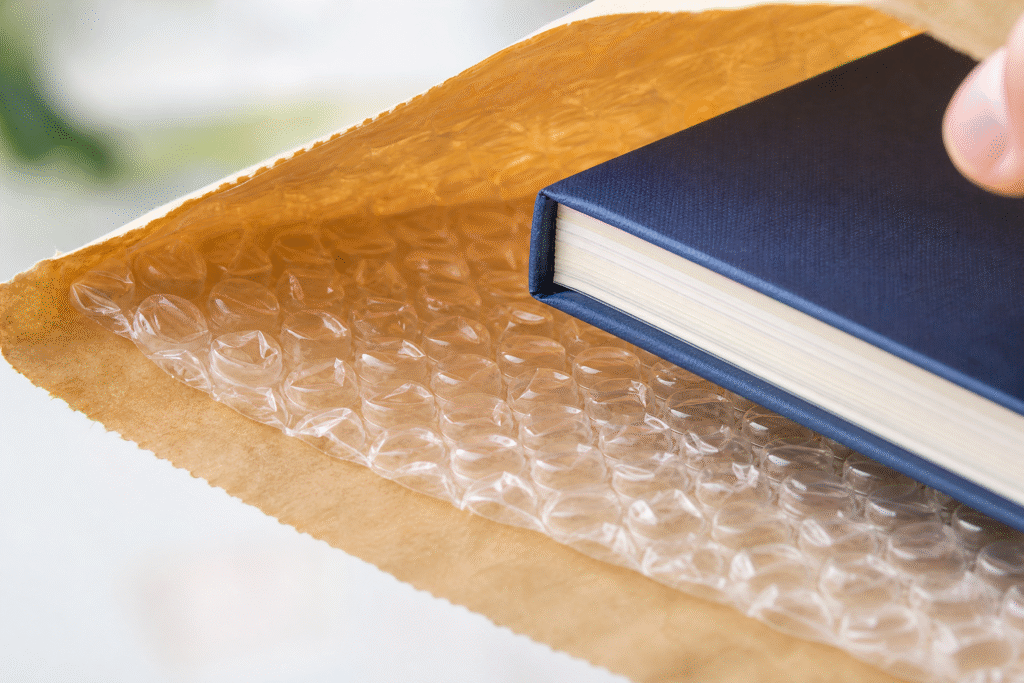
Padded mailer bag combine the lightweight benefits of a poly mailer with an added layer of bubble cushioning for shock absorption. They are ideal for items that need more protection than a flat poly mailer but don’t require a rigid box.
Advantages
- Shock absorption: Protects against drops and impacts
- Adds cushioning without the bulk of a rigid box
- Moisture-resistant: Poly bubble mailing bags generally provide water resistance; performance varies by outer material and construction
Disadvantages
- Higher cost than poly mailers
- Recycling challenges: Multi-material construction can make recycling more difficult, depending on the local recycling program and mailer design
- Same weight/sharp object limitations: Heavy or sharp items may puncture
Best For
Cosmetics, skincare products, small electronics, jewelry, books, CDs, and other fragile small items.
Material Options for Bubble Mailers
- Poly bubble mailers: Fully waterproof with a PE exterior
- Kraft bubble mailers: Natural, paper-based exterior with bubble lining; more eco-friendly perception
- Compostable bubble mailers: Available but less common; confirm certification
Compostable Mailer: Benefits, Limitations & Disposal
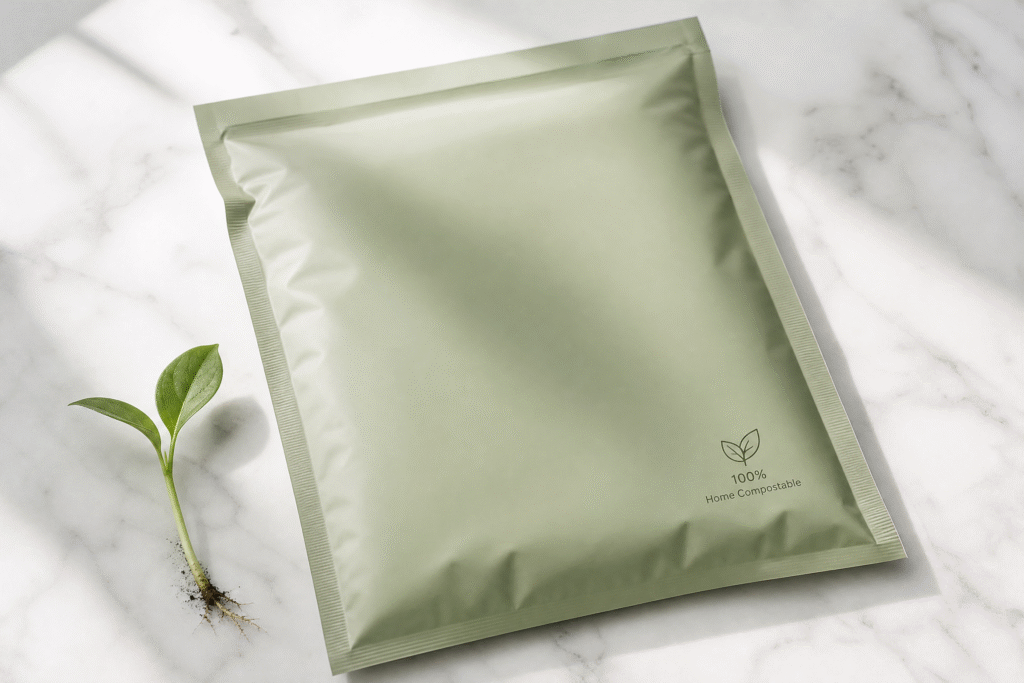
Commercial compostable mailers are commonly made from compostable polymer blends such as PBAT/PLA and may include starch or other bio-based components depending on the formulation. They are designed to biodegrade under specified industrial composting conditions rather than persist as conventional plastic fragments. Many commercially certified compostable mailers are intended for industrial composting, while some products also carry home-composting certification.
Advantages
- Biodegrades under specified conditions: Designed for industrial composting rather than persisting as plastic fragments
- Premium brand experience: Silky matte texture signals eco-commitment
- Certified: Look for BPI (ASTM D6400), EN 13432, or OK Compost certification
- Aligns with sustainability values: Can become part of your brand story
Disadvantages
- Higher cost: Generally more expensive than conventional and recycled poly mailers, though the premium varies significantly by material, size, certification, printing, and order volume
- Requires specific conditions: Most require industrial composting; some may be certified for home composting
- Storage sensitivity: Shelf life varies by formulation and storage conditions; check supplier specifications
- Slightly less puncture-resistant than poly
Best For
Sustainable brands, organic retailers, zero-waste businesses, and DTC brands whose customers actively compost.
The Catch: Disposal Infrastructure is Everything
A compostable shipping bag only delivers its environmental benefit if it actually reaches the appropriate composting system (industrial or home compost depending on certification). If it ends up in a landfill, the conditions may not support the composting process it was designed for, so its intended compostability benefit may not be realized. Clear disposal labeling is essential.
Factors that affect actual cost per shipment:
- Mailer unit cost
- Shipping cost (dimensional weight)
- Storage cost (shelf life)
- Damage rate impact
- Disposal/recycling cost
A $0.20 mailer is not necessarily cheaper than a $0.30 mailer if the cheaper option requires additional protective packaging or results in a higher damage rate.
Recycled Poly Mailers: The Smart Middle Ground
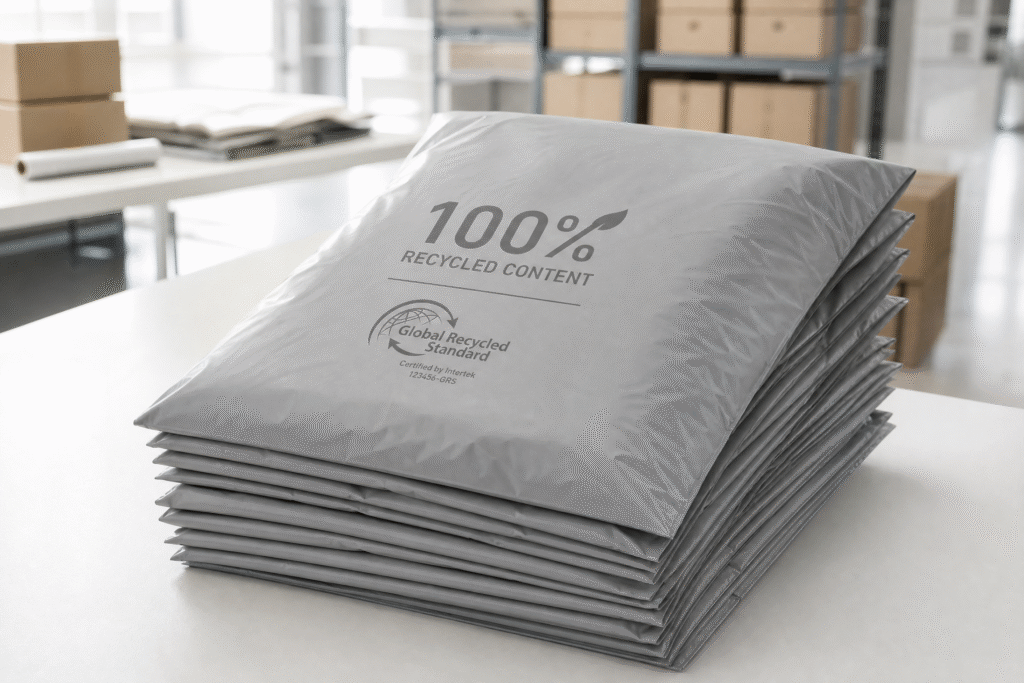
For brands that want to reduce environmental impact without the cost and disposal complexity of compostable mailers, recycled mailers (made from post-consumer recycled LDPE) offer a practical alternative.
Advantages
- Same performance as virgin poly: Tear resistance, waterproofing, and self-seal strip
- Reduces reliance on virgin plastic: Uses post-consumer recycled material
- Cost-effective: Only a modest premium over virgin poly
- Generally long shelf life: No degradation in storage
- Recycled-content verification: Look for GRS or another recognized recycled-content standard
Disadvantages
- Still plastic: Visually similar to virgin poly mailers
- Recycling infrastructure gap: Requires store drop-off; customers often don’t take this step
Best For
High-volume e-commerce sellers who want to reduce virgin plastic use without a significant cost increase.
Full Comparison Table
| Comparison Dimension | Poly Mailing Bag | Bubble Mailing Bag | Compostable Mailer | Recycled Poly Mailer |
|---|---|---|---|---|
| Material | Virgin LDPE | LDPE + bubble | Compostable polymer blend (e.g., PBAT/PLA/starch) | PCR LDPE |
| Weight | ★★★★★ (lightest) | ★★★★ | ★★★★ | ★★★★★ |
| Protection | ★★★ (basic) | ★★★★★ (cushioned) | ★★★ | ★★★ |
| Cost | ★★★★★ (lowest) | ★★★ | ★★ (highest) | ★★★★ |
| Shelf Life | ★★★★ (generally long) | ★★★★ (generally long) | ★★ (varies by formulation) | ★★★★ (generally long) |
| Sustainability | ★★ | ★★ | ★★★★★ | ★★★★ |
| End-of-Life | Store drop-off where accepted | Store drop-off where accepted | Industrial compost / some home compost | Store drop-off where accepted |
| Certification / Verification | None specific | Depends on construction | BPI, EN 13432, OK Compost | GRS |
| Custom Printing | ★★★★★ | ★★★★ | ★★★★★ | ★★★★★ |
Which Mailer Is Right for Your Brand?
How to Choose the Right Mailer
| Your Priority | Best Choice | Why |
|---|---|---|
| Lowest cost | Poly Mailer | Lightweight reduces shipping costs; durable for apparel |
| Maximum cushioning | Bubble Mailer | Cushioning prevents damage without box bulk |
| Reduced virgin plastic | Recycled Poly Mailer | Reduces reliance on virgin plastic while retaining conventional poly performance |
| Certified compostable packaging | Compostable Mailer | Signals commitment to certified compostable solutions |
What We Recommend for B2B Buyers
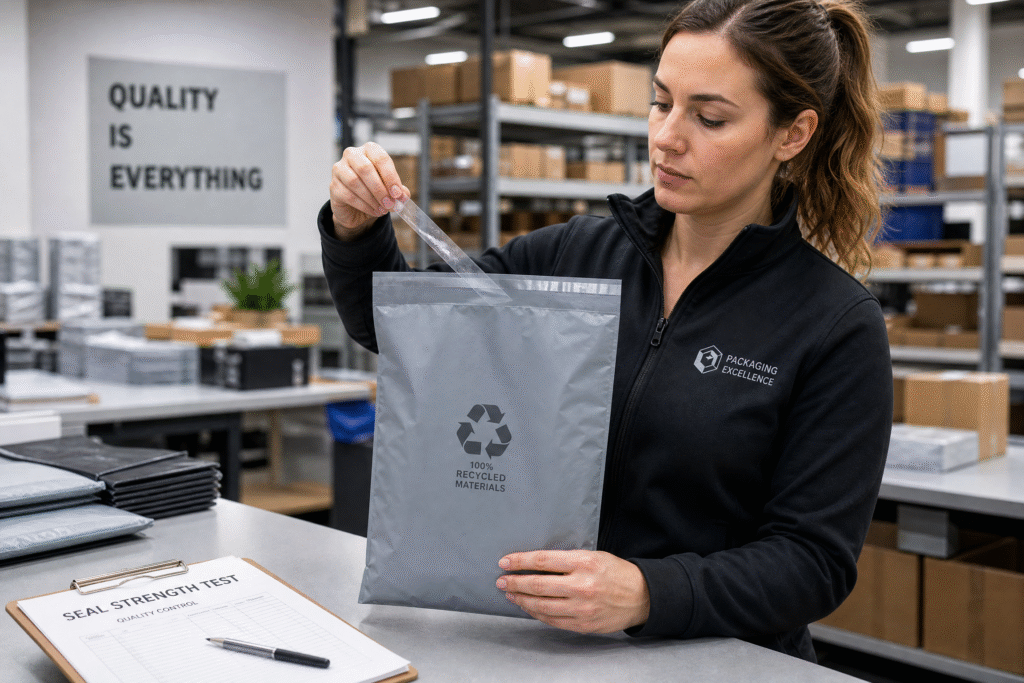
From our experience working with international packaging buyers, the best mailer is rarely determined by material alone. Product dimensions, shipping conditions, required shelf life, printing requirements, order volume, and local disposal infrastructure all affect the right choice.
Key considerations for B2B buyers:
| Consideration | What to Evaluate |
|---|---|
| Product protection | Will the mailer withstand your specific product weight, edges, and handling conditions? |
| Shipping cost | Dimensional weight pricing means lighter isn’t always cheaper — test actual shipping rates |
| Shelf life | If you warehouse packaging for extended periods, compostable mailers may require careful storage |
| Order volume | MOQ differences between options can be significant |
| Local infrastructure | Does your customer’s region have industrial composting or store drop-off recycling available? |
| Brand positioning | Is the sustainability claim aligned with your actual product and customer expectations? |
Sample Testing Checklist for Bulk Orders:
- Drop test (simulate shipping conditions)
- Tear resistance test
- Seal strength test
- Puncture resistance test
- Water resistance test
- Print adhesion test
- Storage test (temperature and humidity)
- Actual shipping test (real transit conditions)
For brands considering compostable mailers, we recommend testing samples under actual packing and shipping conditions before placing a bulk order. Real-world performance — not just certification — should guide your final decision.
Sourcing Considerations
What to Ask Suppliers
| Question | Why It Matters |
|---|---|
| What certifications do you hold? | Look for BPI, EN 13432, OK Compost, or GRS; raw material certification is NOT enough—the finished product must be certified |
| What is your shelf life recommendation? | For compostable mailing, storage conditions (cool, dry, avoid direct sunlight) significantly affect performance; shelf life varies by formulation |
| What is your MOQ? | Compostable shipping bags often have higher MOQs due to material costs |
| Do you manufacture in-house? | Control over quality and consistency |
| Can you provide samples? | Test thickness, sealing, and durability before ordering |
Storage Note for Compostable Mailers
Store in a cool, dry place away from direct sunlight and heat. Avoid humid conditions, which can trigger premature degradation. Typical shelf life varies by formulation and storage conditions; check the supplier’s specification for your specific product.
FAQ
Are compostable mailers as durable as plastic mailers?
Modern compostable mailers have improved substantially in strength and tear resistance. They are generally comparable to standard poly mailers for most e-commerce shipments, though they may be slightly less puncture-resistant for sharp or heavy items.
What’s the difference between biodegradable and compostable mailers?
“Biodegradable” by itself does not specify the environment or timeframe for degradation. Compostable claims should be supported by the appropriate certification or standard for the intended disposal environment.
Do compostable mailers break down in landfills?
Generally, you should not expect certified compostable mailers to compost in a landfill. Compostability standards are designed around defined composting conditions, not landfill environments. Landfills vary widely in oxygen, moisture, temperature, and microbial activity, so compostable packaging should not be labeled or marketed as landfill-degradable.
What certifications should I look for?
BPI (US) — certifies compliance with ASTM D6400
OK Compost INDUSTRIAL (TÜV Austria) — EN 13432 compliance for industrial composting
OK Compost HOME — certified for backyard composting
EN 13432 — European standard for packaging compostability
GRS — Global Recycled Standard for recycled content verification
Can compostable mailers be custom printed?
Yes. Poly, bubble, and compostable mailers can all be custom printed. The suitable ink and printing process depend on the film structure, printing method, and supplier requirements.
Are compostable mailers more expensive than poly mailers?
Compostable mailers generally carry a higher unit cost than virgin and recycled poly mailers, although the difference depends heavily on size, thickness, certification, printing, and order volume. For brands with high-volume shipping, the unit cost difference can be significant over time.
About the Author
Written by Chris
Founder, HEMCBags
Chris is the founder of HEMCBags, a compostable packaging supplier specializing in PBAT/PLA bags, biodegradable packaging solutions, and certified compostable products for global markets.
Since 2015, he has been involved in developing compostable packaging solutions for international buyers across the US, UK, and European markets, with specific experience in compostable garbage bags, shopping bags, mailers, and custom packaging projects. His work includes material formulation selection, certification requirements (EN 13432, ASTM D6400, OK Compost HOME), and custom bag development for brands and distributors.