
Author: HEMCbags Technical Team | 10+ Years Experience
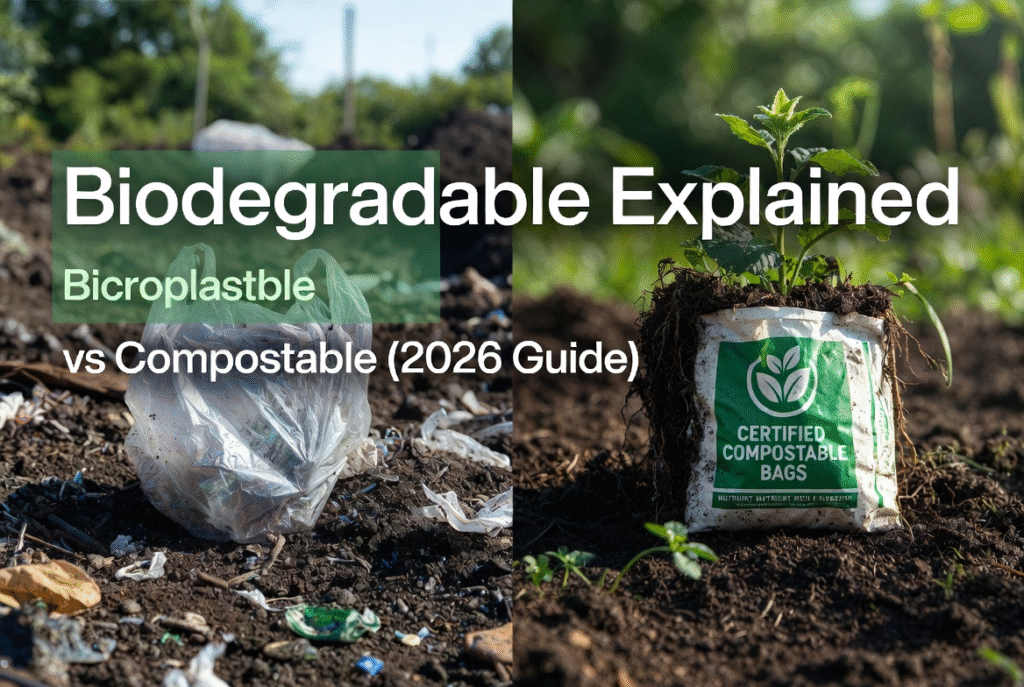
Quick Answer: Biodegradable means a material can be broken down by microorganisms into natural elements. However, the term has no legal standard, no required timeframe, and no third-party verification. A product can be called biodegradable whether it takes 6 months or 500 years.
Key Takeaways:
- ✔ Biodegradable means “capable of being broken down by microorganisms” — but with no set timeframe.
- ✔ Most biodegradable products do not break down in landfills — they lack oxygen and moisture.
- ✔ This term is unregulated — four US states have banned it in marketing.
- ✔ Biodegradable is not the same as compostable — and oxo-biodegradable is even worse.
What is Biodegradable Meaning?
Scientific Definition: Biodegradation is the process by which microorganisms (bacteria, fungi) break down organic matter into simpler substances like carbon dioxide, water, and biomass.
Dictionary Definition: “Biodegradable” means capable of being decomposed by bacteria or other living organisms.
EPA Perspective: According to the U.S. Environmental Protection Agency, biodegradation occurs naturally, but the timeframe and conditions vary widely depending on the material and environment.
Real-world Example: An apple core left on the ground will biodegrade in weeks. A plastic bag labeled “biodegradable” in a landfill may remain intact for years — even decades — because landfills lack the oxygen and moisture needed for the process.
Common Misunderstanding: Most people assume this term means “will disappear quickly.” In reality, there is no timeframe requirement. A product that takes 500 years to break down can legally be called biodegradable.
HEMCbags Technical Insight
At HEMCbags, we’ve supplied more than 50 million certified compostable bags to customers across North America and Europe.
One of the most common misconceptions we encounter is the belief that bags labeled “biodegradable” will break down in a landfill. In reality, landfills are designed as “dry tombs” — compacted, sealed, and lacking the oxygen, heat, and moisture needed for any meaningful breakdown.
That’s why we always recommend verified compostable certifications over vague claims.
How Biodegradation Works
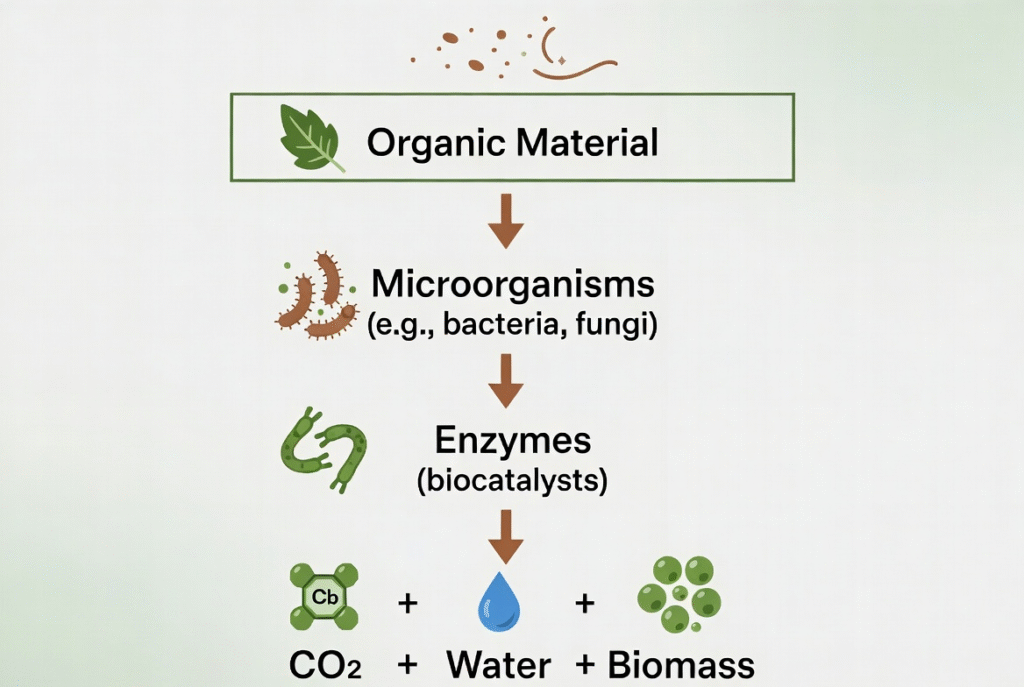
The process is driven by microorganisms. Here is how it works:
The Biodegradation Process:
Organic Material (food, paper, plastics) ↓ Microorganisms (bacteria, fungi) attach to the material ↓ Enzymes break down complex molecules into simpler compounds ↓ Microorganisms consume the compounds for energy and growth ↓ Byproducts: CO₂, water, methane (in anaerobic conditions), and biomass ↓ Complete degradation (time varies widely)
The Five Essential Factors:
| Factor | Role in the Process |
|---|---|
| Microorganisms | Bacteria, fungi, and other microbes that consume organic matter |
| Moisture | Essential for microbial activity |
| Temperature | Warmer temperatures accelerate microbial growth |
| Oxygen | Required for aerobic breakdown (anaerobic produces methane) |
| Time | Highly variable — from weeks to decades |
What Materials Are Biodegradable?
Many biodegradable materials can break down under the right conditions:
| Material | Ability | Typical Timeframe |
|---|---|---|
| Paper | Yes | 2-5 months |
| Wood | Yes | 10-15 years |
| Cotton | Yes | 6-12 months |
| Food Waste | Yes | 1-6 months |
| Leaves | Yes | 6-12 months |
| Natural Fibers (wool, silk) | Yes | 1-5 years |
| Bioplastics (PLA, PBAT) | Yes (in industrial composting) | 3-6 months |
| Conventional Plastics | No (or centuries) | 450+ years |
Why “Biodegradable” Doesn’t Always Mean Environmentally Friendly
The term is widely misunderstood. Here is why:
1. No Timeframe
According to the Biodegradable Products Institute (BPI), this term is not an appropriate marketing claim because it lacks specificity on timeframe and environment. A product can be called biodegradable whether it breaks down in 6 months or 600 years.
2. No Standard
There is no universal standard for this category. Unlike “compostable” (ASTM D6400 / EN 13432), it has no testing requirements, no certification, and no legal definition.
3. Landfill Conditions
Landfills are designed as “dry tombs” — compacted, sealed, and lacking oxygen, light, and moisture. In these conditions, products labeled this way often behave exactly like conventional plastic.
4. Microplastics Risk
Many products in this category are actually “oxo-degradable” — they fragment into smaller pieces (microplastics) rather than fully degrading. This is arguably worse than a whole plastic bag.
5. Four US States Have Banned the Term
California, Washington, Minnesota, and Oregon have banned this label on single-use products because it misleads consumers.
📖 What about compostable? Read our companion guide: Compostable Explained: Meaning, Certifications, Materials & Everything You Need to Know (2026 Guide)
Biodegradable vs Oxo-Biodegradable vs Compostable
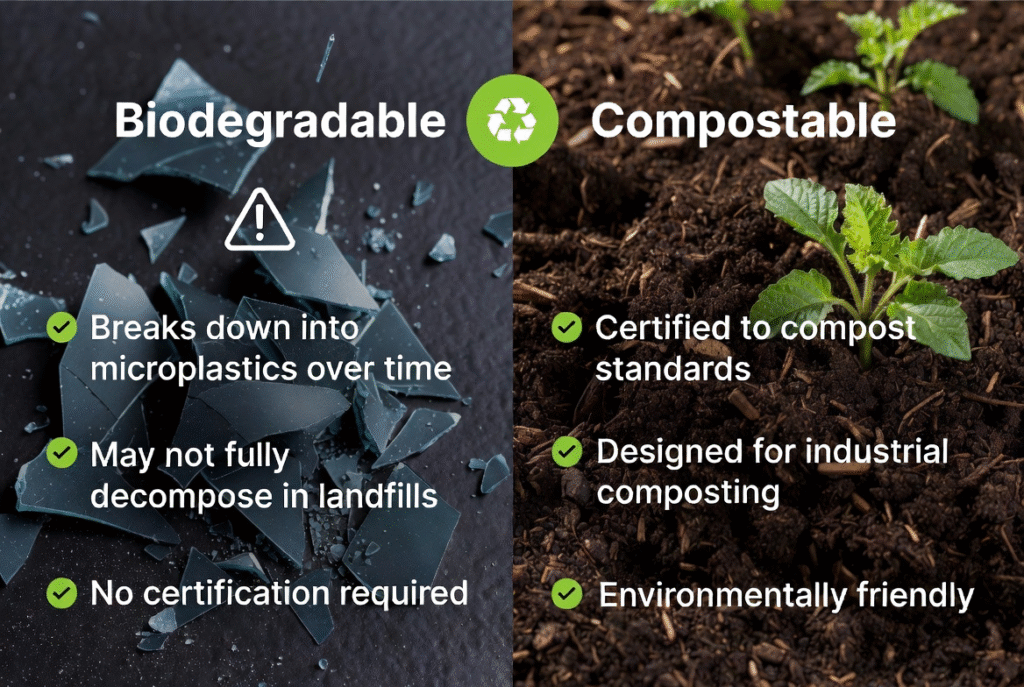
| Feature | Biodegradable | Oxo-Biodegradable | Compostable |
|---|---|---|---|
| Legal standard | None | None | ASTM D6400 / EN 13432 |
| Timeframe | Unspecified | Unspecified | 90-180 days |
| Breakdown process | Microorganisms | Fragmentation + oxidation | Complete decomposition |
| End result | Unknown (may be microplastics) | Microplastics | CO₂, water, biomass |
| Certification | None | None | BPI, OK Compost |
| Regulation | Banned in 4 US states | Banned in EU | Regulated worldwide |
Why oxo-biodegradable is worse: These plastics contain additives that cause them to fragment into tiny pieces. These fragments do not fully break down — they become microplastics that persist in the environment for decades.
Biodegradation Timeline: How Long Does It Take?
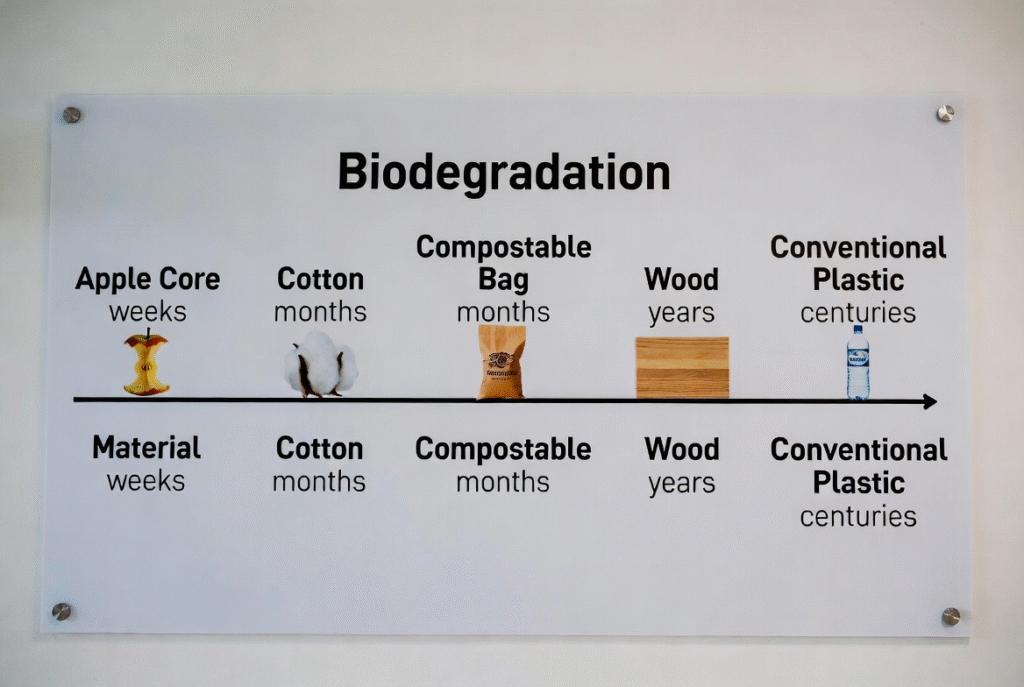
| Material | Typical Time |
|---|---|
| Apple core | 1-2 months |
| Paper | 2-5 months |
| Cotton t-shirt | 6-12 months |
| Orange peel | 6-12 months |
| Wool sock | 1-5 years |
| Compostable bag (industrial) | 3-6 months |
| Compostable bag (home) | 6-12 months |
| Wood | 10-15 years |
| Plastic bottle (conventional) | 450+ years |
| Glass | 1+ million years |
Important: These are estimates under ideal conditions. In landfills, most of these materials take significantly longer.
Advantages and Limitations
Advantages
| Advantage | Explanation |
|---|---|
| Renewable Feedstock | Many come from plant-based sources |
| Reduced Fossil Fuel Dependence | Use less petroleum |
| Reduced Waste Volume | Materials break down when properly disposed |
Limitations
| Limitation | Explanation |
|---|---|
| Requires specific conditions | Most don’t break down in landfills |
| No standard or certification | Anyone can claim “biodegradable” |
| Cost | Often more expensive than conventional plastics |
| Confusion | Consumers often confuse with compostable |
| Microplastics risk | Some fragment into microplastics |
Common Myths
Myth 1: Everything biodegradable disappears quickly
False. The time varies widely — from weeks to centuries. The term does not specify how long.
Myth 2: Everything Biodegrad is compostable
False. Compostable is a specific, certified category. Most products in this category are not compostable.
Myth 3: Biodegradable means safe for the environment
False. Some materials leave behind toxic residue or microplastics.
Myth 4: These bags break down in landfills
False. Landfills lack the oxygen, heat, and moisture required for the process.
Biodegradable vs Compostable: The Key Difference
For a deeper understanding of the distinctions between bio-based, biodegrad, and compostable materials, see the MoeBIOS EU guide which clarifies that these are independent characteristics — a material can be any combination of these properties.
| Compostable | Biodegradable | |
|---|---|---|
| Legal standard | Yes (ASTM D6400 / EN 13432) | No (unregulated) |
| Timeframe | Yes (90-180 days) | No (unspecified) |
| Environment specified | Yes (industrial or home composting) | No |
| Third-party certification | Yes (BPI, OK Compost) | No |
| Leaves microplastics | No (when composted correctly) | Often yes |
| Works in landfill | No | No |
📖 Want to understand compostable in depth? Read our companion guide: Compostable Explained: Meaning, Certifications, Materials & Everything You Need to Know (2026 Guide).
FAQ
What does biodegradable mean?
It means a material can be broken down by microorganisms. However, there is no legal standard, timeframe, or certification requirement.
Can biodegradable plastic be recycled?
No. These plastics contaminate recycling streams and should not be placed in recycling bins.
Does biodegradable mean non-toxic?
Not necessarily. Some materials leave behind toxic residues or microplastics. Compostable products are tested for toxicity.
What’s the difference between biodegradable and compostable?
Compostable is a certified standard with a specific timeframe. The other term has no standard.
How long does biodegradation take?
It varies widely — from weeks to centuries. The term does not specify any timeframe.
What happens to biodegradable plastic in the ocean?
Most does not break down. Cold, dark marine environments slow the process significantly.
What should I look for instead of “biodegradable” bags?
Look for compostable certification logos: BPI, OK Compost, or ASTM D6400.
Why don’t these bags break down in landfills?
Landfills lack the oxygen, heat, and moisture needed for the process.
Are there any benefits to biodegradable products?
Yes — they use renewable resources and reduce fossil fuel dependence. But proper disposal is essential.
Can I put these bags in my compost?
No — unless they are specifically certified as compostable. The label does not mean compostable.
Conclusion
“Biodegradable” is a widely misunderstood term. It sounds environmentally friendly, but without a legal standard or timeframe, it often means very little. Products with this label may take years to break down — or may simply fragment into microplastics.
Key takeaways:
- The term has no legal standard, timeframe, or certification
- Most products with this label do not break down in landfills
- Four US states have banned it on single-use products
- Compostable is a stronger, more reliable standard
- Look for certification logos — not the word itself
Ready to explore better alternatives?
Browse HEMCbags certified compostable bags | Learn more about compostable certifications