
Quick Answer:
The most effective ways to reduce plastic use are:
- Eliminate unnecessary single-use plastics from daily routines
- Replace plastic bags with reusable, paper, or certified compostable options
- Switch from disposable bottles to reusable containers
- Choose products with minimal or paper-based packaging
- Compost food waste when possible instead of using plastic trash bags
- Buy in bulk to reduce packaging waste
If you’re wondering how to reduce plastic use effectively, start with these six actions—they deliver the biggest impact with the least effort.
Key Takeaways:
- Start with the highest-impact changes first—plastic bags, bottles, and packaging
- Reusable products create the biggest long-term impact
- Not all plastic alternatives are equal—look for EN 13432 or ASTM D6400 certification
- Compostable products work best with proper composting systems
- Small daily changes add up to significant environmental impact
Why Should We Reduce Plastic Use?
Learning how to reduce plastic use is one of the most impactful actions individuals and businesses can take to address environmental pollution. Plastic pollution is one of the greatest environmental threats globally. Since the 1950s, over 9 billion tons of plastic have been produced, and a significant portion has ended up in landfills, oceans, and natural ecosystems.
Key facts from the OECD Global Plastics Outlook:
- 460 million tonnes of plastics were used in the most recent year on record, nearly doubling since 2000
- Only 9 percent of plastic waste is ultimately recycled
- 19 percent is incinerated, nearly 50 percent goes to sanitary landfills, and the remaining 22 percent is disposed of in uncontrolled dumpsites, burned in open pits, or leaked into the environment
- Plastics contributed 3.4 percent of global greenhouse gas emissions in 2019, with 90 percent from production and conversion from fossil fuels
According to the U.S. Environmental Protection Agency (EPA), plastic pollution poses significant risks to wildlife, ecosystems, and human health. The Ellen MacArthur Foundation reports that if current trends continue, there could be more plastic than fish in the ocean by 2050.
The UN Environment Programme warns that the next few years are critical for action. Without significant changes, annual plastic waste could reach 408 million tonnes by 2040. Microplastics have been detected in blood, breast milk, and placentas—a reminder that plastic pollution is also a human health issue.
The goal is not eliminating all plastic overnight, but reducing unnecessary plastic where better alternatives exist.
Plastic Reduction vs Plastic Replacement: What’s the Difference?
Understanding the distinction between these two approaches helps you make smarter decisions. When you reduce plastic use, you’re actively choosing to consume less plastic overall. When you replace, you’re substituting one material for another.s helps you make smarter decisions:
| Approach | Definition | Examples |
|---|---|---|
| Reduce | Using less plastic overall | Buying products with less packaging, buying in bulk, avoiding single-use items |
| Reuse | Using the same item multiple times | Reusable water bottles, reusable shopping bags, glass food containers |
| Recycle | Processing used plastic into new products | Sorting plastics correctly for recycling (requires proper infrastructure) |
| Replace | Substituting plastic with alternative materials | Compostable bags, paper bags, bamboo products |
Why this matters: Many people assume that replacing plastic with a “green” alternative is always the best solution. In reality, reducing and reusing should come first. Replacement only makes sense when the alternative truly reduces environmental impact—for example, compostable bags for food waste collection or paper bags for shopping. For plastic bottles, a reusable bottle is almost always better than a disposable alternative.
The priority order: Reduce > Reuse > Recycle > Replace
What Plastic Should You Reduce First?
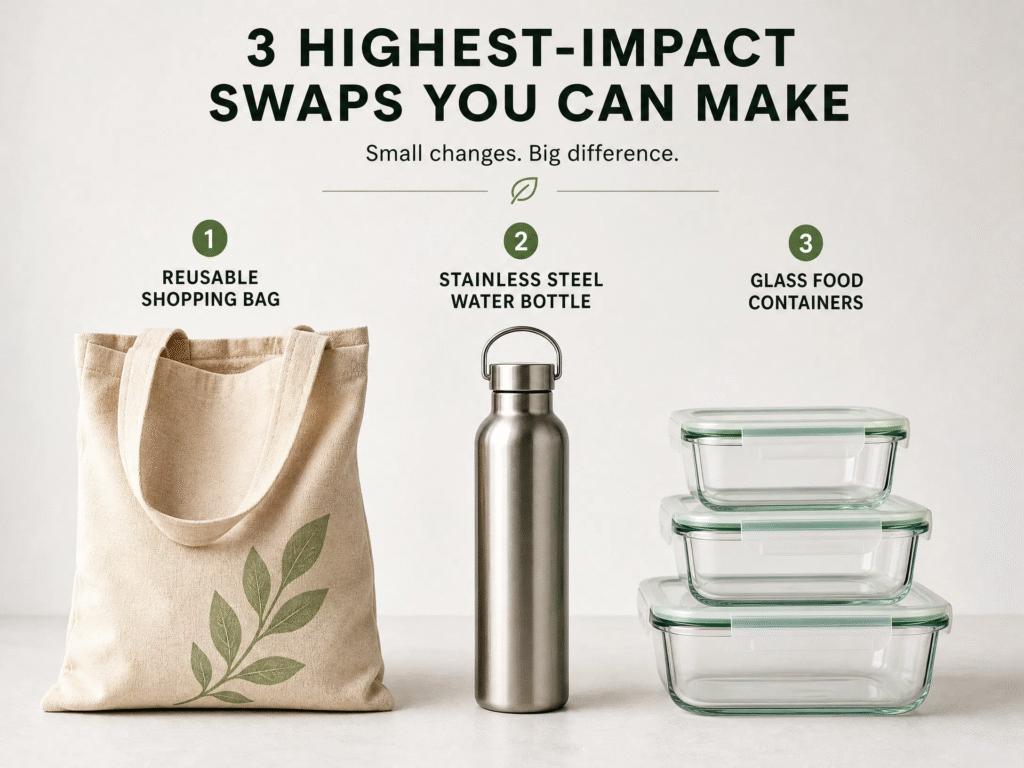
Not all plastic is equal in terms of environmental impact. Here is the priority order for reducing plastic waste:
| Priority | Plastic Item | Why It Matters | Alternative |
|---|---|---|---|
| ★★★★★ 1 | Plastic shopping bags | Used for minutes, persists for centuries; high volume | Reusable, paper, or compostable bags |
| ★★★★★ 2 | Food packaging | Largest source of household plastic waste | Products with minimal packaging |
| ★★★★★ 3 | Plastic bottles | 1 million bottles bought every minute globally | Reusable stainless steel or glass bottles |
| ★★★★ 4 | Plastic trash bags | Daily consumption, high volume | Certified compostable trash liners |
| ★★★★ 5 | Plastic produce bags | Used briefly, not recyclable in most areas | Compostable produce bags |
| ★★★ 6 | Straws and cutlery | Low volume but highly visible | Reusable alternatives |
The Biggest Sources of Plastic Waste
| Source | Common Plastic Items |
|---|---|
| Shopping | Plastic bags |
| Food packaging | Wrappers, containers, clamshells |
| Beverage | Bottles, cups, lids |
| Household | Trash bags, storage bags, cling wrap |
| Personal care | Shampoo bottles, body wash, toothpaste tubes |
Most of these items are single-use plastics—designed to be discarded after one use but lingering in the environment for centuries. If you want to reduce plastic waste, these categories offer the biggest opportunities for change. environment for centuries.
Top 10 Plastic Reduction Actions Ranked by Impact
| Rank | Action | Impact Level | Difficulty |
|---|---|---|---|
| ★★★★★ 1 | Stop using single-use plastic shopping bags | ★★★★★ | Easy |
| ★★★★★ 2 | Replace disposable water bottles | ★★★★★ | Easy |
| ★★★★ 3 | Avoid excessively packaged products | ★★★★★ | Medium |
| ★★★★ 4 | Use reusable food containers | ★★★★★ | Easy |
| ★★★★ 5 | Compost food waste | ★★★★ | Medium |
| ★★★★ 6 | Choose certified compostable trash bags | ★★★★ | Easy |
| ★★★ 7 | Say no to plastic straws and cutlery | ★★★ | Very Easy |
| ★★★ 8 | Buy in bulk | ★★★★ | Medium |
| ★★★ 9 | Choose paper over plastic at checkout | ★★★ | Very Easy |
| ★★ 10 | Recycle correctly | ★★★ | Medium |
Start with the 5 highest-impact actions first. They require minimal effort but create the most significant reduction in plastic waste.Start with the 5 highest-impact actions first. They require minimal effort but create the most significant reduction in plastic waste. This is the most practical way to reduce plastic use without overwhelming yourself.Start with the 5 highest-impact actions first. They require minimal effort but create the most significant reduction in plastic waste.
Quick Comparison: Plastic Reduction Options
| Option | Impact | Best For | Considerations |
|---|---|---|---|
| Reuse | ★★★★★ | Daily products (water bottles, shopping bags) | Most sustainable option; requires habit change |
| Recycle | ★★★ | Accepted plastics | Limited by local infrastructure |
| Paper bags | ★★★★ | Shopping, retail | Recyclable; higher production energy |
| Compostable bags | ★★★★ | Food waste, produce, trash liners | Requires composting infrastructure |
| Reusable packaging | ★★★★★ | Long-term reduction | Highest impact; best for businesses |
This comparison helps you understand which option delivers the most environmental benefit for your specific situation.
Best Plastic Alternatives for Everyday Products
This is one of the most important sections for anyone searching “how to reduce plastic use.” Many people don’t just want to know why to reduce plastic—they want to know what to replace it with.
| Plastic Product | Better Alternative | Why It Works |
|---|---|---|
| Plastic shopping bags | Reusable bags, paper bags, compostable bags | Reusable bags eliminate repeated single-use consumption. Paper bags are recyclable and widely accepted. Compostable bags work well for organic waste collection. |
| Plastic trash bags | Certified compostable trash bags | Food waste goes directly to composting with the bag, eliminating the need to separate waste from the liner. |
| Plastic produce bags | Compostable produce bags | Allow produce to breathe while breaking down in composting systems. No persistent plastic waste. |
| Plastic packaging | Compostable packaging | Provides an alternative for retail products that can break down in industrial composting facilities. |
| Plastic mailers | Compostable mailers | Protect shipments during transit while being home-compostable. No plastic residue remains. |
| Plastic food containers | Glass or stainless steel containers | Reusable indefinitely with no chemical leaching. Eliminates single-use plastic waste entirely. |
| Plastic wrap | Beeswax wraps or plate covers | Reusable, natural materials that eliminate single-use plastic film from food storage. |
| Plastic bottles | Reusable stainless steel or glass bottles | Eliminates hundreds of disposable bottles per year per person. Durable and long-lasting. |
35 Simple Ways to Reduce Plastic Waste
A. Reduce Plastic Bags
1. Use reusable shopping bags
Keep them where you won’t forget them—in your car trunk, by the front door, or a compact one in your daily bag.
💡 Real-life example: Keep 2–3 bags in your car trunk at all times. The biggest reason people fail is not forgetting to buy reusable bags—the problem is forgetting to bring them. A compact bag in your daily purse or backpack solves this.
2. Choose paper bags when appropriate
At the grocery store, say “paper not plastic.” Paper bags are recyclable, biodegradable, and widely accepted in curbside programs.
3. Use certified compostable shopping bags
For certain applications, certified compostable bags provide an alternative to conventional plastic. Look for EN 13432 (European) or ASTM D6400 certification.
B. Reduce Plastic Food Packaging
4. Buy products with less packaging
Skip the plastic clamshell containers. Shop at local farmers markets where produce often comes with less packaging.
💡 Real-life example: One trip to a farmers market can eliminate 5–10 plastic produce bags, 2–3 plastic containers, and multiple plastic wraps compared to a typical supermarket run.
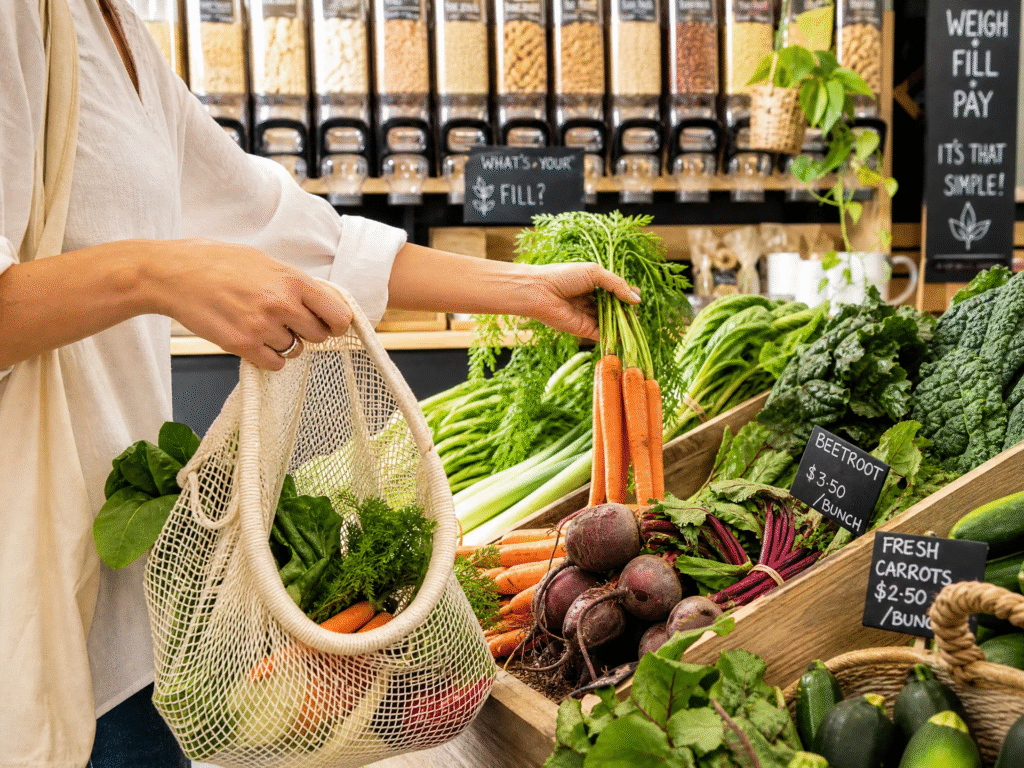
5. Buy bulk products
Purchase bulk cereal, coffee, nuts, and grains using your own paper bags or containers.
6. Use reusable food containers
Switch to glass or stainless steel food storage containers with airtight lids. No more plastic containers or plastic wrap.
7. Choose products in paper or glass
- Buy milk in paper cartons
- Buy peanut butter in glass jars
- Buy real maple syrup in glass bottles
- Buy tortilla chips in paper bags
8. Make your own snacks
Make your own crackers, granola, and snacks instead of buying pre-packaged versions.
💡 Real-life example: Homemade granola takes 20 minutes to make and saves 2–3 plastic bags per week. Over a year, that’s over 100 plastic bags avoided.
9. Cook more from scratch
Cooking at home helps eliminate the need for packaged foods.
10. Buy fresh bread from bakeries
Buy bread wrapped in paper rather than plastic packaging.
11. Get cheese and meat wrapped in paper
Ask the deli to wrap your cheese and meat in paper instead of plastic.
12. Avoid frozen foods
Most frozen foods come in plastic packaging—even the ones that look like cardboard usually have a plastic film.
13. Buy eggs in paper containers
Choose eggs packaged in recyclable paper containers.
C. Replace Plastic Bottles and Cups
14. Carry reusable water bottles
Eliminate all plastic bottles in your home and invest in reusable stainless steel or glass water bottles.
15. Bring a reusable coffee mug
Purchase a reusable mug for beverages and ask to have your order prepared in that container.
💡 Real-life example: If you buy one coffee per day, switching to a reusable mug saves over 300 disposable cups and lids per year—all of which are plastic-coated or made of plastic.
16. Install a water filter
Filter tap water and fill your own reusable bottles.
17. Use refill stations
Many shops now offer refill stations for household and personal care products.
18. Avoid bottled beverages
Don’t buy beverages in plastic bottles—glass is a better choice.
D. Reduce Single-Use Plastics
19. Replace plastic wrap
Use beeswax wraps (or vegan wax wraps) instead of cling film. Or simply put a plate on top of a bowl.
20. Say no to plastic straws
When eating out, ask them to skip the plastic straw. Use reusable metal or glass straws at home.
💡 Real-life example: Over a year, saying “no straw” at restaurants saves 50–100 plastic straws. Each one takes centuries to break down but only minutes to use.
21. Say no to disposable cutlery
Request that restaurants do not pack plastic ware in your takeout meals. Use silverware at home.
22. Stop using disposable coffee pods
Opt for refillable pods or a coffee maker that doesn’t create plastic waste.
23. Quit chewing gum
Most chewing gum today is made of synthetic rubber, which is plastic-based and does not biodegrade.
24. Avoid glitter
Glitter is mostly made with PET plastic and creates microplastics.
25. Don’t buy convenience foods in plastic
Skip pre-cut ingredients and pre-made dishes—they’re almost always wrapped in plastic.
26. Avoid plastic tea bags
Many tea bags contain plastic. Choose loose-leaf tea instead.
E. Reduce Plastic in the Bathroom and Laundry
27. Use bar soap
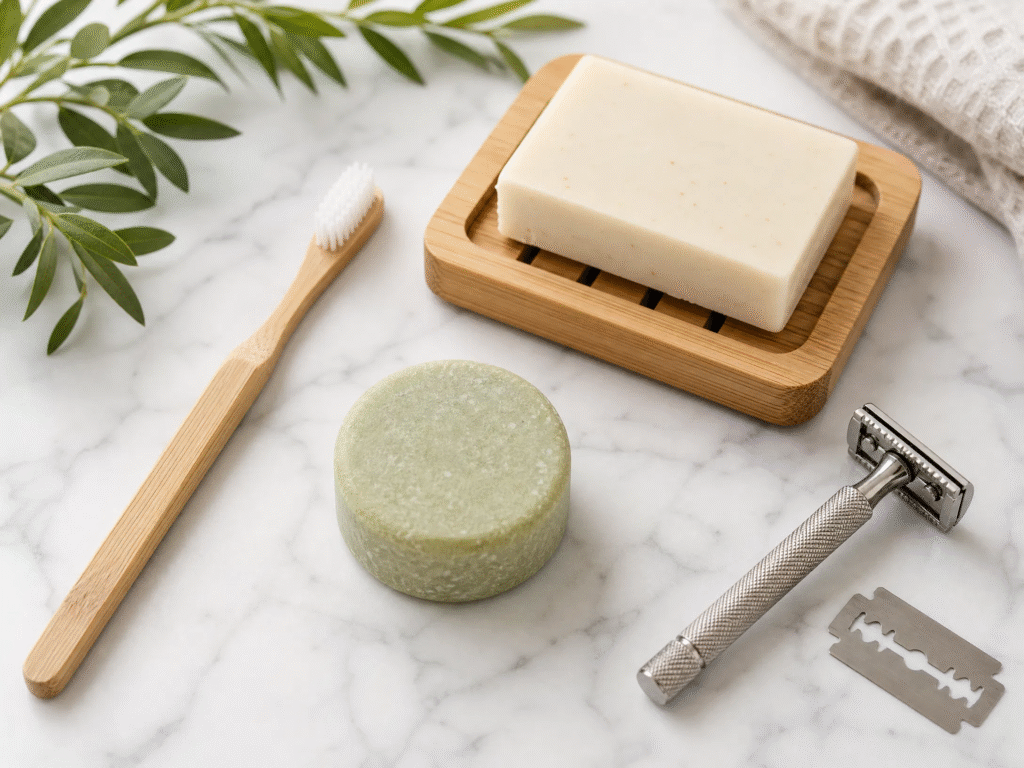
Switch from liquid body wash to bar soap.
💡 Real-life example: One bar of soap lasts as long as 2–3 plastic bottles of body wash. Over a year, this small switch saves 6–10 plastic bottles per person.
28. Use shampoo and conditioner bars
Solid shampoo and conditioner bars eliminate plastic bottles entirely.
29. Buy laundry detergent in boxes
Buy laundry detergent in cardboard boxes rather than liquid in plastic containers.
30. Use refillable cleaning products
Many cleaning brands offer concentrated refillable pods for their spray bottles.
31. Clean with simple ingredients
Clean with baking soda and vinegar instead of cleaners packaged in plastic.
32. Use reusable makeup pads
Use washable and reusable cotton pads or makeup rounds.
33. Switch to a safety razor
Switch from disposable plastic razors to razors with replaceable blades.
F. Reduce Plastic Waste Through Better Disposal
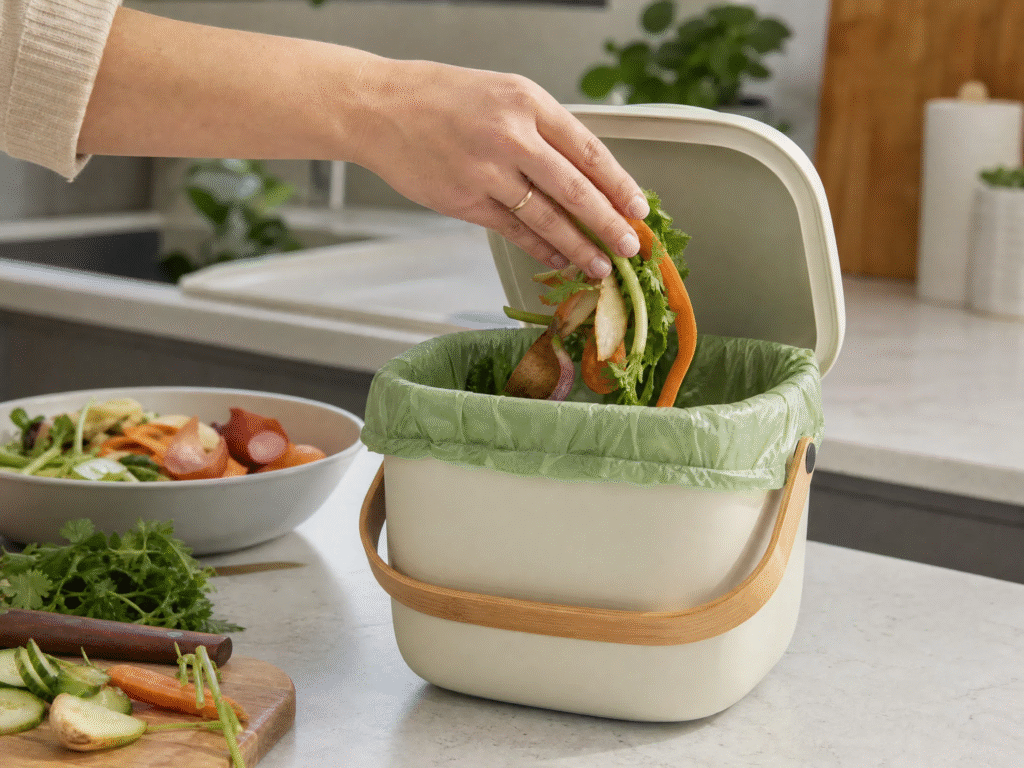
34. Compost food waste
Composting reduces your trash volume—and less trash means fewer plastic trash bags.
35. Use certified compostable trash bag liners
Line small trash bins with paper bags or certified compostable liners that meet standards like EN 13432 or ASTM D6400.
Other Effective Plastic Reduction Strategies
Beyond swapping specific plastic items, there are lifestyle changes that significantly reduce plastic consumption without requiring new products:
Reusable clothing and textiles
Choose natural fibers over synthetics. Synthetic fabrics like polyester shed microplastics with every wash. Cotton, linen, and wool don’t create microplastic pollution.
Second-hand shopping
Buying used clothing, furniture, and household items reduces demand for new products—and their associated plastic packaging.
Repair instead of replace
When something breaks, repair it instead of buying a new one. This reduces packaging waste and keeps items out of landfills.
Choose digital receipts
Paper receipts are often coated with plastic (BPA/BPS). Choose digital receipts when available.
Borrow instead of buy
For infrequently used items, borrow from friends, family, or tool libraries. This reduces packaging waste and manufacturing impact.
Support plastic-free businesses
Choose restaurants and stores that use sustainable packaging. Your spending sends a message to businesses.
Participate in plastic-free challenges
Join campaigns like Plastic Free July to build lasting habits.
Plastic Alternatives: Which Ones Actually Work?
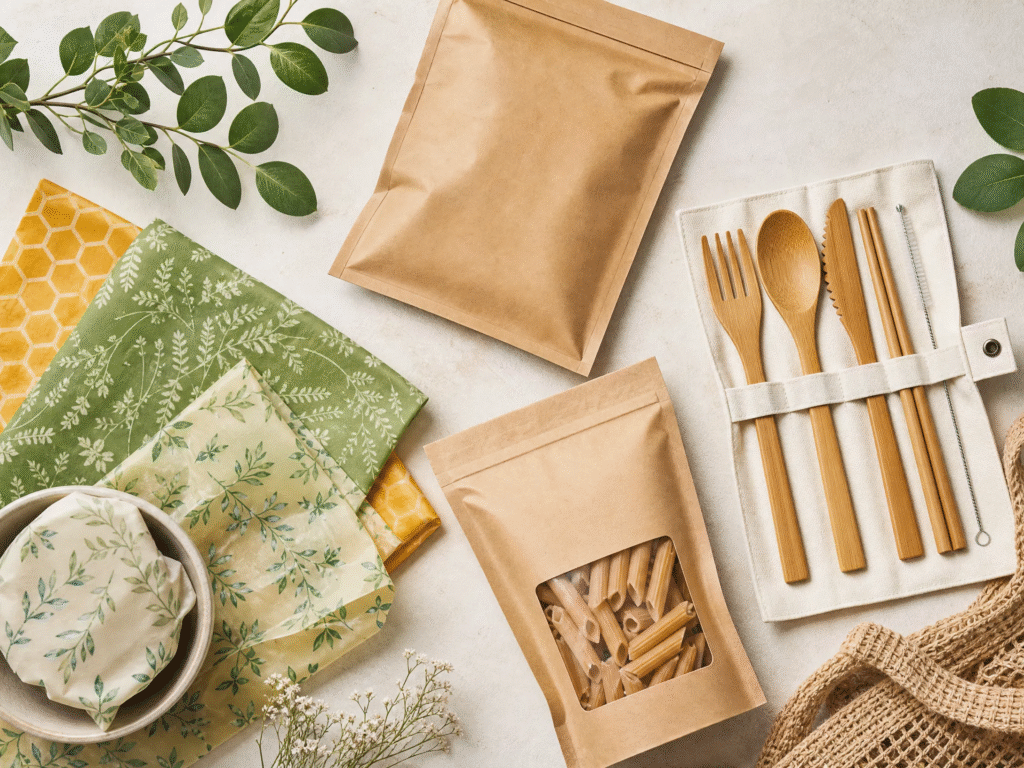
The hierarchy of plastic alternatives:
Reduce consumption → Reuse products → Recycle properly → Choose compostable alternatives when suitable
The UN Environment Programme identifies reuse as the most effective measure—cutting plastic pollution up to 30 percent by 2040—with the introduction of things like refillable water bottles, packaging take-back schemes, and reverse vending machines. Replacing products like plastic wrappers and takeaway items with alternatives such as paper or compostable materials can deliver an additional 17 percent decrease in plastic pollution. This is another reason why learning how to reduce plastic use through a combination of reduction, reuse, and replacement is so effective.
Alternative Comparison Table
| Plastic Product | Alternative | Best Situation | Certification Needed |
|---|---|---|---|
| Plastic shopping bag | Reusable bag | Daily shopping | None |
| Plastic shopping bag | Paper bag | Checkout when reusable unavailable | FSC certified |
| Plastic shopping bag | Compostable bag | When reusable not practical | EN 13432 / ASTM D6400 |
| Plastic trash liner | Compostable bag | Food waste collection | EN 13432 / ASTM D6400 |
| Plastic produce bag | Compostable produce bag | Fresh produce storage | EN 13432 / ASTM D6400 |
| Plastic mailer | Compostable mailer | E-commerce shipping | EN 13432 / ASTM D6400 |
| Plastic packaging | Paper packaging | Retail products | FSC certified |
Are Compostable Bags Better Than Plastic?
This is one of the most common questions asked by consumers and businesses looking for plastic alternatives. The answer is: it depends.
When compostable bags ARE a better choice
- When used for food waste collection that goes to an industrial composting facility
- When the bag carries organic waste that will be composted together with the bag
- When the bag is certified to EN 13432 or ASTM D6400 and disposed of correctly
When compostable bags are NOT a better choice
- When they are sent to landfill (they won’t break down effectively)
- When composting infrastructure is not available in your area
- When a reusable alternative exists and can be used multiple times
Key takeaway
Compostable bags are an excellent alternative to conventional plastic bags when used correctly—for organic waste collection that goes to composting. They are not a replacement for reusable bags in everyday shopping situations.
Common Mistakes When Reducing Plastic
Mistake 1: Choosing “biodegradable” products without certification
Not all biodegradable products actually break down in real-world conditions. Look for EN 13432 or ASTM D6400 certification.
Mistake 2: Using compostable bags incorrectly
Compostable bags need the right composting environment—industrial or home compost—to break down properly.
Mistake 3: Replacing plastic with unnecessary single-use alternatives
Only replace plastic if the alternative is truly better. Sometimes the most sustainable choice is using what you already have.
Mistake 4: Ignoring durability
A reusable item that breaks quickly ends up creating more waste, not less. Invest in quality.
Mistake 5: “Wish-cycling”
Don’t throw any plastic item in the recycling bin and hope for the best. Contact your local recycling facility to understand what they actually accept.
Mistake 6: Assuming all compostable products are the same
Different certifications mean different disposal requirements. Industrial compostable products (EN 13432) require commercial facilities. Home compostable products can break down in your backyard compost.
HEMCBags Technical Insight: Choosing the Right Plastic Alternative
Based on our experience manufacturing compostable bags for international markets over the past decade, we’ve learned that replacing plastic is not simply about choosing a “green” material. The most effective solution depends on the specific application and disposal infrastructure.
What Actually Works in the Real World
For shopping bags:
Reusable bags are usually the best option for daily use. Paper bags are a good backup option at checkout. Compostable shopping bags are best for specific situations where reusable options are not practical.
For food waste collection:
Certified compostable bags can replace conventional plastic liners effectively. They go directly into the composting stream with the waste, eliminating the need to separate food from the bag.
For produce storage:
Compostable produce bags offer a practical alternative to plastic produce bags. They allow produce to breathe while breaking down in composting systems.
For e-commerce packaging:
Compostable mailers protect shipments while being home-compostable. They eliminate persistent plastic waste from shipping.
The Most Common Mistake We See
Buyers often assume that because a bag says “compostable,” it will break down in any environment. The reality is that true biodegradability requires specific conditions—temperature, moisture, and microbial activity found in industrial composting facilities or well-maintained home compost systems.
Our recommendation: Always choose products with recognized certifications like EN 13432 or ASTM D6400. These standards ensure the product will break down under industrial composting conditions.
30-Day Plastic Reduction Challenge
Try this 30-day challenge to build lasting habits that reduce plastic use. Each week focuses on one area of daily life.
Week 1: Replace Plastic Bags
- Day 1: Place reusable shopping bags in your car trunk
- Day 2: Keep a compact reusable bag in your daily bag
- Day 3: Say “paper not plastic” at the grocery checkout
- Day 4: Try a compostable produce bag at the market
- Day 5: Use a reusable produce bag for weekly shopping
- Day 6: Review your habits—count plastic bags avoided
- Day 7: Celebrate your first week of progress!
Week 2: Remove Plastic Bottles
- Day 8: Buy a reusable stainless steel or glass water bottle
- Day 9: Find a public water refill station near you
- Day 10: Make your morning coffee in a reusable mug
- Day 11: Skip buying a bottled beverage—refill instead
- Day 12: Install a water filter if you don’t like tap water
- Day 13: Count how many bottles you avoided
- Day 14: Plan your refill routine for next week
Week 3: Reduce Packaging
- Day 15: Shop at your local farmers market
- Day 16: Buy one bulk item using your own container
- Day 17: Cook one meal from scratch (no packaged ingredients)
- Day 18: Switch to bread from a bakery wrapped in paper
- Day 19: Buy eggs in a paper container
- Day 20: Choose a glass or paper packaged product over plastic
- Day 21: Review your progress—what’s already easier?
Week 4: Switch Household Products
- Day 22: Replace liquid body wash with bar soap
- Day 23: Switch to a shampoo bar
- Day 24: Switch to a conditioner bar
- Day 25: Buy laundry detergent in a cardboard box
- Day 26: Start using a safety razor
- Day 27: Compost food waste for the first time
- Day 28: Use a certified compostable trash bag liner
- Day 29: Replace one plastic container with glass
- Day 30: Celebrate—you’ve built 30 days of lasting habits!
Plastic Reduction Checklist
Use this simple checklist to track your plastic reduction progress. Print it out or save it to your phone. It’s a practical tool to help you reduce plastic waste systematically.
Shopping Habits
☐ I keep reusable shopping bags in my car or bag at all times
☐ I say “paper not plastic” at the checkout
☐ I bring reusable produce bags to the market
☐ I avoid products with excessive plastic packaging
☐ I buy in bulk using my own containers
Kitchen & Food Storage
☐ I use glass or stainless steel food containers
☐ I use beeswax wraps or reusable covers instead of plastic wrap
☐ I buy milk, peanut butter, and other staples in paper or glass
☐ I cook more meals from scratch
☐ I buy bread wrapped in paper
Beverages
☐ I carry a reusable water bottle
☐ I bring a reusable coffee mug
☐ I avoid bottled beverages
☐ I use a water filter at home
Household
☐ I use certified compostable trash bags for food waste
☐ I compost food scraps
☐ I buy laundry detergent in cardboard boxes
☐ I use cleaning products made from simple ingredients (baking soda, vinegar)
Bathroom & Personal Care
☐ I use bar soap instead of liquid body wash
☐ I use shampoo and conditioner bars
☐ I use a safety razor
☐ I use reusable makeup pads
Lifestyle
☐ I choose second-hand shopping when possible
☐ I repair items instead of replacing them
☐ I choose digital receipts when available
☐ I support businesses that use sustainable packaging
FAQ
What is the easiest way to reduce plastic use?
Start with the five highest-impact swaps: reusable water bottles, reusable shopping bags, glass food storage containers, reusable coffee cups, and reusable produce bags.
Is it possible to live without plastic?
While completely eliminating all plastic is extremely difficult in modern life, reducing unnecessary single-use plastics is realistic and achievable for most people.
What plastic should I eliminate first?
Start with the most common single-use plastics: shopping bags, water bottles, food wrap, straws, and disposable coffee cups.
What are the easiest plastic swaps?
Reusable shopping bags, reusable water bottles, glass food containers, beeswax wraps, and paper bags are among the easiest and most effective swaps.
Are compostable bags better than plastic bags?
Compostable bags can be better if properly disposed of in composting systems, but they are not a silver bullet and require the right infrastructure. According to European Bioplastics, certified compostable products offer a sustainable end-of-life option when composting infrastructure is available.
How can I reduce plastic waste at home?
Cook more from scratch, buy from bulk bins, store food in glass containers, compost food waste, and take a day to review all the plastics you use—then replace them item by item.
What are the best alternatives to plastic bags?
Reusable cloth bags, paper bags, and certified compostable bags are the best alternatives depending on the application.
Are paper bags better than plastic bags?
Paper bags are recyclable and biodegradable, but they have a higher production carbon footprint than plastic. For recyclability, paper is better. For water resistance, plastic is better.
Can one person really reduce plastic use?
Yes. The Plastic Free July campaign has inspired over 174 million participants in 190 countries, with participants collectively avoiding over 15 million tonnes of waste, including 1.7 million tonnes of plastic—a greater impact than the largest cleanup efforts globally.
Is reducing plastic expensive?
Not necessarily—many swaps save money over time: reusable bottles, cooking from scratch, and buying in bulk often cost less.
What is the most harmful single-use plastic?
Plastic bags, bottles, and food packaging are among the most problematic because they are used for minutes but persist for centuries.
Final Thoughts
Reducing plastic use is not about achieving a completely plastic-free lifestyle. It is about making smarter choices where alternatives are practical. The most effective way to reduce plastic use is to start small, stay consistent, and gradually replace problematic items one by one.
For everyday consumers and businesses, replacing unnecessary single-use plastics with reusable, recyclable, and certified compostable options is the most realistic path forward. Every action—no matter how small—helps to reduce plastic waste and build a more sustainable future.
Start with the 5 highest-impact actions. Change one habit at a time. Small changes add up to significant impact.