
Author: HEMCbags Team | Sustainable Packaging Specialists
Quick Answer: The best dog poop bag depends on your specific needs — thickness (15+ microns), material (standard, recycled, plant-based, or certified compostable), and your disposal method (landfill, home compost, or municipal composting). The most important factor is thickness: 15 microns minimum prevents leaks. For eco-conscious owners, the choice between recycled plastic and certified compostable depends entirely on whether you have access to proper composting facilities.
Key Takeaways:
- ✔ Thickness matters most: 15 microns minimum for leak-proof protection
- ✔ Material types: Standard plastic, recycled plastic, plant-based, and certified compostable
- ✔ Certifications are not interchangeable: USDA Biobased (plant content) vs. ASTM D6400/EN 13432 (industrial compost) vs. OK Compost HOME (home compost)
- ✔ Disposal determines eco-impact: A compostable bag in a landfill is no better than a recycled bag
- ✔ Bulk buying saves money: In many cases, larger bulk packs (typically 600+ bags) offer a lower cost per bag than smaller packs
What Are Dog Poop Bags?
Dog poop bags are small, durable disposable bags designed for hygienically collecting and disposing of dog waste during walks or in the yard. They typically come in rolls that fit into leash-attached dispensers, making them convenient for daily use.
When shopping for dog bags, you’ll encounter several names for the same product. The most common term is dog poop bags, but you may also see them sold as dog waste bags, pet waste bags, or doggie bags. In some regions, doggy bags is also used — though this term can sometimes refer to restaurant leftovers. Regardless of the name, the key factors to consider are thickness, material, and how the bag will be disposed.
Dog waste bags are typically sold in bulk rolls of 120 to 600 bags, with dispensers included in many packs. Some brands offer scented options to mask odors, while others focus on unscented, eco-friendly materials for sensitive dogs.
How We Tested Dog Poop Bags
Our evaluation of dog poop bags is based on five key criteria:
| Test | What We Measure | Why It Matters |
|---|---|---|
| Thickness (mil/microns) | Actual material thickness measured with a calibrated gauge | Thicker bags resist tearing and punctures |
| Tear Resistance | Force required to initiate and propagate a tear | Prevents bag failure during use |
| Seal Integrity | Bottom seal strength under load | Bottom seal failure is the most common leak point |
| Odor Containment | Olfactory assessment of odor leakage | Odor containment affects user experience and hygiene |
| Eco-Certification Verification | Cross-referencing claims with certification databases | Verifies that “biodegradable” and “compostable” claims are legitimate |
Real-World Testing Scenarios
| Test | Method | What We Look For |
|---|---|---|
| Leak Test | Bag filled with water and suspended for 24 hours | Zero leakage at bottom seal |
| Drop Test | Bag dropped from waist height with weight | No seam failure or splitting |
| Stretch Test | Bag stretched to maximum capacity before tearing | Material elasticity and tensile strength |
| Puncture Test | Bag punctured with blunt object under load | Resistance to sharp waste (bones, etc.) |
Note: Our testing methodology follows standard ASTM D1709 for dart impact resistance and ASTM D882 for tensile properties, adapted for dog waste bag applications.
Top 8 Dog Poop Bags Compared
| Brand | Best For | Thickness | Material | Eco-Certification | Price Range |
|---|---|---|---|---|---|
| Earth Rated | Best Overall | 15+ microns | 65% recycled plastic | B Corp Certified | $0.04-0.07/bag |
| Amazon Basics | Best Budget | 13-15 microns | Standard plastic | None | $0.02/bag |
| BioBag | Best Compostable (Industrial) | Variable | Plant-based, GMO-free | ASTM D6400 | $0.05-0.08/bag |
| UNNI | Best Compostable (Home) | 15 microns | Plant-based | OK Compost HOME | $0.04-0.07/bag |
| PET N PET | Best Value | 15 microns | 41% USDA Biobased | USDA Certified Biobased | $0.02/bag |
| HEMCbags | Best Custom/Wholesale | 15+ microns | Plant-based / Custom | BPI, OK Compost, EN 13432 | Custom pricing |
| The Original Poop Bags | Best Heavy Duty | 15+ microns | USDA Biobased | USDA Biobased | $0.07-0.08/bag |
| Gorilla Supply | Best for Travel | 12-15 microns | Standard plastic | None | $0.02-0.03/bag |
Top Picks Breakdown
| Category | Winner | Why |
|---|---|---|
| Best Overall | Earth Rated | Best balance of durability, eco-credential, and bulk price. According to Wirecutter, these bags are “tough and thick” and live up to their exacting standards. |
| Best Budget | Amazon Basics | Lowest cost per bag in 600+ count |
| Best Compostable (Industrial) | BioBag | Trusted brand with ASTM D6400 certification |
| Best Compostable (Home) | UNNI | OK Compost HOME certified for backyard composting |
| Best Value | PET N PET | USDA Biobased at bulk pricing |
| Best Custom/Wholesale | HEMCbags | Factory-direct compostable bags with custom options |
| Best Heavy Duty | The Original Poop Bags | 4.9/5 rating, durable silky material |
| Best for Travel | Gorilla Supply | Compact, lightweight for on-the-go |
For more user-rated options, see Chewy’s dog poop bags sorted by popularity and customer ratings.
Why Picking Up Dog Waste Matters
Beyond the obvious nuisance, un-scooped pet waste has real environmental consequences. According to the City of Orlando, un-scooped pet waste washes into storm drains, which drain directly to local lakes and water bodies, adding extra nutrients that can lead to algae blooms and fish kills.
This is why choosing the right bag matters — and why using a bag that doesn’t tear is essential not just for convenience, but for preventing contamination in the first place. Whether you call them dog poop bags, dog waste bags, or pet waste bags, the bag you choose directly affects how effectively you can clean up and dispose of waste.
Types of Dog Poop Bags
| Type | Material | Decomposition Time | Best For | Disposal |
|---|---|---|---|---|
| Standard plastic | Virgin LDPE/HDPE | 500+ years | Budget, daily use | Landfill |
| Recycled plastic | Post-consumer recycled content | 500+ years | Everyday eco-friendly use | Landfill |
| Plant-based / Biobased | USDA-certified biobased (corn, sugarcane) | 500+ years | Reducing fossil fuel use | Landfill |
| D2W Biodegradable | Recycled plastic + additives | May fragment more quickly under exposure to oxygen, heat, and sunlight, but complete biodegradation is uncertain and depends on environmental conditions. Oxo-degradable plastics are restricted or discouraged in several jurisdictions because they may fragment into microplastics rather than fully biodegrade. | Faster fragmentation in nature | Landfill / Nature |
| Certified compostable (industrial) | ASTM D6400 / EN 13432 | 90-180 days | Municipal composting programs | Industrial compost |
| Certified compostable (home) | OK Compost HOME | 6-12 months | Backyard composting | Home compost |
Key Difference: Biodegradable vs Compostable vs Plant-Based
| Term | What It Really Means | Misconception |
|---|---|---|
| Plant-based / Biobased | Made from renewable plant sources | Does NOT mean it breaks down faster |
| Biodegradable | Will break down under certain conditions | Does NOT specify how long or where |
| D2W | Oxo-degradable — fragments faster when exposed to oxygen, heat, and sunlight | Does NOT fully biodegrade — fragments into microplastics |
| Compostable (ASTM D6400/EN 13432) | Breaks down completely in industrial composting (55-60°C) in 90-180 days | Does NOT break down in home piles or landfills |
| Compostable (OK Compost HOME) | Breaks down completely in home compost at ambient temperature in 6-12 months | Will also break down in industrial facilities |
The FTC Green Guides regulate “biodegradable” and “compostable” claims. Under the Green Guides, a general biodegradable claim can only be made if the product completely breaks down within one year after customary disposal. Most dog poop bags do not meet this standard, so many “biodegradable” claims are misleading.
How to Measure Thickness
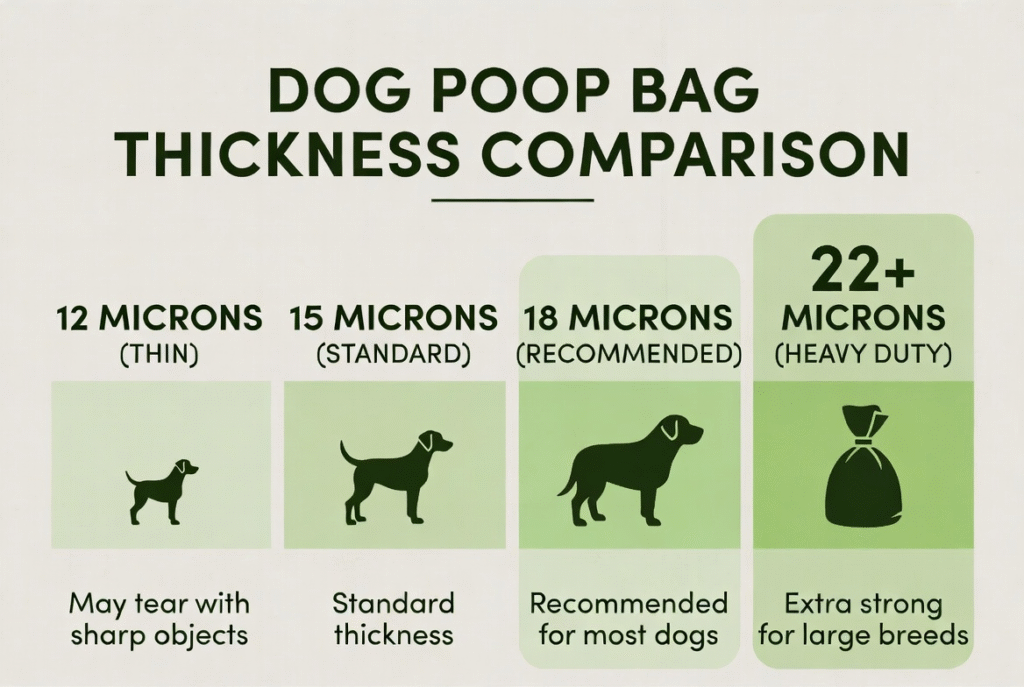
Thickness is measured in microns (µm) or mils. One mil equals 25.4 microns.
| Thickness | Rating | Best For |
|---|---|---|
| 10-12 microns | Very thin | Light waste, small dogs |
| 12-15 microns | Standard | Most dogs |
| 15-18 microns | Recommended | Medium to large dogs, wet waste |
| 18-22 microns | Heavy-duty | Large breeds, multiple pickups |
| 23+ microns | Extra heavy-duty | Commercial use |
How to check: Reputable brands list thickness on the packaging. If not listed, contact the manufacturer or choose a brand that does. Some dispensers have a thickness gauge built into the opening.
HEMCbags Technical Insight
At HEMCbags, we’ve supplied more than 50 million certified compostable bags to customers across North America and Europe. One recurring observation stands out: many dog owners buy compostable dog waste bags believing they’re making the eco-friendly choice, but most don’t have access to the industrial composting facilities required for proper breakdown.
Here’s the key distinction:
- Industrial compostable bags (certified to ASTM D6400 or EN 13432) are designed for municipal composting facilities and are not intended to break down in home compost piles or landfills. According to the Sierra Club, BPI-certified bags break down into harmless materials after fewer than 12 weeks in a commercial composting setup.
- Home compostable bags (certified to OK Compost HOME) are designed for backyard compost piles at ambient temperatures (20-30°C) over 6-12 months.
What this means for you: Before buying compostable pet waste bags, check whether your city accepts pet waste in its composting program. If it doesn’t, the most practical choice is recycled plastic bags — they reduce fossil fuel use without requiring specialized disposal infrastructure.
How to Choose the Best Dog Poop Bags
Step 1: Determine Your Disposal Method
| Disposal Method | Best Bag Type |
|---|---|
| Landfill | Recycled plastic or plant-based (biobased) |
| Home compost | OK Compost HOME certified |
| Municipal compost | ASTM D6400 / EN 13432 or BPI certified |
| Unknown / no composting access | Recycled plastic |
Step 2: Select the Right Thickness
| Dog Size | Recommended Thickness |
|---|---|
| Small (< 25 lbs) | 12-15 microns |
| Medium (25-60 lbs) | 15-18 microns |
| Large (60+ lbs) | 18-22 microns |
| Multiple dogs / yard cleanup | 22+ microns |
Step 3: Choose Scented or Unscented
| Option | Best For |
|---|---|
| Unscented | Dogs with allergies, sensitive noses, skin conditions |
| Scented | Owners who want odor masking |
Step 4: Consider Size
| Dog Size | Recommended Bag Size |
|---|---|
| Small (< 25 lbs) | 7″ x 13″ |
| Medium (25-60 lbs) | 9″ x 13″ |
| Large (60+ lbs) | 12″ x 13.5″+ |
Most standard dog waste bags are 13″ x 9″, which fits most breeds and dispensers.
Step 5: Check Dispenser Compatibility
Most bags are designed to fit standard 9″ x 13″ dispensers. Before buying in bulk, verify that the bag size fits your dispenser.
Dog Poop Bag Buying Guide: Which One Should You Choose?
| Situation | Best Choice | Why |
|---|---|---|
| Daily walks, standard use | 15-18 micron, recycled or plant-based plastic | Balanced durability and eco-impact |
| Budget priority | Bulk standard plastic (600+ count) | Lowest cost per bag |
| Large breed / heavy waste | 19+ micron or jumbo size | Prevents tearing and leaks |
| Sensitive dog | Unscented only | Avoids skin irritation |
| Home composting | OK Compost HOME certified | Breaks down in backyard piles |
| City composting program | ASTM D6400 / EN 13432 or BPI certified | Accepted in municipal facilities |
| No composting access | Recycled plastic or plant-based | Reduces fossil fuel use without requiring specialized disposal |
Common Mistakes to Avoid
| Mistake | Why It’s Wrong | What To Do Instead |
|---|---|---|
| Buying compostable for landfill | Doesn’t break down in landfill | Choose recycled plastic or plant-based |
| Choosing only cheapest bags | Risk tearing and double-bagging | Check thickness (15 microns+) |
| Ignoring certifications | “Biodegradable” claims may be misleading | Look for USDA Biobased, BPI, or OK Compost |
| Flushing non-flushable bags | Clogs plumbing | Only flush PVA bags if verified |
| Buying scented for sensitive dogs | May cause skin irritation | Choose unscented |
| Overlooking thickness | Thinner bags tear more easily | Check microns before buying |
FAQ
Can dog poop bags go in compost?
Only if they are certified for composting. Industrial compostable bags (BPI, ASTM D6400) go to municipal facilities. Home compostable bags (OK Compost HOME) can go in backyard piles. Most municipal programs do not accept pet waste.
Can dog poop bags go in the green bin?
Only if your local green bin program accepts pet waste. Most US municipal programs do not accept dog poop bags in green bins. Always check with your local waste authority.
Should dog poop be composted?
Yes — but only in systems designed to handle pet waste. Home compost piles that reach adequate temperatures can process pet waste, but most home piles do not reach the 55-60°C needed to kill pathogens. Commercial composting facilities that accept pet waste are the safest option.
How thick should dog poop bags be?
15 microns is the minimum for leak-proof protection. 18-20 microns is recommended for large breeds or wet waste. Thicker bags also provide better odor containment.
Are scented bags safe for dogs?
Most are safe, but some dogs may be sensitive to strong fragrances. Choose unscented if your dog has allergies or skin sensitivities.
How many bags per roll?
Standard rolls contain 15-25 bags. Bulk packs contain 120-600 bags. Some brands offer 1,000+ count boxes for heavy users.
Are dog poop bags smell proof?
Most quality dog waste bags are designed to contain odor during transport, but thickness matters. Thicker bags (15+ microns) provide better odor containment. Materials with higher oxygen barrier properties also reduce odor permeability.
How long do dog poop bags last?
Standard polyethylene dog bags generally have a much longer shelf life than compostable bags when stored properly. Compostable bags typically have a shelf life of 6-18 months — heat, moisture, and UV light accelerate degradation.
Are dog poop bags biodegradable?
Some are, but “biodegradable” claims are regulated by the FTC Green Guides. Under the Green Guides, a general biodegradable claim can only be made if the product completely breaks down within one year after customary disposal. Most dog poop bags do not meet this standard, so many “biodegradable” claims are misleading.
What are the most eco-friendly dog poop bags?
Bags made from post-consumer recycled plastic (like Earth Rated’s 65% recycled content) reduce new plastic production. Certified compostable pet waste bags are eco-friendly only if you have access to a composting facility that accepts pet waste. According to Wirecutter, “the worst bag for the planet is 100% virgin plastic. After that, the difference between compostable and recycled is splitting hairs.”
What is the difference between doggy bags and doggie bags?
Both terms refer to the same product — dog poop bags. However, “doggy bag” can also mean a restaurant takeout container, so context matters.
Can dog poop bags be recycled?
Used dog poop bags cannot be recycled — the waste contaminates the recycling stream. Some unused, clean bags may be recyclable, but most curbside programs do not accept plastic film.
How should I store dog poop bags?
Store in a cool, dry place away from direct sunlight. Compostable bags are particularly sensitive to heat and moisture. Keep them in their original packaging until use.
Buying Checklist
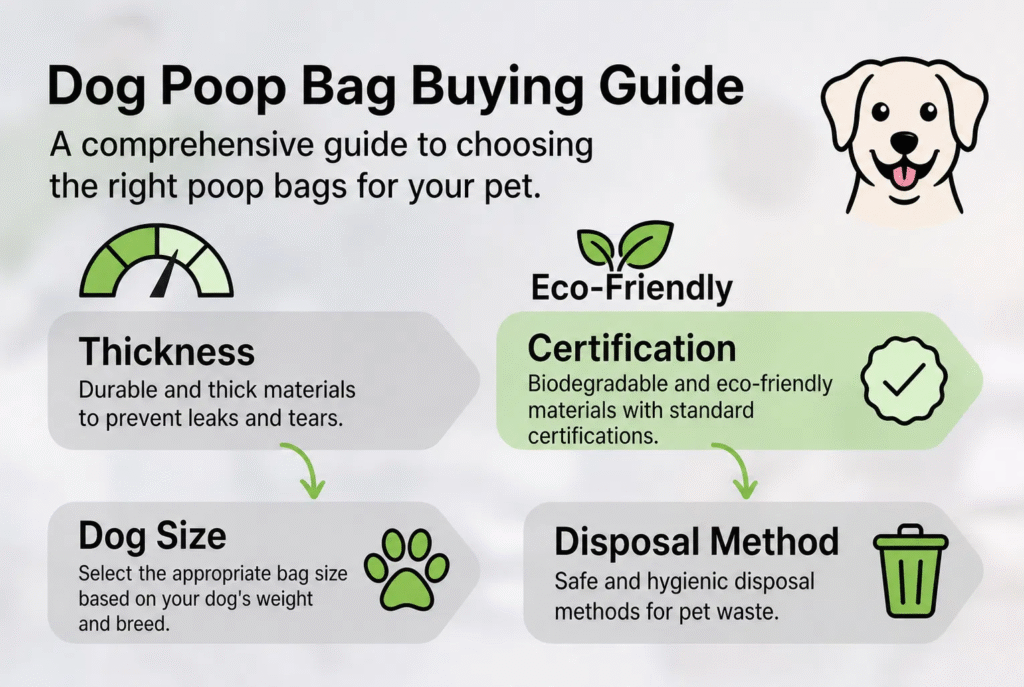
Before buying dog poop bags, consider:
| Check | What to Look For |
|---|---|
| ☐ | Thickness — 15+ microns for daily use, 18+ for large dogs |
| ☐ | Leak-proof — Look for bags that specifically state leak-proof |
| ☐ | Material — Standard, recycled, plant-based, or certified compostable |
| ☐ | Certification — USDA Biobased, BPI, OK Compost HOME, or ASTM D6400 |
| ☐ | Roll Size — Fits your dispenser (standard: 9″ x 13″) |
| ☐ | Scent — Unscented for sensitive dogs |
| ☐ | Price — Bulk packs (600+ count) offer the best value |
| ☐ | Disposal — Know where your waste goes |
Conclusion
Choosing the right dog bags comes down to understanding your specific needs: your dog’s size, your walking frequency, your budget, and your disposal method.
Whether you call them dog poop bags, dog waste bags, pet waste bags, doggie bags, or doggy bags, the same criteria apply. Thickness matters most. Certifications are not interchangeable. And your disposal method determines which material makes the most sense.
Key takeaways:
- For most owners: 15-18 micron bags with recycled or plant-based material
- For budget: Bulk standard plastic (600+ count)
- For large dogs: 19+ micron or jumbo size
- For home composting: OK Compost HOME certified
- For city composting: ASTM D6400 / EN 13432 or BPI certified
- No composting access: Recycled plastic or plant-based
Ready to find the right dog poop bags for your needs?
Browse HEMCbags pet waste solutions | Learn more about compostable certifications