
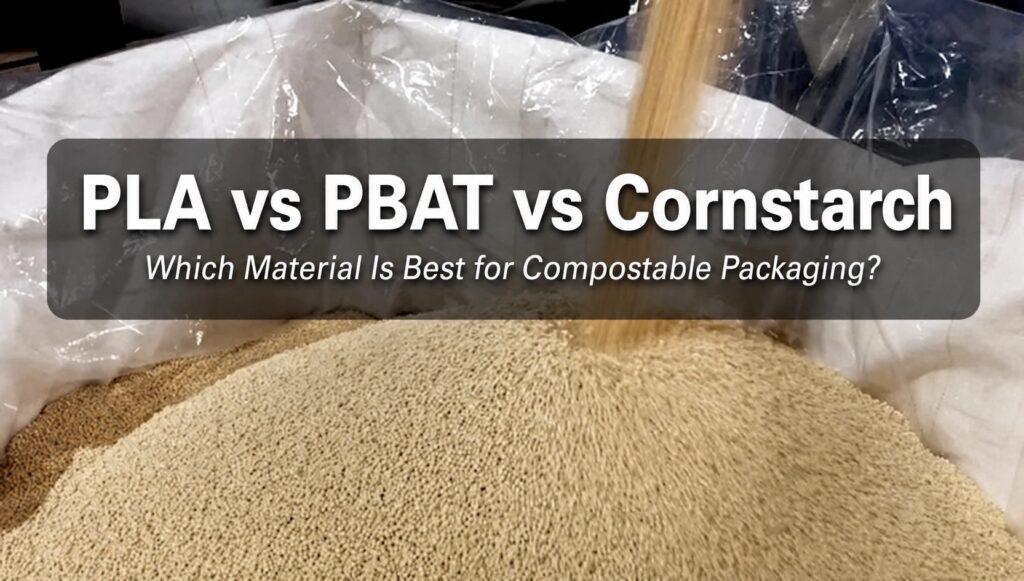
Quick Answer:
- PLA: Stiff and clear. Think of it like glass — great for cups and trays, but too brittle for bags.
- PBAT: Soft and stretchy. It’s what makes compostable bags flexible and tear-resistant. But on its own, it’s floppy — a bag won’t stand up.
- Corn starch: Cheap and plant-based. It helps cut costs and speeds up composting. But it’s weak and absorbs moisture, so it must be mixed with other materials.
The bottom line: No single material works alone. Nearly all certified compostable bags use a blend of all three — PBAT for flexibility, PLA for stiffness, and starch to reduce cost. The real question isn’t “which material?” — it’s “which blend for which job?”
Introduction
Compostable packaging is everywhere now. Governments are banning single-use plastics. Customers want greener options. And brands are racing to switch to compostable bags, mailers, and food containers.
But when you start looking at compostable packaging, you quickly hit three names: PLA, PBAT, and corn starch. Which one is best?
It’s a trick question. None of them works alone. Every compostable bag you’ve ever used was almost certainly a blend of two or three materials, carefully balanced to be strong enough, flexible enough, and affordable enough for its specific use.
In this guide, we’ll explain what each material does, how they compare, and how to pick the right blend for your needs — in plain English, no chemistry degree required.
What Is PLA? (The Stiff One)
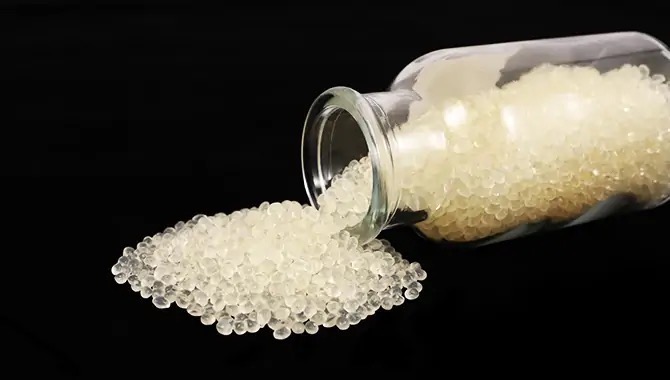
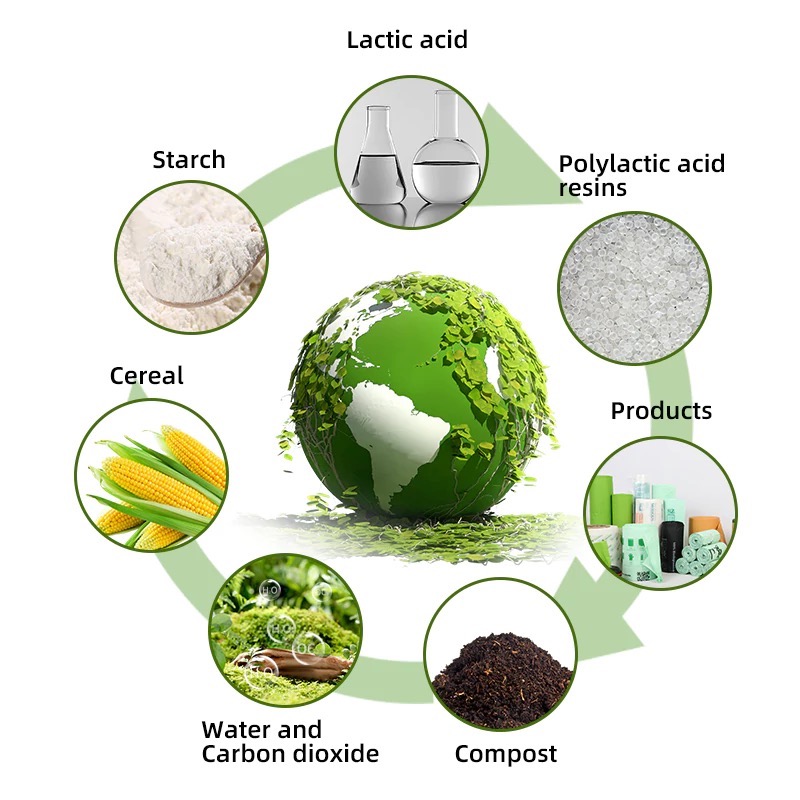
PLA is made from plants — usually corn, sugarcane, or cassava. Factories ferment the plant sugars into lactic acid, then turn that into a plastic-like material.
PLA is clear, rigid, and looks a lot like traditional plastic. That’s why it’s used for compostable cups, salad containers, clear lids, and food trays. It’s the most common bioplastic in the world, holding a dominant share of the global bioplastics market according to data from European Bioplastics.
Good things about PLA:
- Made from renewable plants, not oil
- Crystal clear — looks premium
- Safe for food contact
- Lower carbon footprint than regular plastic
Bad things about PLA:
- Very brittle — it snaps instead of stretching
- Terrible for bags — if you tried to make a trash bag from pure PLA, it would tear immediately
- Needs industrial composting — it won’t break down in your backyard pile
Think of PLA like glass: perfect for rigid containers, useless for anything that needs to bend.
What Is PBAT? (The Flexible One)
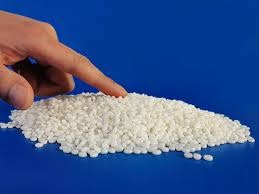
PBAT is the opposite of PLA. It’s soft, stretchy, and tough — very similar to the polyethylene used in regular plastic bags. The difference is that PBAT is chemically designed to break down completely in compost.
PBAT is what makes compostable bags actually work. It’s in trash bags, shopping bags, dog poop bags, mailers, and agricultural films. Without PBAT, flexible compostable packaging wouldn’t exist. PBAT is recognized as a compostable polymer by the Biodegradable Products Institute (BPI) when products meet ASTM D6400 requirements.
Good things about PBAT:
- Extremely flexible and stretchy — it gives bags their “give”
- Strong tear and puncture resistance
- Processes beautifully in bag-making machines
- Certified compostable under BPI and TÜV Austria standards
Bad things about PBAT:
- Partly made from fossil fuels (though engineered to biodegrade)
- More expensive than PLA
- On its own, it’s floppy — a pure PBAT bag can’t stand open in a bin
Think of PBAT like rubber: it provides all the stretch and toughness, but it needs something stiffer mixed in to hold its shape.
What Are Cornstarch-Based Materials? (The Filler)
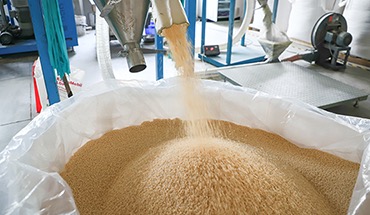
Corn starch in compostable packaging is not the same powder you cook with. It’s been processed into something called thermoplastic starch, or TPS. Even then, it’s never used alone — it’s always blended with PBAT or PLA.
Why use it? Two reasons: it’s cheap, and it helps the bag break down faster in compost because microbes love eating starch.
Good things about corn starch blends:
- 100% plant-based
- Cheapest raw material of the three
- Speeds up composting
Bad things about corn starch blends:
- Very weak on its own
- Absorbs moisture from the air — bags with too much starch can get soft and sticky in humid weather
- Must be blended — you cannot make a bag from pure starch
Think of starch like filler: it stretches the more expensive materials further and helps the bag decompose faster, but too much of it ruins the bag’s strength.
Side-by-Side Comparison
| PLA | PBAT | Corn Starch | |
|---|---|---|---|
| What it’s like | Glass — stiff and clear | Rubber — stretchy and tough | Filler — cheap and biodegradable |
| Strength | High rigidity, but snaps easily | High tear resistance, very flexible | Low — must be blended |
| Transparency | Excellent | Moderate | Low |
| Moisture resistance | Okay | Good | Poor |
| Compostability | Industrial only | Industrial (some grades home) | Compostable when blended |
| Cost | Medium | Higher | Low |
| Best for | Cups, trays, rigid containers | Bags, films, mailers | Reducing cost in blends |
Why Compostable Packaging Materials Always Use Blends
Here’s the short version: PLA is too brittle for bags. PBAT is too floppy. Starch is too weak. But mix them together, and they balance each other out.
A typical compostable trash bag is roughly:
- 60-80% PBAT — for flexibility and toughness
- 15-30% PLA — so the bag has body and can stand open
- 0-20% starch — to reduce cost and help it compost faster
The exact recipe depends on what the bag is for. A heavy-duty kitchen trash bag needs more PBAT and less starch. A lightweight produce bag can use more starch to save money.
Which Material for Which Job?
| Application | Best Blend | Why |
|---|---|---|
| Heavy kitchen trash bags | High PBAT, low starch | Needs to hold wet food waste without tearing |
| Shopping bags | Balanced PBAT + PLA + some starch | Needs flexibility and moderate strength |
| Compostable mailers | PBAT + PLA, minimal starch | Needs to survive shipping |
| Produce bags (light, short-life) | Higher starch content | Cheap, fast to compost, light loads only |
| Cups, trays, rigid containers | PLA-dominant | Stiffness and clarity matter most |
| Home compostable bags | Special PBAT/PLA grades | Must have OK Compost HOME logo |
Common Myths
“Cornstarch bags dissolve in water.”
No. They’re designed to stay stable during normal use. They break down in compost, not in your kitchen bin.
“PLA is home compostable.”
Most PLA needs the high heat of an industrial facility. Only bags with the OK Compost HOME logo will break down in a backyard pile.
“PBAT is just regular plastic.”
Wrong. PBAT is chemically engineered to biodegrade. Regular plastic is designed to last forever. PBAT’s molecular structure includes bonds that microbes can break down.
“Biodegradable = compostable.”
Not even close. “Biodegradable” is a loose, unregulated term with no set timeframe. The FTC’s Green Guides state that unqualified biodegradable claims are deceptive if the product doesn’t fully decompose within one year. “Compostable” requires independent certification to strict standards like ASTM D6400 or EN 13432. Always look for the BPI or OK Compost logo.
How to Check If a Supplier Is Legitimate
- Ask for the certification license number — not just the logo. Cross-check it on BPI’s or TÜV Austria’s website.
- Ask what’s actually in the blend. A good supplier will tell you roughly how much PBAT, PLA, and starch they use. Vague answers like “plant-based” are a red flag.
- Make sure everything is certified — including any ink or adhesive on the bag.
- Ask if they’ve tested the bag in real conditions. A lab test is good. Knowing the bag holds wet kitchen waste for 48 hours without leaking is better.
Other Useful Links: What Does BPI Compostable Mean?
FAQ
Which material is strongest?
PBAT is the toughest and most flexible. PLA is the most rigid. Starch is the weakest. In practice, they’re blended so you get the best of all three.
Can pure cornstarch bags hold wet waste?
No. They absorb moisture and fall apart. Blends with no more than 20-30% starch can handle moderate moisture. For heavy wet waste, choose a PBAT-rich blend with low starch.
Are PLA bags compostable at home?
No — standard PLA needs industrial composting heat. Look for OK Compost HOME certification if you backyard compost.
Why can’t manufacturers use just one material?
Because no single material does everything well. PLA is too brittle. PBAT is too floppy. Starch is too weak. Blending fixes each material’s weakness.
How do I spot fake “compostable” claims?
Look for the BPI or OK Compost logo, then verify the license number on the certifier’s website. No logo, no license number — don’t trust it.
The Bottom Line
PLA, PBAT, and corn starch aren’t rivals. They’re teammates. Each one brings something the others lack.
For most compostable bags, the winning formula is a PBAT + PLA blend, with some starch — the exact ratio depending on whether you need heavy-duty strength, lightweight economy, or backyard compostability.
Forget asking “which material is best for compostable packaging.” Ask three questions instead:
- Is it independently certified (BPI, OK Compost)?
- Will it be disposed of in the right composting system?
- Is the blend right for the job?
Get those three right, and the material question answers itself.
Other Useful Links
Best Compostable Trash Bags 2026 Guide
Top 10 Compostable Bags Manufacturers and Suppliers in the World (2026 Update)
About the Author
Chris Xiang
Chris Xiang is a compostable packaging specialist with over a decade of hands-on experience in the industry. A firm believer that the best compostable bag is the one that actually gets composted correctly, Chris combines real-world supply-chain knowledge with a practical, no-greenwashing approach to sustainable packaging.