
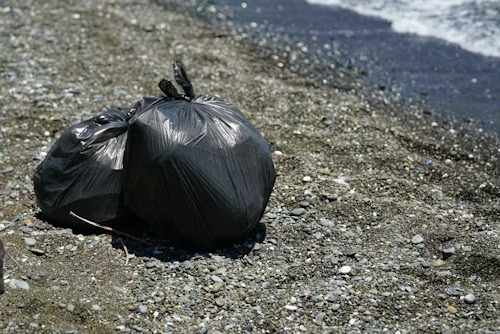
Biodegradable trash bags are eco-friendly waste liners designed to break down naturally into water, carbon dioxide, and biomass through the action of microorganisms like bacteria and fungi. Unlike traditional plastic bags that last for centuries, biodegradable garbage bags decompose much faster when exposed to the right environmental conditions, such as industrial composting facilities or active soil.
Why “Biodegradable” Doesn’t Mean What You Think
Biodegradable trash bags are waste liners made from materials like PLA or PHA that break down into water and CO2 through microbial action.
Walk down any grocery aisle and the word “biodegradable” appears on dozens of trash bag products. It sounds reassuring. It rarely tells the whole story.
The Federal Trade Commission’s Green Guides (16 CFR Part 260) require marketers to substantiate claims that a product will “completely break down and return to nature within a reasonably short period of time” — but that standard is loosely enforced and deliberately vague.
This matters because biodegradable plastic bags, compostable trash bags, and oxo-degradable bags are three fundamentally different product categories. Marketing often treats them as interchangeable, but they are not. For a comprehensive breakdown of their differences, read our detailed guide on Non-biodegradable VS Biodegradable VS Compostable.
The Materials Behind Biodegradable Plastic Bags
Understanding what a bag is made of tells you how — and whether — it will actually degrade. Here are the five primary material categories used in biodegradable and compostable plastic bags today.
PLA — Polylactic Acid
PLA is derived from fermented plant starch — typically corn, sugarcane, or tapioca — and processed into a thermoplastic polymer.
How it degrades: PLA requires sustained temperatures of 55–60°C and specific microbial activity to hydrolyze its ester bonds. These conditions exist only in managed industrial composting facilities. In a standard landfill, PLA degrades at a rate comparable to conventional PE plastic — effectively not at all within a human lifetime.
Certification: Certifiable under ASTM D6400 and EN 13432. Not suitable for home composting unless specifically marked.
PBAT — Polybutylene Adipate Terephthalate
PBAT is a petroleum-derived but certified-compostable copolyester, almost always blended with PLA or starch to improve flexibility and puncture resistance. Most commercial compostable trash bags are PLA/PBAT blends.
How it degrades: PBAT undergoes hydrolytic and microbial degradation. Enzymatic attack on its ester linkages produces water and CO₂ — but only under industrial composting conditions.
TPS — Thermoplastic Starch
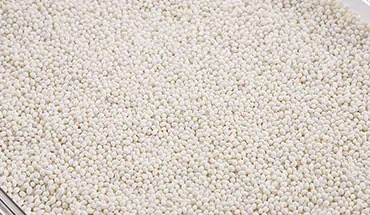
TPS is produced by plasticizing native starch from potato, cassava, or corn. It is one of the most genuinely biodegradable materials available — soil bacteria begin attacking starch chains at ambient temperatures.
How it degrades: Amylase and glucosidase enzymes cleave the glycosidic bonds in starch chains. TPS can break down in home composting environments — one of the few materials that performs outside industrial infrastructure.
Trade-off: TPS absorbs moisture, which weakens bags during storage. Most TPS products are blended with PBAT or PLA to compensate.
PHAs — Polyhydroxyalkanoates
PHAs are polyesters synthesized by bacteria (Cupriavidus necator and others) fed on carbon-rich substrates. They represent the frontier of genuinely biodegradable plastic technology.
How they degrade: PHA-degrading microorganisms are ubiquitous in soil and marine sediments. PHA depolymerases cleave the polymer backbone, and the resulting hydroxy acids enter standard metabolic pathways. Critically, PHAs biodegrade in marine environments — something no other common bag material can claim under independent certification.
The barrier: PHAs cost 3–5× more than PLA. Production is scaling, but slowly.
Oxo-Degradable Additives (EPI, d2w)
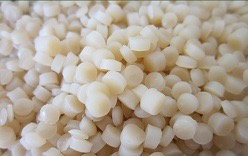
Oxo-degradable bags are made from conventional polyethylene blended with metal-salt additives (cobalt or manganese stearates) that accelerate fragmentation through photo- and thermo-oxidation. They do not biodegrade. They fragment into microplastics.
A 2019 study published in Environmental Science & Technology found oxo-degradable bags remained largely intact after three years in marine and soil environments. The European Union banned oxo-degradable products in July 2021 under the Single-Use Plastics Directive. They remain legal across North America, Southeast Asia, and Australia.
Biodegradable vs. Compostable Trash Bags: The Definitive Comparison
Summary: Compostable bags break down in 90-180 days in specific conditions, while biodegradable bags have no set timeframe.
The main difference between compostable and biodegradable trash bags lies in their breakdown timeframe and required conditions. While all certified compostable bags are biodegradable, not all biodegradable bags are compostable. Here is a definitive comparison of biodegradable vs. compostable trash bags:
| Dimension | Biodegradable Trash Bags | Compostable Trash Bags |
|---|---|---|
| Legal definition | No mandatory standard in the US; broadly unregulated | Defined by ASTM D6400 (US), EN 13432 (EU), AS 4736 (AU) |
| Required breakdown timeframe | Not specified; could be decades | 90–180 days at ≥55°C (industrial); 6–12 months (home-certified) |
| End products | Not tested or specified | CO₂, water, biomass; <10% dry solids residue; passes eco-toxicity test |
| Certification required? | No | Yes — independent third-party testing mandatory |
| Works in home compost? | Rarely | Only if certified (e.g., OK Compost Home) |
| Works in landfill? | No — effectively same as PE | No — anaerobic conditions prevent degradation |
| Greenwashing risk | High — claim has no mandatory backing | Low-to-moderate with valid certification |
An unqualified “biodegradable” label on packaging is often a marketing claim. A BPI or EN 13432 logo, however, is a performance guarantee backed by independent laboratory testing. To understand the significance of key certifications like BPI, delve into our guide: What Does BPI
This distinction is critical for compliance and environmental impact. While all certified compostable bags are biodegradable, the reverse is not always true. If you are looking for certified, high-strength options for wholesale or commercial use, explore our full range of Compostable Trash Bags & Liners.
How Long Do Biodegradable Trash Bags Actually Take to Decompose?
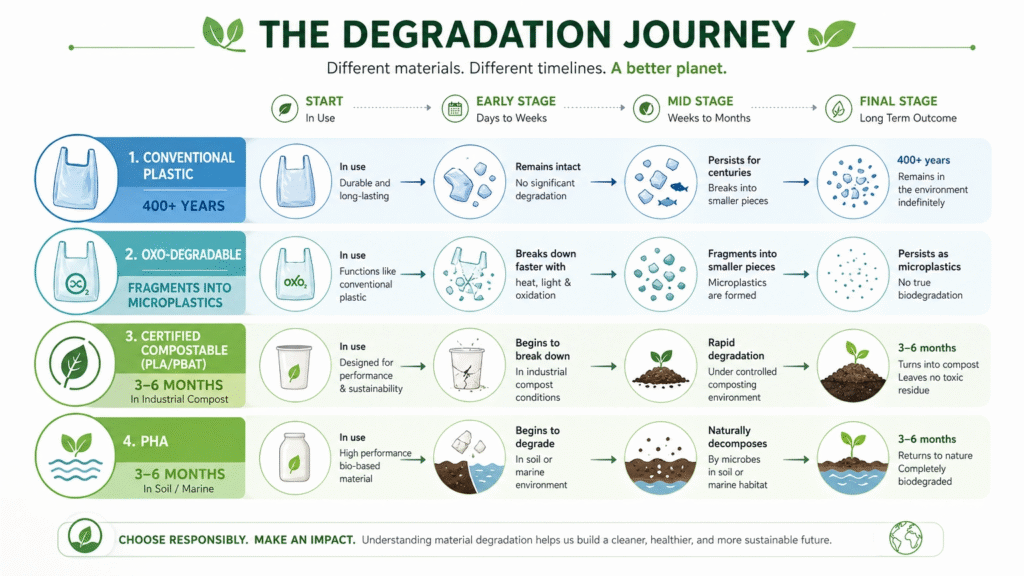
The decomposition time of biodegradable trash bags ranges from 3 months to several years, depending heavily on the material and the disposal environment. Here is a breakdown of how long biodegradable garbage bags take to decompose across different conditions:
The table below is based on independent research including a 2019 study from the American Chemical Society and industry testing data:
| Disposal Environment | Certified Compostable Bags (PLA/PBAT) | PHA Bags | Oxo-Degradable Bags | Conventional PE Bags |
|---|---|---|---|---|
| Industrial composting (58°C) | 3–6 months ✅ | 3–6 months ✅ | Fragment only, never fully degrade ❌ | Do not degrade ❌ |
| Home composting (25–30°C) | 6–12 months (if home-certified) ⚠️ | 6–12 months ✅ | 5+ years ❌ | 400+ years ❌ |
| Active soil / garden | Years (unreliable) ⚠️ | 3–6 months ✅ | Fragments into microplastics ❌ | 400+ years ❌ |
| Seawater (15°C) | 5+ years ⚠️ | ~2 years (90% degradation) ✅ | 10+ years ❌ | 400+ years ❌ |
| Landfill (anaerobic) | Decades — negligible degradation ❌ | Decades ❌ | Microplastic contamination ❌ | Does not degrade ❌ |
Key takeaway: The bag’s certification only matters if your disposal method matches the conditions it was tested for. A certified compostable bag going to landfill is functionally identical to a conventional PE bag.
The Real Limitations Nobody Puts on the Packaging
The Landfill Problem
An estimated 80–90% of trash bags in the United States end their life in a municipal solid waste landfill. Modern landfills are engineered with liner systems and compaction to minimize oxygen and moisture — conditions specifically designed to prevent leachate and methane spikes. The same engineering that reduces landfill pollution also ensures that even certified compostable bags degrade at negligible rates once buried.
A landmark study from the University of Arizona’s Garbage Project found newspaper headlines readable after 30–40 years in landfill cores. Bioplastic bags perform no differently.
The Infrastructure Gap
The environmental case for compostable plastic bags depends entirely on industrial composting infrastructure that most consumers cannot access. Fewer than 5% of US municipalities currently operate accessible residential organics collection programs routed to certified industrial composting facilities. In the absence of that infrastructure, a certified compostable bag delivers no measurable climate benefit over conventional plastic.
The Microplastics Risk
Oxo-degradable bags fragment into microscopic plastic particles. But even PLA bags carry a secondary risk: if they enter conventional plastic recycling streams, PLA contaminates the PE/PP resin pool. Sorting facilities cannot reliably distinguish PLA from PE visually. Both the European Bioplastics Association and WRAP (UK) recommend that compostable bags be kept strictly out of mechanical recycling — a separation that consumer behavior makes difficult to guarantee.
The Certification Void
In countries without mandatory labeling regulation, “biodegradable” can appear on packaging with no required substantiation. A 2021 investigation by the UK Competition and Markets Authority found 40% of green claims in the consumer goods sector were misleading or unsubstantiated. The packaging industry is no exception.
Agricultural Trade-Offs
PLA produced from corn or sugarcane requires land, irrigation, fertilizers, and often pesticides. Life-cycle assessments show the carbon benefit of PLA over conventional plastic diminishes significantly once agricultural inputs are accounted for — particularly when the end-of-life scenario is landfill rather than composting.
How to Buy Biodegradable Trash Bags That Actually Work
The Four Certifications That Actually Matter
ASTM D6400 — The US standard for industrial compostability. Requires ≥90% carbon conversion to CO₂ within 180 days at 58°C, plus disintegration and eco-toxicity testing. The gold standard for municipal organics programs.
EN 13432 — The European equivalent, slightly stricter on heavy metal limits. Required for compostability claims in EU markets.
OK Compost HOME (TÜV Austria) — Tested at 25°C over 12 months. The only widely recognized certification for home composting. If you intend to compost at home, this is the mark to look for.
BPI Certified (Biodegradable Products Institute) — A US third-party program licensing products that meet ASTM D6400. The BPI logo is the most reliable signal of legitimate industrial compostability for US consumers.
If you’re evaluating manufacturers, see our guide to the top biodegradable bags manufacturers and suppliers
for a global comparison of certifications and factory capabilities.
Match the Bag to Your Disposal Method
- Municipal organics bin → industrial composting facility: Any ASTM D6400 or EN 13432 certified bag works.
- Home compost bin: Require OK Compost HOME or BPI Home Compostable certification specifically. Standard PLA bags do not qualify.
- General household waste to landfill: A certified compostable bag provides no measurable benefit here. Recycled-content PE bags have a lower per-unit carbon footprint for this scenario.
- Coastal, agricultural, or outdoor use: Look specifically for PHA-based products with marine biodegradation certification.
Red Flags to Walk Away From
- “Degradable” without “compostable” — almost always oxo-degradable
- “Eco-friendly” or “plant-based” with no certification logo
- “Biodegradable” as the only claim, with no certification mark
- Green-colored packaging with no third-party verification
FAQ
Are biodegradable trash bags better for the environment?
Yes, biodegradable trash bags are generally better for the environment than traditional plastic bags, provided they are disposed of correctly. They are made from renewable plant-based materials and are designed to break down into natural elements, reducing long-term plastic pollution and microplastic waste.
Do biodegradable garbage bags break down in a landfill?
No, most biodegradable garbage bags do not break down effectively in a landfill. Modern landfills are designed to be anaerobic (lacking oxygen) and dry, which prevents the microorganisms needed for biodegradation from surviving. In a landfill, a biodegradable bag may last just as long as a regular plastic bag.
What is the difference between compostable and biodegradable plastic bags?
All compostable plastic bags are biodegradable, but not all biodegradable plastic bags are compostable. Compostable is a stricter, independently certifiable standard with defined timeframes (90–180 days in industrial composting), specific temperature requirements (≥55°C), and mandatory residue limits (<10% dry solids, no eco-toxicity). “Biodegradable” is a broader, largely unverified marketing claim with no required breakdown timeline or end-product specification in US law.
Can I put compostable trash bags in my home compost bin?
You can only put compostable trash bags in a home compost bin if they are specifically certified for “Home Composting” (like OK Compost HOME). Most standard compostable bags require the high heat (55–60°C) of an industrial composting facility to break down and will not decompose in a typical backyard compost pile.r.
Are biodegradable garbage bags safe for the ocean?
With one exception — PHAs — no widely available biodegradable bag material is certified for marine biodegradation. PLA, PBAT, and TPS all require specific temperature and microbial conditions not reliably found in marine environments. Oxo-degradable bags actively worsen ocean plastic pollution by fragmenting into microplastics. If marine safety is a priority, PHA-based products with verified marine biodegradation testing are the only scientifically backed choice available today.
Before You Toss Your Next Bag — Do This First
Pick up the box of trash bags in your kitchen right now. Flip it over. Spend 30 seconds looking for one of three things: a BPI logo, an ASTM D6400 notation, or an EN 13432 mark.
If you find one — and you have access to an organics collection bin or home compost — you’re holding a bag that will actually do what it claims.
If the packaging says only “eco-friendly,” “plant-based,” or “biodegradable” with no certification mark, you now know exactly what that claim is worth: nothing verifiable.
One logo. Thirty seconds. That’s the difference between greenwashing and a genuinely better choice.