
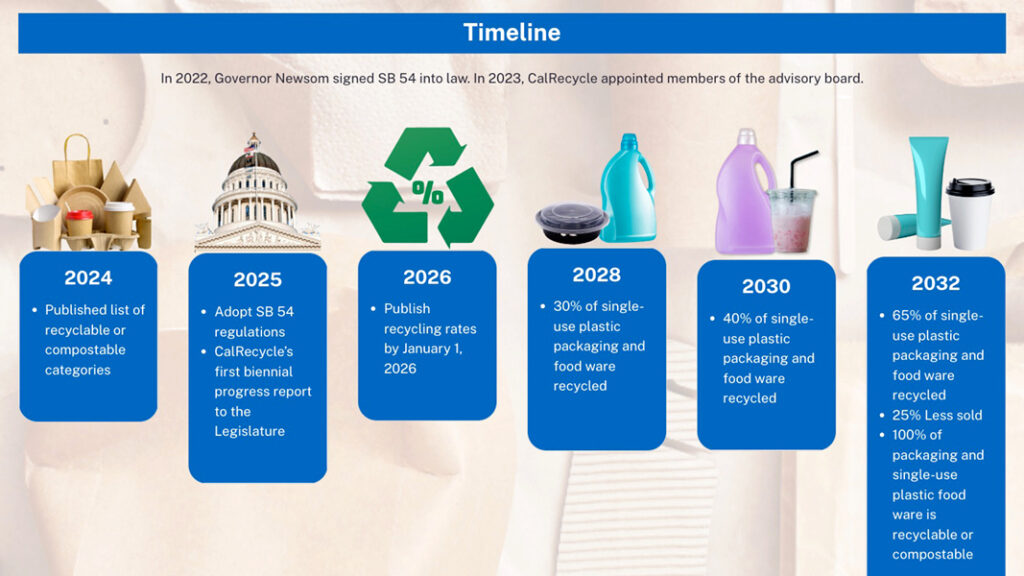
If you are sourcing compostable bags (wholesale & OEM) for the California or broader US market in 2026, California SB 54 2026 is no longer a future regulation — it is an active compliance requirement already shaping purchasing decisions.
This Extended Producer Responsibility (EPR) law is transforming how importers, brand owners, distributors, and wholesalers bring packaging into California. By 2032, 100% of covered single-use packaging must be recyclable or compostable. For more details on EPR laws, see our Compostable Bag Wholesale Guide.
As a supplier that has helped numerous importers and wholesalers successfully transition their packaging lines, we have prepared this practical 2026 guide based on the latest CalRecycle updates.
What SB 54 Requires in 2026 – Key Targets for Importers & Wholesalers
SB 54 places responsibility on “producers,” a broad definition that typically includes importers of covered materials into California.
Core 2032 Mandates (already driving 2026 actions):
- 100% of covered single-use packaging must be recyclable or eligible to be labeled “compostable”
- 25% reduction in single-use plastic packaging volume (vs 2023 baseline)
- 65% recycling rate for plastic packaging and food service ware
Latest 2026 Update: On December 31, 2025, CalRecycle published its annual updated Covered Material Categories (CMC) list. Further refinements were issued in January 2026.
For the official framework, refer to CalRecycle’s main SB 54 Packaging EPR page.
Which Packaging Types Are Most Affected?
If your imported or wholesaled products fall into these categories, sourcing compliant compostable bags (wholesale & OEM) is now a priority. See our detailed guide on Low MOQ Custom Compostable Bags Wholesale 2026 for practical sourcing options.
The current CMC list covers many common imported items, including trash bags, shopping bags, e-commerce mailers, produce bags, and food service ware. If your imported or wholesaled products fall into these categories, sourcing compliant compostable bags (wholesale & OEM) is now a priority.
What Makes Compostable Bags Compliant Under SB 54 in 2026?
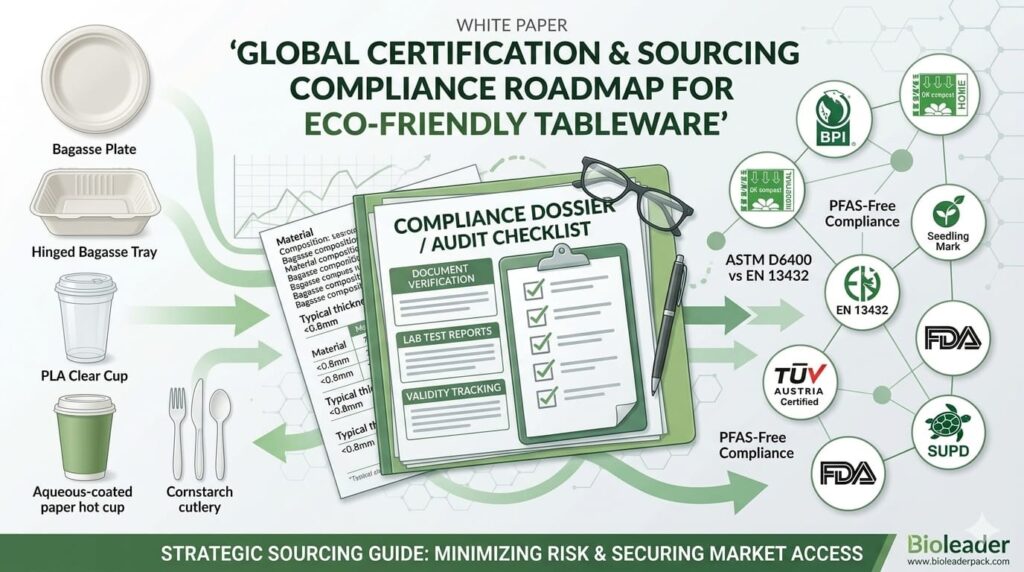
To qualify for the “compostable” pathway, bags must meet verifiable standards such as EN 13432, TÜV Austria OK Compost, BPI Certification, and ASTM D6400 / D6868.
Pro Tip for Importers: Always request full certificate numbers and third-party test reports.
For deeper insight, see this detailed compliance analysis.
Real-World Challenges & How Importers Are Responding in 2026
Many importers we work with are facing three main challenges in 2026:
First, certification documentation is becoming stricter. Some suppliers only provide logos without full test reports, which is no longer acceptable for serious buyers or brand owners who need to defend their compliance.
Second, cost pressure remains significant. Certified compostable materials typically cost 30-60% more than traditional plastic, although the gap is narrowing as production volumes increase and more manufacturers enter the market.
Third, supply chain reliability is a concern. With many brands rushing to switch before deadlines tighten, lead times for certified compliant compostable bags have extended in some cases.
How are successful importers responding?
- They are building relationships with suppliers who can provide complete documentation packages upfront.
- They are starting with small test orders of compliant compostable bags before committing to large volumes.
- They are calculating total landed cost (including potential fines for non-compliance) rather than just unit price.
- Many are choosing to work with suppliers who offer flexible MOQ and custom printing to reduce inventory risk.
We have seen importers who started early in 2025 now enjoy more stable pricing and supply compared to those waiting until mid-2026.
Key Differences Between Compliant Compostable Bags and Traditional Plastic Bags
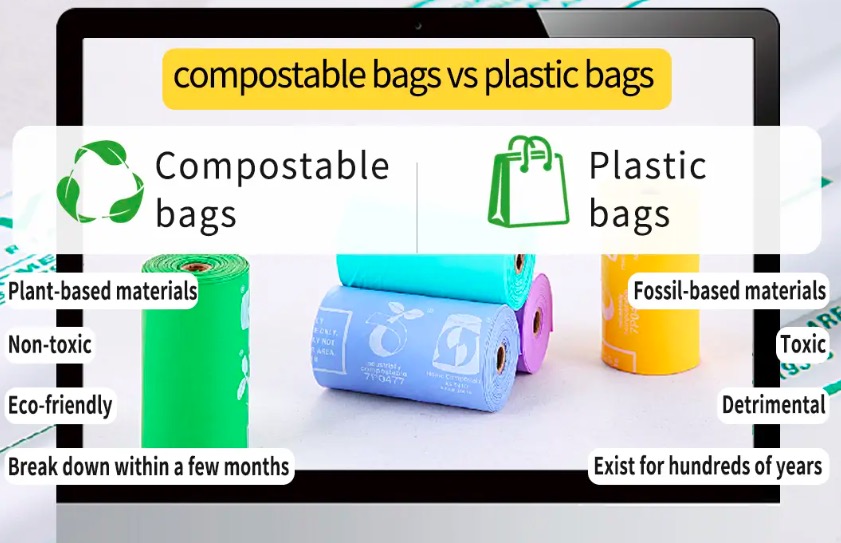
When sourcing compliant compostable bags (wholesale & OEM), it’s important to understand the real differences beyond just the “compostable” label.
Performance Comparison:
- Strength and Durability: Certified compostable bags (especially those with PBAT/PLA blends) have improved significantly. Many now match or exceed traditional plastic in puncture resistance and load-bearing capacity, making them suitable for heavy waste or e-commerce shipping.
- Odor and Leak Control: High-barrier versions perform much better than basic biodegradable bags, which often fail quickly in humid or warm conditions.
- End-of-Life Behavior: Traditional plastic bags can take hundreds of years to break down and contribute to microplastics. Compliant compostable bags are designed to break down into water, CO₂, and biomass in industrial composting facilities within 45–180 days, depending on conditions.
Cost Perspective: While the upfront unit price is higher, many wholesalers report that when factoring in potential fines, brand reputation benefits, and increasing customer demand for sustainable packaging, the long-term ROI is positive. Early adopters in 2025–2026 are also securing better pricing through volume commitments.
Market Feedback: Brands that have switched to compliant compostable bags often see positive customer feedback and improved shelf appeal. Several mid-sized e-commerce sellers we work with reported a 15-25% increase in repeat purchases after highlighting their sustainable packaging on product pages.
In 2026, the market is clearly shifting. Importers who delay the transition risk supply disruptions and competitive disadvantage as more retailers and brands demand compliant options.
How to Choose the Right Supplier for Compliant Compostable Bags in 2026
Choosing the right supplier is one of the most critical decisions when sourcing compliant compostable bags (wholesale & OEM) under California SB 54 2026.
Here are the key factors successful importers focus on:
1. Certification Transparency Look for suppliers who proactively provide full certificate numbers, test reports, and scope of certification — not just logos. Red flag: suppliers who say “it’s compostable” without documentation.
2. Supply Chain Stability Ask about production capacity, raw material sourcing, and lead time history. In 2026, reliable suppliers with multiple production lines are better positioned to handle sudden demand spikes.
3. MOQ Flexibility & Customization Top suppliers offer reasonable MOQ (1,000–5,000 pieces for starters) and support custom printing/private label without high setup fees.
4. Cost Structure Clarity Request a transparent breakdown: material cost, certification cost, printing cost, and shipping. Avoid suppliers who only quote “best price” without details.
5. Communication & After-Sales Support Reliable suppliers respond quickly, provide regular updates, and help with compliance questions even after the order is placed.
6. Sample Testing Process Always request samples and conduct your own tests (strength, leak, odor, and composting if possible) before placing bulk orders.
Importers who follow this structured approach in 2026 are not only meeting compliance requirements but also building stronger, more resilient supply chains.

Future Outlook: What Importers Should Prepare for Beyond 2026
Looking ahead, California SB 54 2026 is just the beginning of a broader shift in the US packaging landscape.
By 2032, the full 100% recyclable or compostable target will be in force, and many experts expect other states to introduce similar EPR laws. This means importers who invest early in compliant compostable bags will have a significant first-mover advantage.
Real-Life Cases:
- One mid-sized e-commerce importer we worked with switched their mailer bags to certified compostable versions in Q4 2025. Although the unit cost increased by 42%, they avoided an estimated $180,000 in potential fines and gained a 22% increase in repeat purchase rate after highlighting “SB 54 Compliant” on their product pages.
- A California-based food service wholesaler we supplied in early 2026 reported that after switching to BPI-certified produce bags, they secured two new large retail chain contracts that specifically required SB 54 compliance.
We are already seeing several trends:
- Larger brands are requiring suppliers to provide annual compliance audits.
- Demand for BPI-certified products is growing faster than EN 13432-only options in the US market.
- More e-commerce platforms are adding “sustainable packaging” filters, rewarding compliant sellers with better visibility.
- Raw material prices for certified compostable resins are expected to stabilize or even decrease slightly as global production capacity expands in 2027–2028.
Importers who treat California SB 54 2026 as a long-term strategic project rather than a short-term checkbox will be better positioned to handle future regulations, reduce risk, and potentially turn sustainability into a marketing advantage.
Those who delay may face higher costs, supply shortages, and competitive pressure as more retailers demand compliant options.
2026 Importer Compliance Quick Reference Table
| Item | Requirement in 2026 | Recommended Action | Risk Level if Non-Compliant | Our Solution (Wholesale & OEM) |
|---|---|---|---|---|
| Trash & Garbage Bags | Must be recyclable or compostable | Switch to certified compostable | High | EN13432 + TÜV + BPI options |
| E-commerce Mailer Bags | Must meet source reduction + compostable | Custom printed compliant versions | High | Low MOQ custom printing |
| Food Service Packaging | Food-contact safe + compostable | Verify BPI or equivalent | Very High | Food-safe certified range |
| Produce & Thin Film Bags | Must be labeled accurately | Request full CMC compliance statement | Medium-High | Transparent documentation |
| Overall Labeling | No deceptive “compostable” claims | Use verified certifications only | High | Full certification support |
2026 Compliance Checklist for Importers & Wholesalers
When sourcing compostable bags (wholesale & OEM), use this checklist:
- Map your products to the latest CMC list.
- Verify full, current certifications.
- Request supplier’s CMC compliance statement.
- Compare total landed cost.
- Ensure accurate labeling.
- Secure flexible MOQ and reliable lead times.
When sourcing compostable bags (wholesale & OEM), always verify certifications. Learn more in our article on How to Choose a Reliable Compostable Bag Supplier.

FAQ – Common Questions from Importers & Wholesalers
Q1: When does SB 54 fully take effect? A: The law has been phased in since 2024, with major targets due by 2032. However, 2026 CMC updates and reporting requirements are already active.
Q2: Do all compostable bags automatically comply with SB 54? A: No. Only those with verifiable certifications (EN 13432, TÜV, BPI, etc.) and accurate labeling qualify. Self-claims are not sufficient.
Q3: What is the biggest challenge for importers in 2026? A: Most importers struggle with obtaining complete documentation and managing the cost difference between traditional plastic and certified compostable materials.
Q4: Can we still use traditional plastic bags in California? A: Many traditional single-use plastic items are being phased out. Certified compostable alternatives are the safest long-term option.
Q5: Do you offer low MOQ for compliant compostable bags? A: Yes. We support sourcing compostable bags (wholesale & OEM) with MOQ starting from 1,000–5,000 pieces depending on the product, along with custom printing.
Practical Next Steps for Importers in 2026
- Audit your current portfolio against the latest CMC list.
- Identify items requiring immediate switch to certified compostable alternatives.
- Engage suppliers who can provide complete documentation.
- Test small orders before scaling up.
We have guided multiple wholesalers through this transition while maintaining competitive margins.
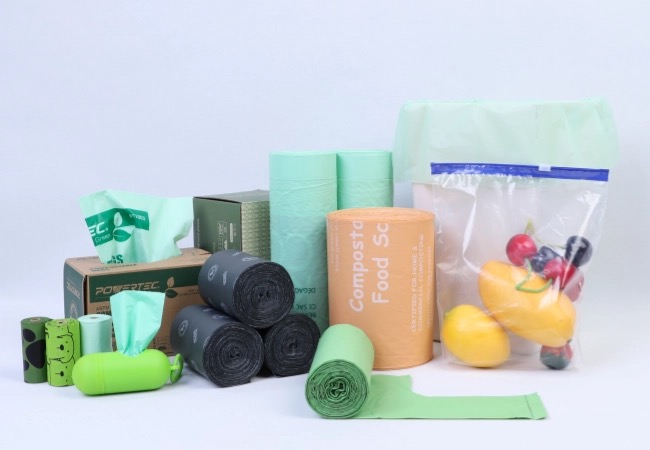
Ready to Source Compliant Compostable Bags?
If you are sourcing compostable bags (wholesale & OEM) for California compliance or planning long-term supply chain security, we can support you with certified products, flexible MOQ, custom options, and transparent 2026 pricing.
Contact Chris today for a free compliance consultation, sample kit, and current wholesale quotes. Email: chris@hemcbags.com Mention “SB 54 2026” and we’ll include the latest CMC list summary with your response.
Act now — securing compliant supply early turns regulatory pressure into a competitive advantage.