
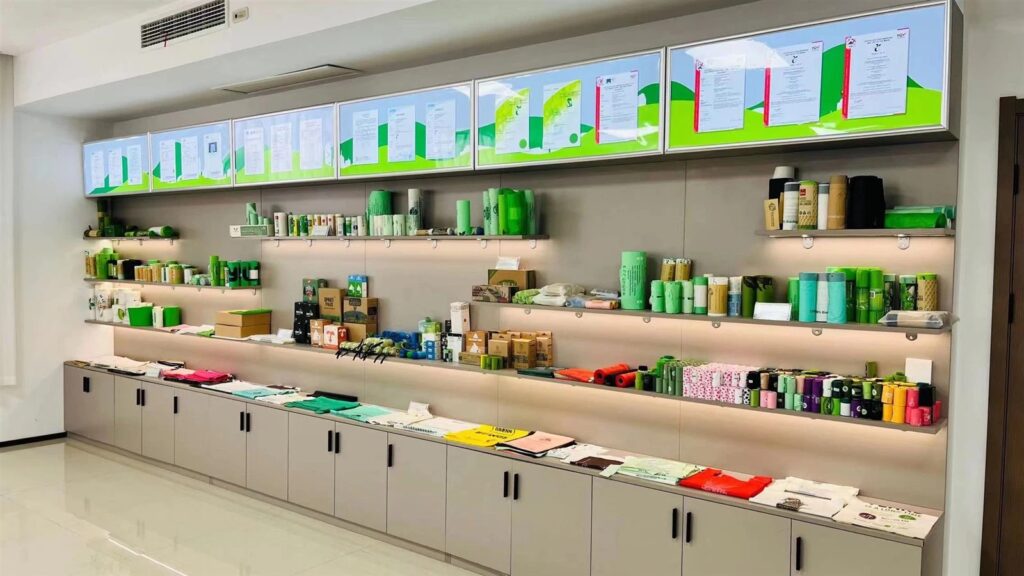
In September 2025, a Canadian importer sent us a purchase inquiry with just three words: “compostable bags, 10,000 pcs, best price.”
We replied: please tell us your end use, composting method, required certifications, and target market. He sounded a bit annoyed – “It’s just a regular compostable trash bag for home use.”
We insisted on two more rounds of questions. Finally we discovered: what he really needed was home compostable certification (OK compost HOME), not industrial composting. Why? Because in his province, municipal composting facilities have very low coverage – most consumers can only compost at home. If we supplied industrial compostable bags, they wouldn’t break down in backyard piles, and his brand would be flooded with negative reviews.
This is not an exception. In our 20 years of manufacturing experience, we have seen too many importers buy the wrong product simply because they didn’t ask enough details at the beginning.
In this 2026 guide, I will walk you through how to source compostable bags from China correctly. Finding a reliable compostable bags manufacturer China is just the first step. You also need to know how to verify certified compostable packaging solutions and navigate the complexities of how to import biodegradable bags from China without falling into quality traps.
Before you source compostable bags from China: three overlooked questions
Most importers only care about price and MOQ. But before you send out RFQs, answer these three questions. If you can’t, your sourcing is likely to fail.
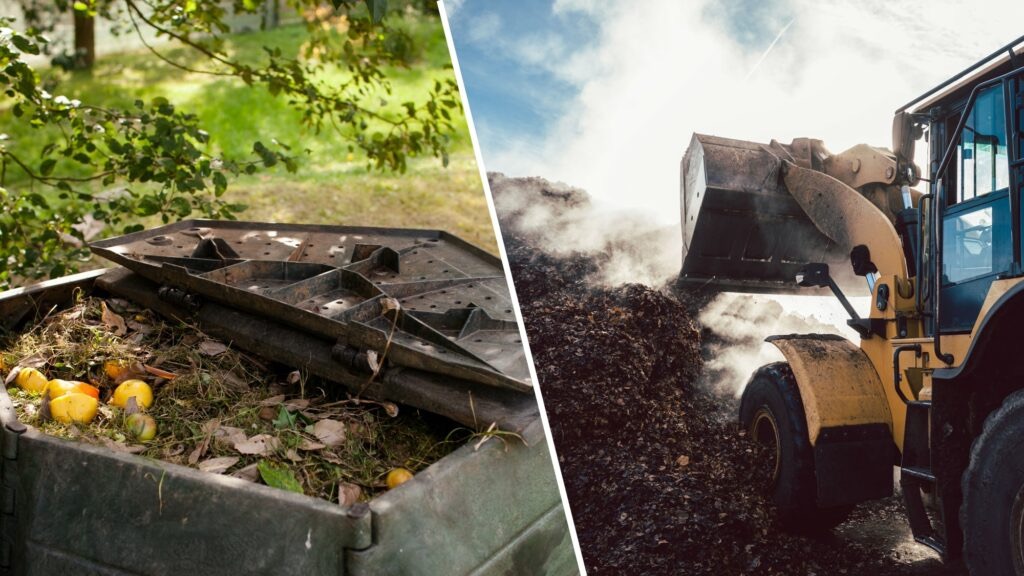
Where will the bags be used – home compost or industrial compost?
- Industrial composting requires 50-60°C and high humidity in centralized facilities. Certifications: EN 13432 (EU), ASTM D6400 (US).
- Home composting happens at ambient temperature under much less controlled conditions. Certification: OK compost HOME (TÜV Austria) or equivalent.
Real data: According to our 2025 customer statistics, about 35% of first-time importers mistakenly choose industrial compostable bags for home use. The result: consumer complaints (“the bag doesn’t break down”), high return rates, and damaged brand reputation.
What regulations apply in your target market?
- EU: From August 12, 2026, the PPWR requires that compostable packaging must not interfere with recycling streams. Tea bags and fruit labels must comply with EN 13432 from 2028.
- USA: No federal standard. California AB1201 (effective June 2027) requires all products claiming compostability to be third-party certified (e.g., BPI). Minnesota has required BPI certification since January 1, 2026.
- Canada: Some provinces require compostable plastics to be clearly labeled “not for backyard composting.”
Real case: At the end of 2025, a French customer sent us an ASTM D6400 certificate for products to be sold in German supermarkets. The German buyer rejected the shipment because the EU market requires EN 13432. We had to redo the certification testing – an extra 3 weeks and €2,500. That money could have been saved.
What will the bag contact – oil, water, or heat?
This is the question most importers forget. Compostable materials (PLA, PBAT, starch blends) have specific sensitivities to grease, high temperature, and prolonged moisture.
- Kitchen waste (oily, wet) : Needs high barrier or multilayer structure (e.g., PLA+PBAT+starch) with thickness no less than 15 microns.
- Hot food: PLA has a heat deflection temperature of only ~55°C. If your customer wants to pack hot steamed buns, you need paper bags or bagasse containers, not compostable plastic bags.
Real data: Our factory‘s quality records show that about 40% of all returns in 2024 were due to customers not specifying the contact medium, leading to in-use failures (most common: leakage at the seal when holding wet waste).
How to screen genuine compostable bag manufacturers (not “greenwashing” workshops)
There are hundreds of factories in China claiming to make compostable bags. But many of them are just adding a pinch of starch into ordinary PE bags and calling it “biodegradable.” Here are three screening steps.
Step 1: Request batch‑level raw material test reports, not just a photocopy of a certificate
Many suppliers will show you a photo of a BPI or TÜV certificate. But that certificate could be three years old, or borrowed from another factory.
What you should ask for:
- COA (Certificate of Analysis) for each batch of raw materials, showing the exact ratios of PLA/PBAT/starch.
- Recent third-party test reports from labs like SGS, TÜV, or DIN CERTCO – dated within the last 12 months.
Our practice: At hemcbags, we perform in‑house FTIR spectroscopy on every incoming batch of raw materials and compare it to a standard spectrum. Customers can request the FTIR spectrum for any batch. Not every factory can provide this.
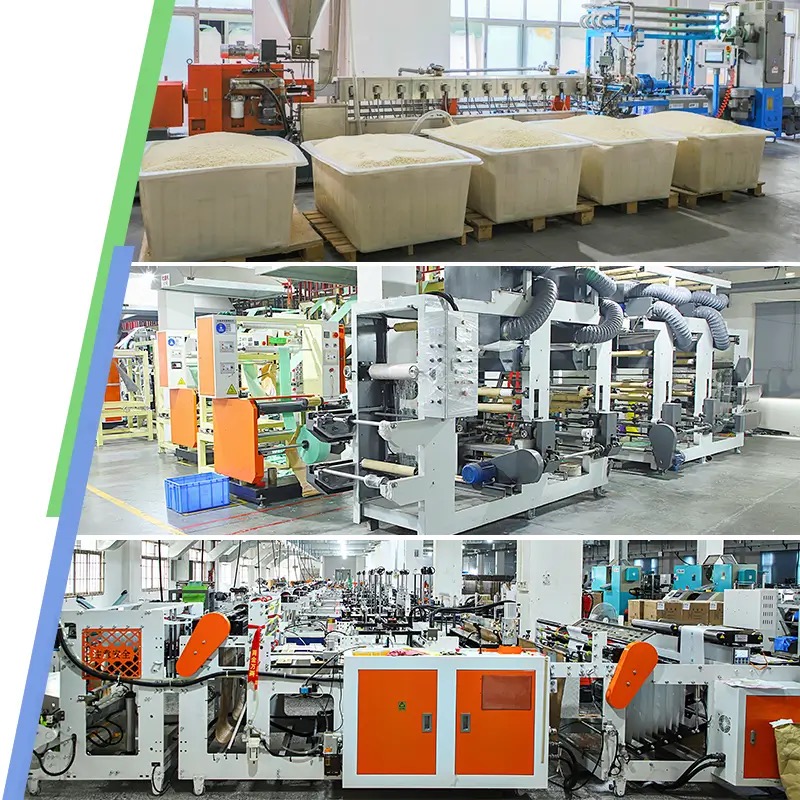
When you decide to source compostable bags from China, the technical details matter more than the price. A professional wholesale compostable bags supplier should provide not just a certificate, but a full traceability report. This ensures that every time you source compostable bags from China, the material consistency meets your brand’s standards.
Step 2: Verify the factory‘s own production quality control
Making compostable bags is different from making ordinary plastic bags. Uneven mixing of materials leads to brittle spots and weak seals.
Ask three questions:
- “Does your blown film line have online thickness control?” (Without it, thickness variation can exceed ±10%.)
- “How often do you perform seal strength tests?” (Ideal: every 2 hours.)
- “Can you provide batch traceability records?” (From raw material to finished goods – each batch has a production date and operator.)
Real data: Our factory’s thickness control capability is ±5% (industry average ±10-15%). In 2025, a Dutch customer compared samples from five Chinese suppliers and chose us because our thickness variation was the smallest – meaning his packaging costs were more predictable and his printing quality more consistent.
Step 3: Always start with a small trial order (MOQ 5,000 pieces is reasonable)
Do not place an order for 200,000 pieces on your first try. First, order 5,000-10,000 pieces and do three things:
- Test yourself: tensile strength, seal strength, real‑use test (e.g., wet waste for a week).
- Send a sample to a third‑party lab (optional but recommended): biodegradability test takes about 45-90 days.
- Let end users try it (if your customer is a brand).
A cautionary story: In 2024, a US customer ordered 200,000 compostable bags directly from a B2B platform without a trial order. When the goods arrived, he found the print colors were off, and the seal strength was only half the required value. He tried to claim compensation, but the supplier had already deregistered the company. His loss: about $38,000.
At hemcbags we always recommend a 5,000‑piece test order. We absorb extra sampling costs because we know: only when our customers succeed will we get repeat orders.
The complete sourcing process – 8 key checkpoints
Following a structured process is the best way to source compostable bags from China safely. From initial requirements to final shipping, each checkpoint is designed to help you import biodegradable bags from China with zero quality issues. Let’s look at the 8 key steps to source compostable bags from China effectively.
| Step | Action | Common Trap | How to Avoid |
|---|---|---|---|
| 1. Requirements | Fill out a detailed spec sheet (size, thickness, print, certification, end use) | Saying “I need compostable bags” without end‑use details | Use our sourcing requirements template (download link at end) |
| 2. Supplier screening | Request certificates, batch reports, factory video | Looking only at price, not verifying certifications | Ask for FTIR spectrum + recent third‑party test report |
| 3. Sample approval | Sampling (3-7 days), test yourself | Good sample, bad mass production | Require sealed reference samples and include in contract |
| 4. Contract signing | Define quality terms, return conditions, test standards | Not specifying “what counts as defective” | Reference ASTM/EN standards as acceptance criteria |
| 5. Production monitoring | Request in‑line inspection (remote or third‑party) | Trusting the factory completely | Inspect at 30% and 70% of production |
| 6. Pre‑shipment testing | Factory provides COA | Believing only verbal promises | Send your own samples to SGS for spot testing (~$200-500) |
| 7. Logistics & customs | Confirm HS code, provide compliance documents (e.g., DoC) | Wrong HS code leads to customs delays | Compostable plastic bags usually HS 3923290000 (consult local broker) |
| 8. Arrival inspection | Compare with sealed samples, document any issues immediately | Finding problems but not taking photos or writing emails | Take photos within 48 hours, send email, request third‑party arbitration |
Three new realities for sourcing compostable bags in 2026
If you are sourcing in 2026 or later, be aware of these changes.
EU PPWR requires a Declaration of Conformity (DoC) and 10‑year technical file retention
- Before: Factories only needed to provide test reports.
- Now: Every batch of compostable bags exported to the EU must be accompanied by a DoC stating that the product complies with PPWR and EN 13432. The DoC must be signed by the manufacturer (the Chinese factory), not the importer.
- Our practice: From January 2026, hemcbags provides a separate DoC for every batch shipped to the EU, and retains all technical files (raw material certificates, test reports, production records) for at least 10 years. This is how we help our customers reduce customs risk.
Fragmented US state regulations – stricter labeling requirements
- California AB1201 (effective June 2027): All compostable products must be labeled “Not for backyard composting” (unless they have home compost certification).
- Minnesota (effective Jan 1, 2026): Products must be BPI certified to claim “compostable.”
- Recommendation: If your customers cover multiple states, go for BPI certification and print “Industrial compost only” or “Check local rules” on the bag.
Longer certification lead times and modest price increases
- In 2025, a new EN 13432 certification took about 4-6 months and cost $5,000-8,000. In 2026, due to surging demand, the queue has extended to 6-8 months and costs are about 15% higher.
- Raw materials: PBAT (a key compostable polymer) saw a ~12% price increase at the end of 2025, partly because the EU started applying a carbon border levy on fossil‑based PBAT. Prices are expected to remain high in 2026.
- Advice: Plan ahead. If you plan to launch a new product in Q4 2026, lock in your supplier and pricing now.
Why hemcbags? (And what we don’t do)
Why do global brands choose to source compostable bags from China through Hemcbags? Because we act as more than just a compostable bags manufacturer China; we are your technical partner. We make it easy and secure to source compostable bags from China by providing on-site testing and guaranteed certification compliance.
What we can do:
- ✅ 20 years of manufacturing experience, own factory (Suzhou, China)
- ✅ EN 13432, ASTM D6400, BPI certified (latest certificates available on request)
- ✅ MOQ as low as 5,000 pieces, custom printing (up to 8 colors)
- ✅ FTIR spectrum + COA + DoC (for EU) with every batch
- ✅ Third‑party testing via SGS/TÜV available (cost paid by customer, we arrange)
What we cannot do:
- ❌ “Oxo‑degradable” or “additive‑masterbatch” fake eco‑bags – we consider that greenwashing.
- ❌ Guarantee the lowest price – our thickness control, testing procedures, and certifications cost money.
- ❌ Accept orders below 5,000 pieces – small batches are uneconomical for both sides.
The most awkward customer feedback we ever received:
In 2025, a UK customer received our samples and said: “Your bags are 20% more expensive than what I bought from India, but the tensile strength is twice as high. My previous bags broke at 3 kg – yours hold 6 kg. Per kilogram of waste, your packaging cost is actually lower.”
That‘s why we insist: don’t look only at unit price – look at total cost of use.
Your next steps
Ready to source compostable bags from China from a trusted manufacturer? here is a simple roadmap:
Note: We only accept three new custom orders per week – we don’t want to sacrifice quality for volume. If we‘re fully booked for the week, we will tell you the waiting time.
- Download our sourcing requirements template (reply “Sourcing template” to chris@hemcbags.com and we‘ll send you an Excel file).
- Fill in your end use, target market, required certifications, and estimated quantity.
- Send it to chris@hemcbags.com – Tell us your bag size, thickness, and intended use. We‘ll reply within 24 hours with a sample confirmation.
- Request a free sample (you only pay for shipping) and see for yourself.
- Test the samples, and if satisfied, move to mass production.
Frequently Asked Questions: Sourcing from China
Q: How do I verify a compostable bags manufacturer in China?
A: To verify a compostable bags manufacturer China, you should check their international certifications (OK Compost, BPI) and request recent batch-level test reports. This is a critical step whenever you source compostable bags from China.
Q: What is the MOQ to source compostable bags from China?
A: A reasonable MOQ to source compostable bags from China is typically around 5,000 to 10,000 pieces for a trial order. This allows you to test the quality before you import biodegradable bags from China in larger volumes.
Q: Can I customize my order with a wholesale compostable bags supplier?
A: Yes, a professional wholesale compostable bags supplier like Hemcbags offers full OEM services. When you source compostable bags from China, you can request custom sizes, thickness, and high-quality printing for your certified compostable packaging solutions.