
Introduction
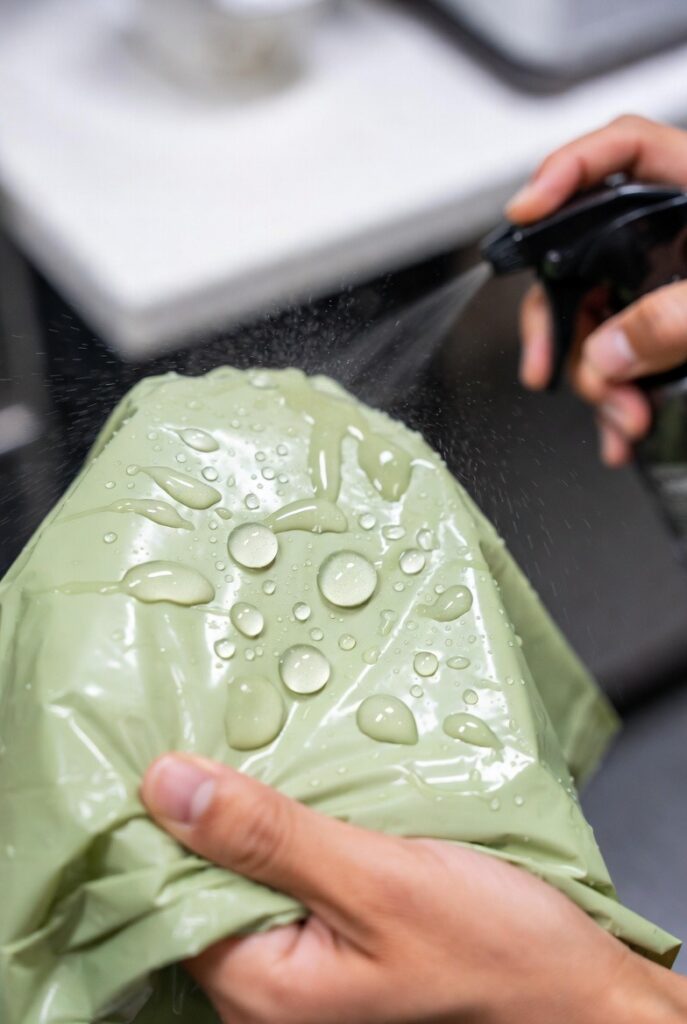
Are compostable bags waterproof? This question dominates purchasing decisions for consumers, retailers, and waste management professionals seeking sustainable alternatives to conventional plastic. The answer, as with most materials science questions, is more nuanced than a simple yes or no.
The waterproof performance of compostable bags sits at the intersection of materials chemistry, manufacturing quality, and real-world usage conditions. A bag that holds up admirably under dry storage may begin to weaken within hours when exposed to wet coffee grounds or fruit scraps. Understanding why compostable bags waterproof performance varies so widely requires a deep dive into the molecular architecture of these materials, the engineering trade-offs inherent in their design, and the certifications that govern their performance.
This article examines the compostable bags waterproof properties from multiple angles—materials composition, failure mechanisms, barrier enhancement technologies, and certification frameworks—to provide a comprehensive, technically grounded understanding of what these bags can and cannot do when confronted with moisture.
Are Compostable Bags Waterproof? Material Composition and Water Interaction Mechanisms
The Three-Component System
Most commercially available compostable bags waterproof claims stem from a ternary blend of three primary materials: polylactic acid (PLA), polybutylene adipate terephthalate (PBAT), and thermoplastic starch (TPS), typically derived from corn or other renewable sources. Each component plays a distinct role in determining the bag’s overall water resistance profile. Notably, PLA PBAT water resistance characteristics are central to understanding why some bags perform better than others when exposed to moisture.
PLA (Polylactic Acid) is a rigid, semi-crystalline biopolyester derived from fermented plant sugars. It provides tensile strength and stiffness to the film, enabling the bag to maintain structural integrity when filled. Importantly, PLA exhibits hydrophobic character relative to starch-based materials; films incorporating 20% PLA have been shown to demonstrate significantly lower water vapor permeability compared to starch-dominated blends. This hydrophobicity makes PLA a critical contributor to moisture barrier performance.
PBAT (Polybutylene Adipate Terephthalate) is a fossil-derived but fully biodegradable copolymer that imparts flexibility and ductility to the blend. Without PBAT, PLA-based films would be brittle and prone to cracking under load. However, PBAT is itself relatively permeable to water vapor—academic studies consistently rank PBAT among the biopolymers with higher water vapor transmission rates. This creates an engineering tension: the very component that makes the bag flexible and tear-resistant simultaneously compromises its moisture barrier properties. Optimizing PLA PBAT water resistance requires careful balancing of these opposing characteristics.
Thermoplastic Starch (TPS) serves as a renewable filler and biodegradation accelerator. Raw starch is highly hydrophilic—meaning it readily absorbs water—which causes films to swell, soften, and lose mechanical strength in moist environments. This is why bags made predominantly from starch tend to become soggy and prone to tearing when exposed to wet waste. Advanced manufacturers address this limitation by encapsulating TPS within a water-resistant polyester matrix during compounding, effectively shielding the hydrophilic starch domains from direct water contact.
The performance of any given compostable bag is therefore a function of formulation optimization: too little PLA and the bag lacks stiffness and water resistance; too little PBAT and the bag becomes brittle; too much starch and the bag degrades prematurely in the presence of moisture. The precise ratios remain proprietary for most manufacturers, but thickness also plays a critical role—commercial compostable bags waterproof capabilities typically range from 15 to 20 microns, while premium products may reach 25 microns or more, providing additional material thickness to delay moisture penetration.
Water Vapor Permeability: Quantifying the Barrier
The water resistance of compostable films is quantified scientifically through Water Vapor Permeability (WVP) or Water Vapor Transmission Rate (WVTR) testing. These measurements determine how much water vapor can pass through a given film area over a specified time period under controlled temperature and humidity conditions.
Recent research on PLA/PBAT/TPS ternary composites has established a benchmark minimum WVP value of approximately 2.0571 g/m²·24h for optimized blend ratios. This figure, while representing the best-case scenario for this particular material family, is notably higher than that of conventional polyethylene films, which typically achieve WVP values an order of magnitude lower. The implications are clear: even optimally formulated compostable films are inherently more permeable to water vapor than their petrochemical counterparts.
This permeability manifests in practical ways. A compostable bag filled with dry goods may perform indistinguishably from conventional plastic for extended periods. But when the contents include moisture-rich organic matter—coffee grounds, vegetable peels, meat drippings—water molecules begin migrating through the film via diffusion, gradually weakening polymer chain interactions and initiating the degradation cascade. This is the fundamental reason why compostable bags waterproof performance remains conditional and time-limited.
Failure Mechanisms: Why Compostable Bags Leak
Understanding compostable bag leak proof expectations requires examining why these materials fail when exposed to moisture.
Hydrolytic Degradation
The primary failure mechanism for compostable bags exposed to moisture is hydrolysis—the chemical cleavage of polymer chains by water molecules. Polyesters like PLA and PBAT contain ester linkages that are susceptible to hydrolytic attack, particularly under acidic or basic conditions. This is, paradoxically, exactly what makes these materials compostable: the same ester bonds that enable enzymatic and microbial breakdown in composting environments are vulnerable to degradation during use.
In real-world kitchen settings, this vulnerability manifests as a gradual but measurable decline in mechanical integrity. Independent testing of commercial compostable bags has shown that many products begin to exhibit visible weakening—clouding, softening, or seam separation—within 24 hours of exposure to moisture-rich environments. One comprehensive evaluation of 12 leading brands found that only one-third completed a 48-hour test period with wet kitchen waste without leakage or tearing; the remainder experienced some degree of seepage through microscopic pores or outright structural failure. This real-world data highlights why compostable bag leak proof performance cannot be assumed.
The rate of hydrolytic degradation is accelerated by several factors commonly present in kitchen waste: heat (softening films near warm appliances or in sun-exposed areas), acidity (citrus peels, tomato sauce, vinegar-based foods), and mechanical stress (sharp bones, crumpled packaging, or simply the weight of accumulated waste). These variables make compostable bags waterproof claims highly dependent on usage conditions.
Seam Integrity and Manufacturing Quality
Beyond material chemistry, manufacturing quality—particularly seam integrity—profoundly influences real-world leak resistance. Heat-sealed seams are the most common failure points in compostable bags subjected to liquid loads. Poor bonding techniques, inconsistent seal temperatures, or inadequate overlap at the bag bottom can create micro-channels through which liquids escape even when the film itself remains intact. Achieving compostable bag leak proof reliability thus depends as much on manufacturing precision as on material formulation.
Premium products address this through several engineering interventions: reinforced seam construction, embossed surface textures that improve interlayer adhesion, and increased film thickness in high-stress areas. Some manufacturers have also introduced calcium carbonate as a filler to modify the mechanical properties of specific components—such as drawstrings—without compromising overall compostability. These enhancements directly improve compostable bags waterproof reliability under challenging conditions.
The Performance Spectrum: Not All Bags Are Equal
The variability in waterproof performance across commercially available compostable bags is substantial. Real-world testing reveals a clear performance hierarchy correlated with both material formulation and manufacturing rigor. The following table summarizes typical performance outcomes based on common bag specifications:
| Material Composition | Typical Thickness | Condition After 24h with Wet Waste | Recommended Use Case |
|---|---|---|---|
| High-Starch (TPS Dominant) | 15–18 μm | Noticeable softening; seams may seep | Dry waste only (paper, packaging) |
| Standard PLA/PBAT Blend | 18–22 μm | Slight dampness at base; no major leakage | Daily kitchen waste (dispose within 24h) |
| Premium PLA/PBAT (Reinforced Seams) | 22–25 μm | Structurally sound; minimal moisture penetration | Multi-day storage of wet organics |
| Coated or Multilayer Barrier Film | 25 μm+ | Dry exterior; high resistance to seepage | High-moisture applications; extended use |
This variability underscores a critical point: general statements about the compostable bags waterproof properties as a category are largely meaningless. Performance must be evaluated at the product level, with attention to material composition, thickness specifications, and independent testing data.
Barrier Enhancement Technologies
Coatings: Adding a Water-Resistant Layer
Recognizing the inherent permeability limitations of base biopolymer films, researchers and manufacturers have developed coating technologies that enhance water barrier properties while maintaining compostability. Coatings function as an additional functional layer applied to the film surface, creating a more tortuous path for water vapor diffusion and increasing the surface hydrophobicity.
PHBV Coating: Poly(3-hydroxybutyrate-co-3-hydroxyvalerate), a member of the polyhydroxyalkanoate (PHA) family, has been investigated as a barrier coating for PBAT-based biodegradable sheets. Research demonstrates that bar-coated PHBV layers with thicknesses of 25–35 μm can improve water vapor barrier performance by approximately 48% compared to uncoated substrates, while simultaneously increasing the water contact angle to 106.6°—indicative of a strongly hydrophobic surface. The coating achieves this by creating a denser, more ordered surface morphology that impedes water molecule penetration.
Aqueous PLA-Based Dispersions: Solvent-free aqueous dispersions of PLA copolymers represent an emerging sustainable coating platform. Studies have shown that these dispersions, when applied to substrates, achieve water vapor barrier properties below 10 g/m² at 23°C and 50% relative humidity—promising performance for flexible packaging applications. The advantage of aqueous systems lies in their elimination of organic solvents, aligning with the broader sustainability objectives of compostable packaging.
Commercial Developments: Industry adoption of barrier coating technologies is accelerating. BASF’s ecovio® 70 PS14H6 biopolymer coating, for instance, reportedly provides excellent barrier properties against liquids, fats, grease, and mineral oil while maintaining temperature stability up to 100°C and full home compostability. Similarly, aqueous BioPBS dispersions have emerged as home-compostable coating solutions that enable high-performance barrier functionality without petroleum-based materials. Such innovations are gradually redefining compostable bags waterproof expectations.
Polymer Blending and Composite Engineering
Coating is not the only route to enhanced water resistance. Advances in polymer blending and composite formulation offer alternative pathways to improved barrier performance:
Compatibilization Strategies: The inherent incompatibility between hydrophilic TPS and hydrophobic PLA/PBAT phases creates morphological discontinuities that can compromise barrier properties. Researchers have explored epoxidized soybean oil and other bio-based compatibilizers to improve interfacial adhesion between polymer phases, achieving water contact angles up to 108.6° and significantly reduced water vapor permeability in optimized TPS/PBAT biocomposites.
Multilayer Structures: Some manufacturers employ co-extrusion to create multilayer films with differentiated functionality. An outer layer rich in PLA provides initial water resistance, while an inner PBAT-rich core maintains flexibility, and a thin starch layer accelerates biodegradation once composting conditions are reached. This stratified approach allows for more precise engineering of the moisture barrier profile.
Calcium Carbonate Fillers: The addition of calcium carbonate (CaCO₃) as a particulate filler serves dual purposes in compostable film formulations. Beyond its role in modifying drawstring stiffness, CaCO₃ particles create tortuous diffusion pathways that increase the effective path length for water vapor transmission, modestly improving barrier properties while also reducing material cost.
Certification Standards and Moisture Resistance
Understanding biodegradable bag certification standards is essential for setting realistic expectations about in-use performance.
What Certification Actually Tests
A common misconception holds that compostability certifications—such as ASTM D6400 (North America) and EN 13432 (Europe)—include specific requirements for waterproof performance or moisture resistance during use. This is not the case. These biodegradable bag certification standards are designed exclusively to verify end-of-life behavior, not functional performance characteristics.
The ASTM D6400 standard establishes a three-component testing framework: biodegradation rate (≥90% conversion to CO₂ within 180 days at 58°C), disintegration (≥90% of material reduced to particles <2 mm within 12 weeks), and ecotoxicity (no harmful effects on plant germination or biomass production). EN 13432 imposes essentially identical requirements for the European market. Neither standard contains any provision addressing in-use water resistance, tensile strength retention under moist conditions, or liquid barrier integrity.
This creates an important nuance: a bag bearing BPI or TÜV Austria certification is guaranteed to break down appropriately in industrial composting facilities—but it is not guaranteed to contain wet kitchen waste without leaking for any specified duration. Compostable bags waterproof performance during the use phase is entirely a matter of product design and manufacturing quality, not certification compliance. Consumers should not interpret biodegradable bag certification standards as indicators of leak resistance.
Industrial vs. Home Compostable: Implications for Water Exposure
The distinction between industrial compostable (ASTM D6400/EN 13432) and home compostable (OK Compost HOME) certifications has direct bearing on moisture interaction profiles. Industrial composting requires temperatures of 55–60°C and controlled moisture levels to achieve the required 90-day breakdown timeframe. Bags certified only for industrial composting may exhibit greater stability under ambient moisture conditions precisely because they are engineered to resist premature degradation outside of these elevated temperature conditions.
Home compostable certification, as administered by TÜV Austria through the OK Compost HOME program, imposes more demanding requirements: products must demonstrate complete biodegradation under the lower, more variable temperatures characteristic of backyard compost piles. To meet this more stringent standard, home-compostable bags often incorporate formulations that are inherently more susceptible to moisture-triggered degradation—a necessary trade-off to ensure breakdown occurs in the intended disposal environment. Consequently, home-compostable bags may demonstrate reduced compostable bags waterproof reliability compared to industrial-only certified alternatives.
Practical Implications and Selection Guidance
Decision Tree: How to Choose a Leak-Resistant Compostable Bag
Use the following decision tree to quickly identify the appropriate bag type for your specific waste profile.
- Step 1: Assess Moisture Content of Waste
- If waste is mostly dry (paper, cardboard, dry organics) → Use any certified compostable bag (thickness ≥15 μm)
- If waste contains moisture (coffee grounds, food scraps, fruit peels) → Proceed to Step 2
- Step 2: Evaluate Disposal Frequency
- If the bag will be emptied within 24 hours → Use a standard PLA/PBAT bag (thickness ≥18 μm)
- If the bag will be used for more than 24 hours or timing is uncertain → Proceed to Step 3
- Step 3: Determine Liquid Content
- If waste is extremely wet (soups, fruit pulp, visible liquid) → Consider a rigid compostable container or double-bagging
- If waste is damp but not dripping → Use a premium/thick bag (thickness ≥22 μm) or one with a barrier coating
Matching Bag to Application
Selecting the right compostable trash bag wet waste solution requires matching product specifications to actual usage conditions.
Given the variability in compostable bags waterproof performance across products and formulations, appropriate bag selection depends critically on the intended use case.
Dry Waste Only: For applications involving paper, packaging materials, or dry organic matter, nearly any certified compostable bag will perform adequately. Water resistance is not a limiting factor.
Short-Duration Wet Waste (≤24 hours) : Kitchen organics intended for daily disposal—where bags are filled and removed within 24 hours—can be managed with most quality compostable bags, particularly those with thicknesses ≥18 microns and reinforced seam construction. Placing a paper towel at the bottom of the bag to absorb excess liquid is a simple, effective strategy to extend usable life. This is the most common compostable trash bag wet waste scenario for households.
Extended Storage or High-Moisture Content: For applications requiring multi-day storage of wet food waste, or for liquid-heavy contents such as soup remnants or fruit processing waste, even premium compostable bags may prove inadequate. In these scenarios, a double-bagging approach—using a compostable liner inside a conventional plastic bin, or employing a rigid compostable container rather than a flexible bag—offers more reliable containment.
Liquid Storage: Compostable bags are generally unsuitable for storing free liquids. Even products with enhanced barrier coatings have limited shelf life when used for liquid storage applications.
Quality Indicators for Water Resistance
When evaluating compostable bags waterproof capabilities for moisture-prone applications, several product characteristics serve as reliable quality indicators:
- Thickness Specification: Bags measuring ≥0.10 mm (100 microns) or 1.0 mil generally offer superior moisture tolerance compared to economy-grade alternatives in the 15–20 micron range. Premium products explicitly state thickness in product specifications.
- Reinforced Seam Construction: Products advertising heat-sealed, reinforced, or embossed seams typically exhibit better leak resistance than those with minimal seam finishing.
- Brand Reputation and Independent Testing: Leading brands in the compostable bag space have invested significantly in material optimization. Third-party comparative testing consistently shows performance stratification, with premium products substantially outperforming generic alternatives in moisture tolerance and leak resistance.
- Intended Use Labeling: Products explicitly marketed for “kitchen waste” or “food scrap collection” are generally engineered with greater attention to moisture resistance than those positioned for general-purpose or lightweight applications.
Storage Considerations
The waterproof performance of compostable bags is also influenced by pre-use storage conditions. These materials are susceptible to gradual hydrolysis from ambient humidity and should be stored in cool, dry environments away from direct sunlight. Prolonged exposure to elevated temperatures or high humidity can initiate premature degradation before the bag is ever placed in service, reducing its effective water resistance when finally used.
The Path Forward: Innovations and Outlook
The field of compostable barrier materials is evolving rapidly, driven by both regulatory pressures (bans on single-use plastics, extended producer responsibility schemes) and consumer demand for genuinely sustainable packaging alternatives. Several technological trajectories are poised to narrow the performance gap between compostable and conventional materials, ultimately improving compostable bags waterproof reliability:
Bio-Based Barrier Coatings: The global market for bio-based barrier coatings is projected to grow at a compound annual growth rate of approximately 25% through 2030, reflecting intensive R&D investment in this space. Emerging solutions derived from agricultural by-products, chitosan, shellac, and other renewable feedstocks promise to deliver water resistance approaching that of petroleum-derived coatings while maintaining full compostability.
Advanced Polymer Architectures: Research into novel biopolymer structures—including polyhydroxyalkanoates with tailored side-chain functionality and PLA copolymers engineered for enhanced hydrophobicity—suggests that the intrinsic water sensitivity of biopolyesters can be addressed at the molecular level rather than relying solely on post-processing modifications.
Multifunctional Additives: The development of compostable additives that provide both processing benefits (plasticization, melt strength improvement) and enhanced barrier properties represents an active area of materials research. These multifunctional components reduce the formulation complexity required to achieve balanced performance profiles.
Conclusion
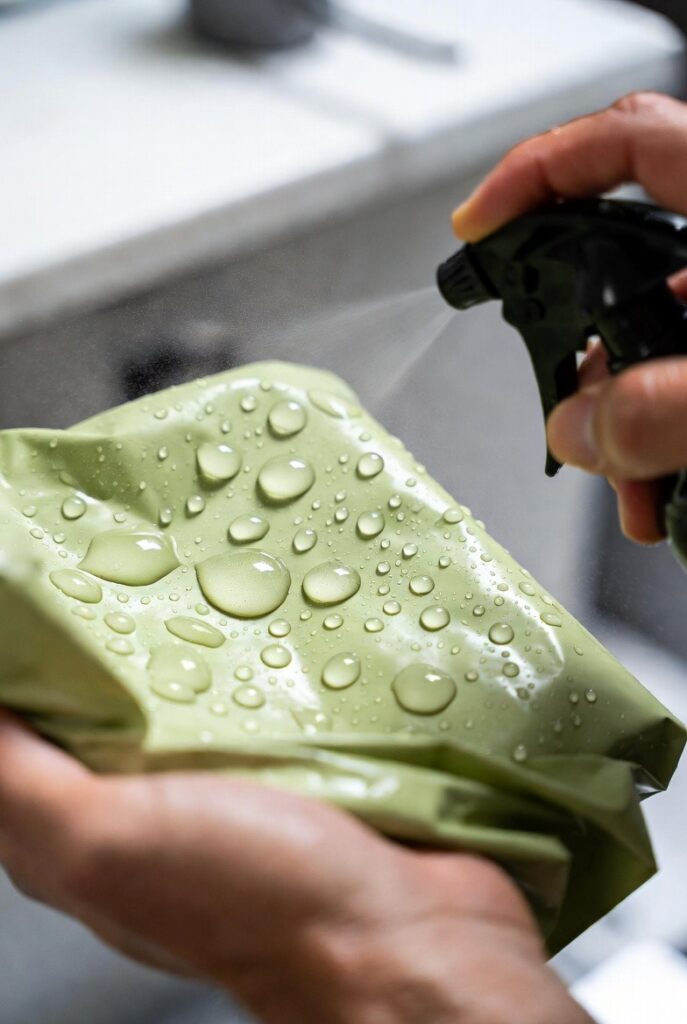
Are compostable bags waterproof? The most accurate characterization is conditional and time-limited. Under appropriate use conditions—short storage durations, moderate moisture loads, and proper handling—quality compostable bags can reliably contain kitchen waste without leakage. Extended exposure to wet contents, however, will eventually compromise the water barrier as hydrolytic degradation progresses.
Certifications like ASTM D6400 and EN 13432 provide assurance of proper end-of-life behavior but do not guarantee in-use waterproof performance—a distinction critical for procurement decisions. Product-level evaluation, attention to thickness and seam construction, and realistic expectations about service life remain essential for successful implementation of compostable bags waterproof solutions.
As coating technologies mature and polymer formulations advance, the performance gap between compostable and conventional materials will continue to narrow. But the fundamental materials science constraint remains unchanged: the same chemical architecture that enables complete biodegradation necessarily limits long-term water resistance. Understanding this trade-off—and selecting products accordingly—enables both environmental responsibility and functional reliability.
Further Reading:What Is the best compostable trash bags?
Frequently Asked Questions (FAQ)
Q: How long can a compostable bag hold water before leaking?
A: Most quality compostable bags (standard PLA/PBAT blends, ≥18 microns) can hold moist kitchen waste for approximately 24–48 hours without significant leakage. Beyond 48 hours, hydrolytic degradation begins to compromise seam integrity, and seepage may occur, especially if the contents are highly acidic or warm. Premium bags with reinforced seams or barrier coatings can extend this window to 72 hours or longer under favorable conditions.
Q: Are home compostable bags less waterproof than industrial compostable bags?
A: Generally, yes. Home compostable bags (certified to OK Compost HOME) are engineered to break down at lower temperatures and more variable conditions. To achieve this, manufacturers often use formulations that are more sensitive to ambient moisture, which can translate to reduced compostable bags waterproof performance during use compared to bags certified only for industrial composting (ASTM D6400 or EN 13432). If you plan to store wet waste for extended periods, industrial compostable bags may offer better in-use performance.
Q: Do compostable bag certifications guarantee waterproof performance?
A: No. Certifications such as ASTM D6400, EN 13432, and OK Compost HOME verify only the end-of-life biodegradation and disintegration properties of the material. They do not test or certify in-use characteristics like leak resistance, tensile strength under moisture, or maximum liquid containment duration. Compostable bags waterproof performance is solely determined by the bag’s material formulation, thickness, and manufacturing quality.
Q: What is the best way to prevent compostable bags from leaking with wet waste?
A: Several strategies can minimize leakage risk:
- Use bags with a thickness of at least 22 microns and reinforced seams.
- Place a layer of absorbent material (e.g., paper towel, shredded cardboard) at the bottom of the bag.
- Avoid overfilling; excessive weight stresses seams and accelerates moisture migration.
- Empty the bag within 24 hours whenever possible.
- Store the bin in a cool location; heat accelerates hydrolytic degradation.
- For extremely wet waste (e.g., soups, watermelon rinds), consider using a rigid compostable container as an inner liner.
Q: Are there any waterproof compostable bags on the market?
A: Truly “waterproof” compostable bags—capable of holding standing liquid for extended periods—remain rare due to the inherent permeability of biopolyester films. However, products incorporating advanced barrier coatings (e.g., PHBV, aqueous PLA dispersions) or multilayer coextrusion structures can approach the short-term liquid containment performance of thin conventional plastic bags. These are typically marketed as “heavy-duty” or “moisture-resistant” compostable liners. Always check the manufacturer’s specified use cases and thickness.